
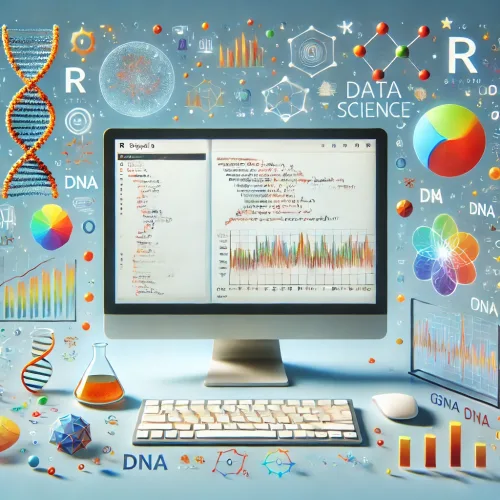
R Programming for Data Analytics in Bioinformatics
R Programming for Bioinformatics: Unlock Data, Drive Discovery!
Skills you will gain:
About Program:
One of the main attractions of using the R (http://cran.at.r-project.org) environment is the ease with which users can write their own programs and custom functions. The R programming syntax is extremely easy to learn, even for users with no previous programming experience. Once the basic R programming control structures are understood, users can use the R language as a powerful environment to perform complex custom analyses of almost any type of data.
Aim: The “R Programming for Data Analytics in Bioinformatics” workshop aims to equip participants with the essential skills to harness the power of R for data analysis, visualization, and statistical modeling. This 3-day workshop is designed to provide hands-on experience with R, enabling participants to transform raw data into actionable insights.
Program Objectives:
- To create vectors and matrices and perform simple operations on them.
- To extract relevant information and incorporating into data file.
- To perform statistical analysis and visualization of given data set.
What you will learn?
Day 1: Introduction to R and R Studio, Vector and Matrices
- Vector and matrices, importing data into R, Sub setting data, and logistics statement
- Setting up the working directory, Producing numeric summaries for categorical and numeric variables
Day 2: R packages and Statistical Analysis
- Working on dplyr, Amelia, gmodels R packages.
- Basics Statistical Analysis with R
Day 3: Data Visualization and prediction model
- Data Visualization with ggplot2
- Insulin prediction model
Mentor Profile
Fee Plan
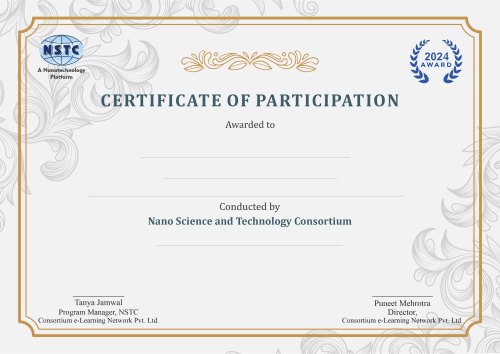
Get an e-Certificate of Participation!
Intended For :
- Undergraduate degree in Bioinformatics, Biology, Biotechnology or related fields.
- Professionals in data-driven industries such as, healthcare, or marketing.
- Individuals with a keen interest in data analysis and statistical computing
Career Supporting Skills
Program Outcomes
- Proficiency in R programming and data manipulation.
- Ability to conduct statistical analysis and hypothesis testing.
- Competence in creating and interpreting data visualizations.
- Knowledge of predictive modeling techniques.
- Hands-on experience with real-world data analytics projects.