
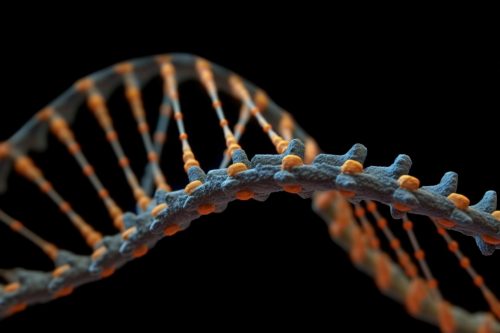
Prediction of Peptide’s Secondary, Tertiary Structure and Their Properties Using Online Tools
Protein Structures: From Sequence to 3D Models
Skills you will gain:
About Program:
Proteins are an important class of biological macromolecules present in all biological organisms. All proteins are polymers of 20 different amino acids. Proteins fold into one, or more, specific spatial conformations to perform its biological function, driven by a number of noncovalent interactions. In order to understand the functions of proteins at a molecular level, it is necessary to determine its 3D structure. Thus, protein sequence (primary and secondary) and protein secondary structure prediction is an important part of analysis in proteomics. This will lead to predict and analyze the 3D structure (Molecular Modeling and Structure Prediction) of a protein.
Aim: The aim is to predict the characterization, post translational site, topology, secondary and tertiary structure of a given protein sequence.
Program Objectives:
- To generate the physiochemical properties, solubility and antigenicity of a protein sequence.
- To predict the secondary and tertiary structure of peptide.
What you will learn?
Day 1: Characterization of peptide
- Physiochemical properties generation using Expasy ProtParam online server
- Solubility and Antigenicity Prediction using SolPro and Vaxijen v2.0 Online Server Online tool
Day 2: Secondary and Tertiary Structure Prediction
- Alpha helices, beta sheets, turn and coil using Gor IV online server
- Tertiary structure prediction using PEP-FOLD3 online server
Day 3: Transmembrane Helices Prediction and Structure visualization
- Generation of the number of transmembrane helices using TMHMM Server v. 2.0
- 3D Structure Visualization of peptide using Visualization tool
Mentor Profile
Fee Plan
Get an e-Certificate of Participation!
Intended For :
- Undergraduate degree in Biotechnology, Biochemistry, or related fields.
- Professionals in the pharmaceutical or biotech industries.
- Individuals with a keen interest in structural biology and proteomics.
Career Supporting Skills
Program Outcomes
- Enhanced understanding of peptide physiochemical properties and solubility.
- Ability to predict secondary and tertiary structures of peptides.
- Proficiency in using online tools for structural predictions.
- Skills in visualizing and analyzing 3D peptide structures.
- Practical knowledge applicable to bioinformatics and structural biology research.