Aim
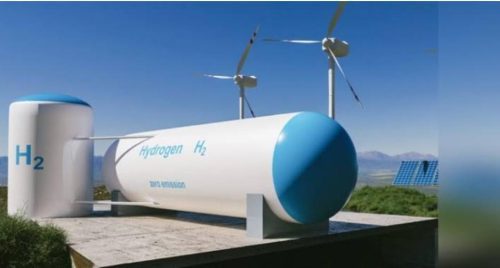
Green Hydrogen: Powering Industries Towards Net-Zero Emissions trains participants to understand how green hydrogen is produced, stored, transported, and integrated into industrial systems to reduce emissions. You’ll learn the end-to-end value chain (renewables → electrolysis → conditioning → storage/transport → end-use), techno-economic drivers, safety fundamentals, and decarbonization use cases across hard-to-abate sectors—so you can plan realistic hydrogen pathways toward net-zero.
Program Objectives
- Understand the Hydrogen Landscape: Green vs blue/grey hydrogen and why “green” matters for net-zero.
- Learn Production Pathways: Electrolysis types, renewable integration, and operational considerations.
- Build Value Chain Literacy: Compression, liquefaction, pipelines, carriers (ammonia/LOHC) basics.
- Assess Industrial Use Cases: Steel, refining, fertilizers, chemicals, power, shipping, and heavy mobility.
- Evaluate Projects: Key KPIs, costs, efficiency, carbon intensity, and system constraints.
- Safety & Standards Awareness: Hazards, handling, and risk controls for hydrogen systems.
- Plan Net-Zero Roadmaps: Identify feasible adoption pathways and transition strategies.
- Hands-on Application: Develop a mini hydrogen adoption plan for a target industry facility.
Program Structure
Module 1: Why Green Hydrogen for Net-Zero Industries?
- Hard-to-abate sectors: why electrification alone is often not enough.
- Hydrogen “colors”: definitions, carbon intensity logic, and common misconceptions.
- Hydrogen as an energy carrier: where it fits best (and where it doesn’t).
- Key metrics: LCOH (cost), efficiency, utilization factor, and emissions accounting.
Module 2: Green Hydrogen Production (Electrolysis + Renewables)
- Electrolysis fundamentals: water splitting, stack, balance-of-plant (conceptual).
- Electrolyzer types: alkaline, PEM, SOEC (high-level comparison).
- Renewable integration: intermittency, curtailment use, hybrid power sourcing.
- Water quality and consumption basics; siting considerations (intro-level).
Module 3: Conditioning, Storage & Transport
- Hydrogen conditioning: drying, purification, compression.
- Storage options: compressed gas, liquid hydrogen, metal hydrides (intro).
- Transport pathways: pipelines, tube trailers, liquid logistics, port infrastructure (conceptual).
- Hydrogen carriers: ammonia and LOHC basics; trade-offs and reconversion concept.
Module 4: Industrial Applications I — Fertilizers, Chemicals & Refineries
- Ammonia production and the role of green hydrogen.
- Refining uses: hydrotreating and hydrogen demand (high-level).
- Methanol and synthetic fuels pathways (conceptual overview).
- Integration challenges: continuous process needs vs variable renewable supply.
Module 5: Industrial Applications II — Steel, Heat & Power Systems
- Steel decarbonization concepts: DRI (direct reduced iron) with hydrogen (high-level).
- High-temperature heat: burners, boilers, and blending considerations (intro-level).
- Power sector uses: turbines, fuel cells, seasonal storage concepts.
- Blending hydrogen in gas networks: benefits and limits (conceptual).
Module 6: Economics, Carbon Accounting & Project KPIs
- Cost stack: CAPEX/OPEX drivers, electricity price, capacity factor, stack replacement.
- Carbon intensity: Scope 1/2/3 basics and why power sourcing matters.
- Project KPIs: kg H2/day, kWh/kg, uptime, purity, cost per ton CO2 abated.
- Contracts and markets: offtake, certification, guarantees of origin (conceptual).
Module 7: Safety, Standards & Implementation Readiness
- Hydrogen properties: flammability, embrittlement, leakage, detection basics.
- Safety systems: ventilation, sensors, hazard zones, operational protocols.
- High-level overview of compliance, approvals, and documentation expectations.
- Risk thinking: HAZID/HAZOP concepts (intro-level) and incident learning mindset.
Module 8: Roadmaps to Net-Zero (Strategy & Transition Planning)
- Choosing starting points: where green hydrogen gives fastest decarbonization value.
- Phased adoption: pilots → scale-up → integration with broader energy systems.
- Infrastructure planning: co-location, hubs, shared transport, industrial clusters.
- Future trends: green ammonia, hydrogen hubs, declining electrolyzer costs (conceptual).
Final Project
- Select an industry case (steel plant, refinery, fertilizer unit, chemicals site, or heavy transport hub).
- Define baseline emissions and identify hydrogen replacement opportunities.
- Propose production + storage + delivery route and estimate key KPIs (conceptual/worksheet-based).
- Deliverables: transition roadmap + risk/safety checklist + KPI dashboard (cost, emissions, supply).
Participant Eligibility
- Engineering students/professionals (chemical, mechanical, electrical, energy, environmental)
- Industry professionals in steel, refining, fertilizers, chemicals, power, mobility, and infrastructure
- Energy transition, ESG, and sustainability practitioners working on decarbonization
- Researchers interested in hydrogen systems, catalysis, electrochemistry, and industrial net-zero
- Policy and program professionals working on clean energy deployment (intro-friendly)
Program Outcomes
- Value Chain Understanding: Ability to explain production-to-end-use pathways for green hydrogen.
- Use-Case Clarity: Ability to identify realistic industrial applications and limitations.
- Project Evaluation Skill: Ability to interpret efficiency, cost drivers, and carbon intensity indicators.
- Safety Awareness: Understanding of basic hydrogen safety systems and implementation considerations.
- Roadmap Capability: Ability to outline a phased plan for hydrogen adoption toward net-zero goals.
- Portfolio Deliverable: A mini project roadmap + KPI dashboard you can showcase.
Program Deliverables
- Access to e-LMS: Full access to course content, worksheets, and case studies.
- Green Hydrogen Toolkit Pack: Value chain worksheet, KPI calculator sheets, safety checklist, roadmap template.
- Case Study Library: Industry pathways (steel/refining/ammonia/power) with trade-off discussions.
- Hands-on Project Support: Guided capstone planning and review feedback.
- Final Assessment: Certification after assignments + capstone submission.
- e-Certification and e-Marksheet: Digital credentials provided upon successful completion.
Future Career Prospects
- Hydrogen Project Analyst / Energy Transition Associate
- Industrial Decarbonization Consultant (Entry-level)
- Green Hydrogen Operations & Systems Associate
- ESG/Climate Strategy Associate (Industry)
- Renewable-to-X (Power-to-H2/Ammonia) Research Associate
Job Opportunities
- Energy & Industrial Companies: Green hydrogen planning, pilots, integration, and decarbonization programs.
- Engineering & EPC Firms: Hydrogen plant design support, safety documentation, and project execution.
- CleanTech Startups: Electrolyzers, storage, hydrogen logistics, ammonia/LOHC value chains.
- Consulting & ESG Firms: Net-zero roadmaps, carbon accounting, and transition strategy projects.
- Research & Academia: Hydrogen systems research, catalysis/electrochemistry, and policy modeling.


Reviews
There are no reviews yet.