
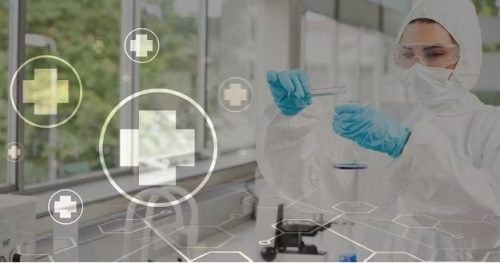
Designing and Engineering of Artificial Microbial Consortia (AMC) for Bioprocess: Application Appro (2024-02-15)
INR ₹2,499.00 INR ₹24,999.00Price range: INR ₹2,499.00 through INR ₹24,999.00
The workshop on Designing and Engineering of Artificial Microbial Consortia (AMC) for Bioprocess: Application Approaches aims to provide a comprehensive understanding of the principles and techniques involved in constructing and optimizing artificial microbial consortia for bioprocessing applications.
Aim
Designing and Engineering of Artificial Microbial Consortia (AMC) for Bioprocess trains participants to design, build, and evaluate engineered multi-microbe systems for biomanufacturing and environmental bioprocesses. Learn consortia design logic, metabolic division of labor, stability control, bioreactor integration, and scale-up considerations to develop robust AMC-driven processes.
Program Objectives
- AMC Basics: why consortia outperform monocultures in many bioprocesses.
- Design Approaches: division of labor, cross-feeding, syntrophy, and modular pathway splitting.
- Engineering Tools: strain selection, genetic circuits (intro), control strategies, and safeguards.
- Stability: population dynamics, cheaters, drift, and strategies to maintain function.
- Bioprocess Integration: bioreactor modes, feeding, monitoring, and control.
- Modeling & Analytics: simple design models, omics-informed decisions (overview).
- Application Focus: chemicals, fuels, enzymes, waste-to-value, wastewater, and bioremediation.
- Capstone: design an AMC bioprocess with KPIs and validation plan.
Program Structure
Module 1: Why Artificial Microbial Consortia?
- Monoculture limits: burden, toxicity, pathway length, and robustness issues.
- AMC advantages: modularity, resilience, substrate flexibility, and improved yields.
- Types of consortia: synthetic vs enriched; stable vs dynamic; co-culture formats.
- Key metrics: yield, titer, productivity, stability, and reproducibility.
Module 2: Consortia Design Principles (Division of Labor)
- Pathway splitting: upstream/downstream modules and intermediate handoff.
- Cross-feeding and syntrophy: nutrient, electron, and metabolite exchange.
- Compartmentalization: separating incompatible reactions or toxic steps.
- Design rules: limiting intermediates, balancing flux, minimizing competition.
Module 3: Selecting Strains, Chassis & Compatibility
- Chassis selection: growth rate, tolerance, secretion, and genetic tractability.
- Compatibility checks: pH, temperature, oxygen demand, media requirements.
- Community interactions: competition, mutualism, commensalism (practical view).
- Experimental planning: inoculation ratios and co-culture setup basics.
Module 4: Engineering & Control Strategies
- Genetic tools overview: promoters, sensors, pathway tuning (intro-level).
- Population control: nutrient limitation, auxotrophies, kill-switch concepts (overview).
- Communication: quorum sensing and inducible control concepts.
- Biocontainment and safety considerations (high-level).
Module 5: Stability, Dynamics & Troubleshooting
- Population drift and dominance: why one strain takes over.
- Cheaters and burden: loss of function over time.
- Stabilization methods: periodic resets, selective pressure, spatial separation.
- Diagnostics: plating/qPCR concepts, metabolite tracking, and simple modeling.
Module 6: Bioprocess Integration (From Flask to Bioreactor)
- Bioreactor basics: batch, fed-batch, continuous; co-culture implications.
- Key controls: pH, DO, agitation, feed strategy, and foam management.
- Sampling plans: biomass, strain ratio, substrate/product, byproducts.
- Scale-up risks: oxygen transfer, mixing, gradients, and reproducibility.
Module 7: Monitoring, Analytics & Modeling (Workflow View)
- How to measure consortium composition: markers and quantification concepts.
- Metabolite analytics: HPLC/GC concepts; pathway bottleneck identification.
- Omics overview: using transcriptomics/metabolomics to guide redesign (intro).
- Simple models: growth/flux balance concepts for design decisions.
Module 8: Applications & Scale-Up Pathways
- Industrial chemicals and biopolymers: modular production concepts.
- Biofuels and waste-to-value: mixed substrates and robustness advantages.
- Environmental applications: wastewater, bioremediation, nutrient removal.
- Translation: QA/QC, contamination control, documentation, and regulatory awareness.
Final Project
- Pick a target product or process (chemical, enzyme, waste-to-value, remediation).
- Design the consortium: strains, roles, exchange metabolites, control strategy.
- Define process setup: reactor mode, feeds, monitoring plan, KPIs (Y/T/P).
- Deliverables: AMC design dossier + workflow diagram + risk/stability checklist + KPI table.
Participant Eligibility
- Students/professionals in Biotechnology, Microbiology, Bioprocess Engineering, Synthetic Biology
- PhD scholars working in metabolic engineering, fermentation, systems biology
- Industry professionals in fermentation, biomanufacturing, environmental biotech
- Researchers interested in co-culture design and scale-up planning
Program Outcomes
- Design AMC systems with clear division of labor and control logic.
- Select compatible strains and plan stable co-culture experiments.
- Integrate AMC into bioprocess workflows and define monitoring KPIs.
- Identify stability risks and plan mitigation strategies.
- Deliver an AMC bioprocess proposal as a portfolio project.
Program Deliverables
- e-LMS Access: lessons, case studies, worksheets.
- AMC Toolkit Pack: strain-role matrix, stability checklist, KPI worksheet, monitoring template.
- Capstone Support: feedback on AMC design and process plan.
- Assessment: certification after assignments + capstone submission.
- e-Certification and e-Marksheet: digital credentials on completion.
Future Career Prospects
- Synthetic Biology / Metabolic Engineering Associate
- Bioprocess Development Associate
- Fermentation R&D Associate
- Systems Biology / Microbiome Engineering Research Assistant
Job Opportunities
- Biomanufacturing & Fermentation: co-culture process development, optimization, scale-up support.
- Industrial Biotech: modular pathway engineering and production analytics.
- Environmental Biotech: wastewater and waste-to-value process teams.
- Academic/Research Labs: consortia engineering, microbiome design, systems biology projects.
| Category | E-LMS, E-LMS+Video, E-LMS+Video+Live Lectures |
|---|
Related products
-

Green Synthesis of Nanoparticles and their Biomedical Applications
INR ₹2,499.00 INR ₹24,999.00Price range: INR ₹2,499.00 through INR ₹24,999.00 Select options This product has multiple variants. The options may be chosen on the product page -

Principles and Applications of Anti-Microbial Coatings
INR ₹2,499.00 INR ₹24,999.00Price range: INR ₹2,499.00 through INR ₹24,999.00 Select options This product has multiple variants. The options may be chosen on the product page -
Protein Structure Prediction and Validation in Structural Biology
INR ₹2,499.00 INR ₹24,999.00Price range: INR ₹2,499.00 through INR ₹24,999.00 Select options This product has multiple variants. The options may be chosen on the product page -
Nanoantibiotics: Applications and Future Trends
INR ₹2,499.00 INR ₹24,999.00Price range: INR ₹2,499.00 through INR ₹24,999.00 Select options This product has multiple variants. The options may be chosen on the product page -
Gene Expression Analysis using R Programming
INR ₹2,499.00 INR ₹24,999.00Price range: INR ₹2,499.00 through INR ₹24,999.00 Select options This product has multiple variants. The options may be chosen on the product page

What You’ll Gain
- Full access to e-LMS
- Publication opportunity
- Self-assessment & final exam
- e-Certificate
Reviews
There are no reviews yet.