
Sale!

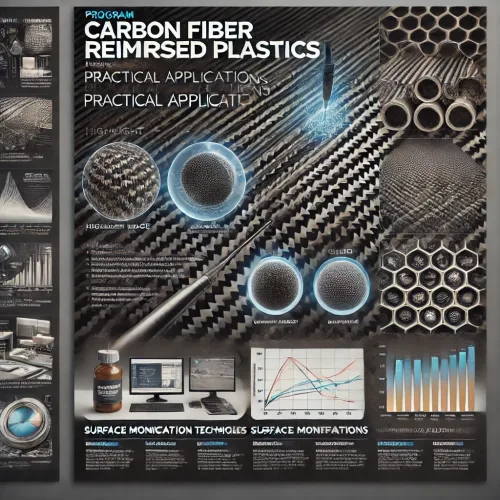
Carbon Fiber Reinforced Plastics Course
Original price was: USD $120.00.USD $59.00Current price is: USD $59.00.
The Carbon Fiber Reinforced Plastics Course provides comprehensive training in the design, fabrication, and application of advanced composite materials. Learn how to optimize material properties, enhance structural performance, and implement lightweight solutions in industries such as aerospace, automotive, and sports engineering.
About the Course
Sustainable Development Through Green Innovations and Renewable Energy is designed for professionals and scholars who want to go beyond theory and build actionable sustainability skills. The course bridges the gap between environmental awareness and implementation-ready expertise.
Participants explore renewable energy technologies, waste and resource management strategies, and innovative green solutions. They learn frameworks used in industry and research to plan and evaluate projects, giving them the ability to propose and execute sustainability interventions across organizations and communities.
“This course emphasizes applied knowledge, hands-on exercises, and real-world cases so learners can confidently translate sustainable development principles into measurable outcomes.”
Why This Topic Matters
The demand for sustainable solutions is growing alongside the climate crisis and energy transition. Economically, the global sustainability market exceeds $12 trillion, encompassing renewable energy deployment, circular economy initiatives, and climate-resilient infrastructure.
Technical complexity remains a barrier: energy systems, urban planning, and industrial processes must be redesigned to reduce carbon footprints while maintaining functionality. Understanding these systems, and knowing how to implement scalable solutions, is a skill set increasingly required in research, policy, and industry.
Interdisciplinary relevance is key: renewable energy engineers, urban planners, ESG analysts, and sustainability consultants all rely on shared knowledge frameworks to collaborate effectively. This course equips learners with that foundation.
What Participants Will Learn
• Explain sustainable development principles and their application to innovation strategies
• Analyze renewable energy systems including solar, wind, hydro, biomass, and geothermal technologies
• Apply life-cycle thinking, carbon footprinting, and efficiency metrics to evaluate sustainability projects
• Identify green technology opportunities across energy, transport, building, and industrial systems
• Plan and propose practical sustainability roadmaps for organizations or communities
• Interpret policy frameworks, funding mechanisms, and project evaluation tools that shape green initiatives
Course Structure / Table of Contents
Module 1 — Sustainable Development & the Green Transition
- Principles of sustainable development and environmental stewardship
- Role of innovation in addressing sustainability challenges
- Overview of UN SDGs and global climate imperatives
Module 2 — Principles of Green Technology
- Definition, scope, and classification of green technologies
- Environmental and operational benefits of sustainable technologies
- Case studies highlighting innovation drivers and adoption strategies
Module 3 — Renewable Energy Systems
- Solar, wind, hydro, biomass, and geothermal energy fundamentals
- Comparative benefits over conventional energy sources
- Integration strategies for grids and communities
Module 4 — Solar Energy Technologies & Applications
- Photovoltaic (PV) principles and thermal solar processes
- System design, installation considerations, and performance assessment
- Case studies of solar deployment in urban and rural contexts
Module 5 — Wind and Hydro Energy Technologies
- Wind turbine design, farm layout, and operational metrics
- Hydropower generation types and efficiency considerations
- Integrating wind and hydro resources into sustainable energy planning
Tools, Techniques, or Platforms Covered
Energy system modeling frameworks
Sustainability assessment and carbon footprinting tools
Life-cycle analysis methods
Case-study and project planning templates
Sustainability assessment and carbon footprinting tools
Life-cycle analysis methods
Case-study and project planning templates
Real-World Applications
Designing low-carbon infrastructure and energy solutions for organizations, developing circular economy projects, supporting ESG reporting, evaluating technology adoption in renewable energy, and informing research agendas and policy design in sustainable development.
Who Should Attend
Sustainability and ESG professionals, engineers transitioning to renewable energy roles, urban planners, researchers, students, and climate consultants seeking applied implementation skills.
Why This Course Stands Out
This program integrates theory, applied tools, and real-world case studies. It emphasizes interdisciplinary integration, practical skill-building, research and industry alignment, and expert guidance from professionals experienced in renewable energy and green innovation projects.
Related products
-

Medical Breakthroughs with Bionanotechnology: Applications and Innovations
USD $59.00 USD $249.00Price range: USD $59.00 through USD $249.00 Select options This product has multiple variants. The options may be chosen on the product page -

Green Nanoparticles: Revolutionizing Drug Delivery Applications
USD $59.00 USD $249.00Price range: USD $59.00 through USD $249.00 Select options This product has multiple variants. The options may be chosen on the product page -

Nanotechnology in Oil Recovery: Revolutionizing Industrial Applications
USD $59.00 USD $249.00Price range: USD $59.00 through USD $249.00 Select options This product has multiple variants. The options may be chosen on the product page -
Carbon Fiber Reinforced Plastics (CFRPs)
USD $1,399.00 Enroll Now -

Nanoscale Sensitization Program
USD $59.00 USD $249.00Price range: USD $59.00 through USD $249.00 Select options This product has multiple variants. The options may be chosen on the product page

What You’ll Gain
- Full access to e-LMS
- Publication opportunity
- Self-assessment & final exam
- e-Certificate
Reviews
There are no reviews yet.