
Sale!

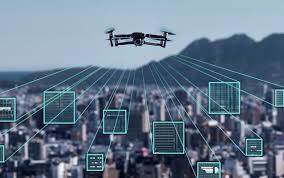
AI for Autonomous Defense Drones & Surveillance
Original price was: INR ₹5,999.00.INR ₹2,999.00Current price is: INR ₹2,999.00.
From policy to pilots: building trustworthy autonomous drones
Course Description
AI for Autonomous Defense Drones & Surveillance is a three-day, hands-on course focused on building ethical, safe, and auditable AI for non-weaponized autonomous drones used in public-good and public-safety missions such as infrastructure inspection, perimeter monitoring, disaster assessment, and search-and-rescue. Participants learn how to translate governance, privacy-by-design, and safety expectations into concrete engineering artifacts—requirements matrices, hazard logs, geofence/abort criteria, and operator procedures. The course covers robust perception and tracking with calibration and out-of-distribution checks, privacy-preserving sensing patterns, human oversight mechanisms, fail-safe communications behaviors, traceable logging, and coordinated multi-drone operations for benign missions. Participants complete the course with reusable templates, test evidence, and operator SOPs suitable for audits and field trials.
Aim
To enable participants to design, test, and operate ethical, safe, and auditable AI for non-weaponized autonomous drones, converting policy and compliance expectations into implementable technical controls and operator procedures.
Course Objectives
Participants will be able to:
-
Translate governance, ethics, and privacy-by-design principles into actionable system requirements and technical controls.
-
Create a policy-aligned requirements matrix, hazard log, and clear geofence, escalation, and abort criteria.
-
Design perception workflows that are robust to dataset shift using calibration and out-of-distribution checks, with explicit false-alarm vs miss trade-offs.
-
Produce evaluation plans and model/system documentation (model cards and system cards) that define safe operating limits and intended use.
-
Implement privacy-preserving sensing patterns, including minimization, redaction, and on-device filtering where appropriate.
-
Design human-on-the-loop supervision patterns, including alerting logic, positive control points, rate limiters, and locked safety modes.
-
Engineer fail-safe behaviors for degraded or lost communications, with traceable logging for audits and incident review.
-
Prepare an assurance package with test evidence and operator SOPs aligned to field trial and audit readiness.
Course Structure
Module 1: Governance, Ethics, and Compliance for Autonomous Aerial Systems
-
Safety and ethics fundamentals: meaningful human control, safety-of-life priorities, privacy and civil-liberties by design
-
Policy alignment into engineering artifacts: risk assessment inputs, auditability, documentation expectations (model/system cards)
-
Data governance: consent and provenance, bias and representativeness, secure storage, access control, retention limits
-
Geofencing and mission constraints: no-fly and no-observe zones, abort conditions, escalation logic, operational boundaries
-
Practical session: create a policy-aware requirements matrix and hazard log (STPA-lite style) for a benign monitoring use case (e.g., infrastructure inspection), including geofence and abort criteria
Module 2: Robust Perception, Tracking, and Privacy-Preserving Sensing
-
Robustness engineering: dataset shift, out-of-distribution detection, calibration, thresholding, and risk trade-offs
-
Evaluation planning: scenario coverage, test sets, failure modes, and operator-facing explanations for trust and traceability
-
Privacy-preserving patterns: minimization, masking/redaction, selective capture, on-device filtering, and secure audit trails
-
Practical session: evaluate a pre-trained detector on a public, non-person dataset; compute calibration/OOD metrics; document results in a model card with limitations and safe-use guidance
Module 3: Human Oversight, Safe Communications, and Multi-Drone Coordination
-
Human-on-the-loop supervision: alert design, positive control, escalation pathways, rate limiters, locked safety modes
-
Communications safety: fail-safe behaviors for degraded or lost links, return-to-safe-state logic, logging and traceability
-
Coordinated multi-drone operations for benign missions (e.g., search-and-rescue): deconfliction, collision avoidance, fair task allocation, geofence compliance
-
Practical session: simulate a multi-drone search-and-rescue scenario with strict geofences and lost-link behaviors; produce an assurance case outline including safety case structure, test evidence list, and operator SOPs
Who Should Enrol
-
ML engineers and developers working on UAV autonomy, perception, and geospatial AI
-
UAS platform teams, QA/safety engineers, and verification/validation professionals
-
Product managers, compliance teams, and public-sector technology practitioners supporting public-good deployments
-
Drone program operators and systems integrators who need audit-ready procedures and safety documentation
Recommended background: Python fundamentals, basic ML (classification/detection), Git/CLI, and clear technical documentation practices. Familiarity with ROS/ArduPilot/simulation tools and safety methods (STPA/FMEA) is helpful but not required. Participation is intended for non-weaponized, public-good use cases with privacy-by-design and human oversight.
Related products
-

Python for Data Science Course
INR ₹2,499.00 INR ₹24,999.00Price range: INR ₹2,499.00 through INR ₹24,999.00 Select options This product has multiple variants. The options may be chosen on the product page -

Tableau for Business Intelligence Course
INR ₹2,499.00 INR ₹24,999.00Price range: INR ₹2,499.00 through INR ₹24,999.00 Select options This product has multiple variants. The options may be chosen on the product page -

AI and Digital Technologies: Pioneering Healthcare Transformation Course
INR ₹2,499.00 INR ₹24,999.00Price range: INR ₹2,499.00 through INR ₹24,999.00 Select options This product has multiple variants. The options may be chosen on the product page -

Scientific Paper Writing: Tools and AI for Efficient and Effective Research Communication
INR ₹2,499.00 INR ₹24,999.00Price range: INR ₹2,499.00 through INR ₹24,999.00 Select options This product has multiple variants. The options may be chosen on the product page -

AI Ethics and Governance in Healthcare Course
INR ₹2,499.00 INR ₹24,999.00Price range: INR ₹2,499.00 through INR ₹24,999.00 Select options This product has multiple variants. The options may be chosen on the product page

What You’ll Gain
- Full access to e-LMS
- Publication opportunity
- Self-assessment & final exam
- e-Certificate
Reviews
There are no reviews yet.