
Sale!

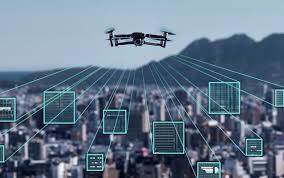
AI for Autonomous Defense Drones & Surveillance
Original price was: INR ₹11,000.00.INR ₹5,499.00Current price is: INR ₹5,499.00.
The use of autonomous drones in defense is revolutionizing surveillance and reconnaissance missions. By integrating AI, drones can operate independently, making critical decisions in real-time to ensure mission success. This course will equip you with the knowledge to design, deploy, and optimize AI-driven defense drones for surveillance and tactical operations.
About the Course
In an era of rapidly evolving defense technologies, autonomous drones have emerged as essential assets for surveillance and reconnaissance. This advanced course covers the practical application of AI in creating autonomous Unmanned Aerial Vehicles (UAVs) capable of gathering intelligence and performing real-time analysis in complex environments.
Participants will explore the technical architecture of machine learning, computer vision, and autonomous decision-making algorithms. You will gain hands-on experience designing systems that enhance operational autonomy and mission success in high-stakes defense scenarios.
“The integration of AI in defense is no longer futuristic—it is happening today. This course bridges the gap between traditional robotics and intelligent, autonomous mission execution.”
The program integrates:
- Real-time decision-making and reinforcement learning
- Computer vision for threat detection and tracking
- Multi-sensor data fusion (LiDAR, IR, Cameras)
- Autonomous navigation and collision avoidance
- Ethical governance and international defense regulations
Why This Topic Matters
AI-powered drones are critical for modern defense due to:
- Risk Mitigation: Reducing human exposure in high-threat environments.
- Swarm Intelligence: Managing coordinated drone attacks or surveillance grids.
- Real-time Analytics: Immediate processing of reconnaissance data at the edge.
- Operational Precision: Enhanced accuracy in target identification and monitoring.
What Participants Will Learn
• Implement ML models for threat recognition
• Integrate LiDAR and IR sensor data
• Design autonomous mission execution loops
• Master UAV navigation and route optimization
• Use OpenCV for real-time target tracking
• Evaluate swarm intelligence architectures
• Navigate ethical and security regulations
Course Structure / Table of Contents
Module 1 — Foundations of Defense Drones
- Overview of drone systems and military tech stacks
- AI applications in reconnaissance and surveillance
- UAV architecture and flight controllers
Module 2 — AI Algorithms & Decision-Making
- Reinforcement learning for autonomous flight
- Deep learning for real-time object detection
- Decision-making loops in contested environments
Module 3 — Perception & Surveillance Systems
- LiDAR, Infrared, and Multi-spectral sensor fusion
- Computer vision for target identification and tracking
- Processing data at the tactical edge
Module 4 — Swarms & Emerging Tech
- Principles of swarm intelligence and coordination
- Advanced data fusion and strategic defense
- Ethical, privacy, and international regulations
Capstone — Final Applied Project
- Design an AI-driven drone for a surveillance mission
- Integrate machine learning models in a simulator
- Test system performance and collision avoidance metrics
Tools & Platforms Covered
Python / C++
TensorFlow / Keras
OpenCV
ROS & Gazebo
PX4 / ArduPilot
UAV Simulators
TensorFlow / Keras
OpenCV
ROS & Gazebo
PX4 / ArduPilot
UAV Simulators
Who Should Attend
This course is ideal for professionals at the intersection of AI and Aerospace:
- Defense Engineers working in aerospace or military tech
- AI Researchers focused on robotics and autonomous systems
- Military Professionals involved in strategic technology planning
- Security Innovators developing next-gen surveillance systems
Prerequisites: Basic programming (Python/C++) and machine learning fundamentals are expected. Familiarity with robotics is helpful.
Frequently Asked Questions
Do I need prior experience in drone technology?
While helpful, it is not required. A basic understanding of programming and machine learning is sufficient to begin the course.
Will I get hands-on experience?
Yes. You will work with industry-standard simulators like Gazebo and ROS to design and test your autonomous models.
Is this applicable to civilian sectors?
Absolutely. The skills in autonomous navigation and object detection are highly relevant to disaster response, search and rescue, and commercial security.
Related products
-

AI-Driven Cybersecurity Course
INR ₹2,499.00 INR ₹24,999.00Price range: INR ₹2,499.00 through INR ₹24,999.00 Select options This product has multiple variants. The options may be chosen on the product page -
Sale!

AI for Risk Management in BFSI: Navigating the Future of Finance Course
Original price was: INR ₹11,000.00.INR ₹5,499.00Current price is: INR ₹5,499.00. Add to cart -
Sale!

AI Ethics and Governance in Healthcare Course
Original price was: INR ₹11,000.00.INR ₹5,499.00Current price is: INR ₹5,499.00. Add to cart -

AI for Business Automation: Streamlining Operations through Intelligent Solutions Course
INR ₹2,499.00 INR ₹24,999.00Price range: INR ₹2,499.00 through INR ₹24,999.00 Select options This product has multiple variants. The options may be chosen on the product page -

Quantum Machine Learning: Harnessing Quantum Computing for AI Course
INR ₹2,499.00 INR ₹24,999.00Price range: INR ₹2,499.00 through INR ₹24,999.00 Select options This product has multiple variants. The options may be chosen on the product page

What You’ll Gain
- Full access to e-LMS
- Publication opportunity
- Self-assessment & final exam
- e-Certificate
Reviews
There are no reviews yet.