ThoughtStream: Neural AI Engineering from Signal to Deployment
Decoding the Mind: Master P300 Signal Analytics for Next-Gen Brain-Computer Interfaces
About This Course
This workshop introduces participants to advanced Neuro-AI, EEG signal processing, Brain-Computer Interface systems, synthetic neural data generation, transformer-based decoding, and real-time edge deployment. Participants will learn how to preprocess EEG data, apply generative AI for augmentation, build neural decoding models, and develop closed-loop BCI applications using tools such as MNE-Python, PyTorch, EEG-GANs, ONNX Runtime, TensorFlow Lite, Streamlit, and WebSockets.
Aim
The aim of this workshop is to equip participants with advanced theoretical and practical knowledge of Neuro-AI systems by enabling them to process EEG signals, apply generative AI for neural data augmentation, design transformer-based decoding models, and deploy real-time closed-loop BCI applications on cloud and edge-compatible platforms.
Workshop Objectives
- Introduce modern Neuro-AI and BCI architectures.
- Explain EEG preprocessing, filtering, and artifact removal techniques.
- Demonstrate synthetic EEG data generation using EEG-GANs.
- Explore EEGNet, TCNs, and transformer-based neural decoding.
- Build understanding of motor imagery and imagined speech decoding concepts.
- Train participants in real-time closed-loop BCI system development.
- Introduce edge deployment using ONNX Runtime and TensorFlow Lite.
- Highlight neuro-privacy, BCI UX, and ethical considerations.
Workshop Structure
📅 Day 1: Advanced Signal Architectures & Synthetic Data Augmentation
- The Modern Neuro-AI Landscape: Moving past legacy P300 matrices to continuous motor imagery and imagined speech decoding using modern EEG arrays such as OpenBCI, Emotiv, Kernel, and Neuralink.
- High-Performance Preprocessing & Filtering: Stream handling via MNE-Python. Implementing Common Spatial Patterns, Surface Laplacian derivations, and real-time Independent Component Analysis for artifact suppression.
- Generative AI for Neural Augmentation: Architecting Generative Adversarial Networks, EEG-GANs, and conditioning latent diffusion models to synthesize authentic multi-channel training datasets.
💻 Hands-on Lab
- Code an automated Google Colab pipeline that ingests raw EEG data, removes artifacts via ICA, and uses an EEG-GAN to generate 5,000 synthetic high-fidelity training trials.
📅 Day 2: Foundational Neuro-Transformers & Neural Decoding
- Deep Learning Paradigms for Brain Data: Mapping long-range neural phase synchronization using spatial-temporal matrix embeddings with EEGNet and Temporal Convolutional Networks.
- Designing Foundational Neural Transformers: Building an EEG-Transformer with Multi-Head Self-Attention layers in PyTorch. Implementing masked signal pre-training models using large-scale public data registries.
- Speech & Intention Decoding: Algorithmic phonetic mapping from continuous sensory-motor cortices and classification of imagined movements. Utilizing cross-subject transfer learning for zero-shot calibration.
💻 Hands-on Lab
- Construct an end-to-end Neural Transformer in PyTorch. Load a multi-subject motor imagery dataset, embed spatial-temporal tensors, apply self-attention blocks, and evaluate cross-subject accuracy.
📅 Day 3: Real-Time Closed-Loop Systems & Production Edge Deployment
- Low-Latency Closed-Loop Architecture: Setting up Lab Streaming Layer configurations for synchronous live ingestion. Compressing inference windows down to sub-50ms for seamless feedback loops.
- Edge Computing & TinyML for Wearables: Model quantization, knowledge distillation, and structural pruning to convert PyTorch models into lightweight ONNX Runtime and TensorFlow Lite architectures for low-power edge chips.
- BCI UX Design & Neuro-Privacy: Triggering actions inside VR, robotics, and web interfaces. Designing adaptive systems based on real-time cognitive workload metrics and hardening biophysical logs against privacy vulnerabilities.
💻 Hands-on Lab
- Develop and launch a full-stack, real-time web application using Streamlit and WebSockets that simulates a live brainwave feed, decodes intentional thoughts via an edge Transformer, and executes instant UI controls.
Who Should Enrol?
- Researchers in neuroscience and cognitive science
- Academicians and faculty in BCI and neural signal analysis
- Industry professionals in healthcare, neurotech, and AI-based assistive systems
- Data scientists and AI practitioners working with EEG/BCI data
- Graduate/postgraduate students in neuroscience, biomedical engineering, or data science
Important Dates
Registration Ends
June 13, 2026
IST 4:30 PM IST
Workshop Dates
June 13, 2026 – June 15, 2026
IST 5:30 PM IST
Workshop Outcomes
- Understand modern EEG-based Neuro-AI and BCI workflows.
- Preprocess and clean EEG signals using MNE-Python and ICA.
- Apply spatial filtering and feature extraction methods.
- Generate synthetic EEG training data using generative AI.
- Build basic transformer-based neural decoding models in PyTorch.
- Evaluate cross-subject motor imagery classification models.
- Develop simulated real-time BCI applications using Streamlit and WebSockets.
- Optimize models for wearable and edge-based deployment.
Meet Your Mentor(s)

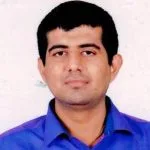
DR. HARISHCHANDER ANANDARAM
Assistant Professor
Centre for Excellence in Computational Engineering and Networking
Next: Fees →
Recording fee
Participants in India
₹2,499
Participants outside India
$50
- All session recordings
- Study material
- Certificate after completion
- 1-year access
The live sessions of this workshop are over, so the live fees no longer apply. The recordings are being uploaded. They appear in your dashboard as soon as they are ready, and we will e-mail you then.
Frequently asked questions
Will I get the recording?
Yes. Paid participants get the session recordings and study material in their NanoSchool dashboard (My registrations → Recorded Lectures / Study Material).
What if I miss a live session?
Watch the recording in your dashboard and send your questions to the mentor through the support desk.
Do I get a certificate?
Yes, an e-certificate of participation after the workshop, with a QR code anyone can verify and an "Add to LinkedIn" button.
Which fee category applies to me?
Choose the category that matches your current role: Student, Ph.D. Scholar / Researcher, Academician / Faculty or Industry Professional.
How can I pay?
By card, UPI or PayPal on the payment page; international bank transfer is also available there.
What is the refund policy?
See our Returns, Refunds & Cancellation policy: Returns, Refunds & Cancellation policy
Registration open
More upcoming workshops
Live, mentor-led and certified. Dates and times in IST.
Agentic AI Engineering: Planning, Tool Use & Multi-Agent Orchestration
- Dates
- 9–11 Nov 2026
- Time
- 5:30 PM IST
- Duration
- 3 Days
- Level
- Moderate
- Student₹2,499
- Ph.D. Scholar / Researcher₹3,499
- Academician / Faculty₹4,499
- Industry Professional₹5,499
Environmental Exposomics in R: PFAS, Chemical Mixtures and Metabolomics
- Dates
- 12–14 Nov 2026
- Time
- 5:30 PM IST
- Duration
- 3 Days
- Level
- Moderate
- Student₹2,499
- Ph.D. Scholar / Researcher₹3,499
- Academician / Faculty₹4,499
- Industry Professional₹6,499
Plant Metabolomics: Bioactive Compounds, Pathway Analysis & Stress Biomarkers
- Dates
- 12–14 Nov 2026
- Time
- 5:30 PM IST
- Duration
- 3 Days
- Level
- Moderate
- Student₹3,000
- Ph.D. Scholar / Researcher₹4,000
- Academician / Faculty₹5,000
- Industry Professional₹7,000
Digital Twins: Predictive Modeling for Dynamic Industrial Processes
- Dates
- 12–14 Nov 2026
- Time
- 5:30 PM IST
- Duration
- 3 Days
- Level
- Moderate
- Student₹2,499
- Ph.D. Scholar / Researcher₹3,499
- Academician / Faculty₹4,499
- Industry Professional₹6,499
Digital Fraud Forensics: Transaction Anomaly Detection, Phishing Threat Analysis & Machine Learning
- Dates
- 16–18 Nov 2026
- Time
- 7:30 PM IST
- Duration
- 3 Days
- Level
- Advanced
- Student₹2,999
- Ph.D. Scholar / Researcher₹3,999
- Academician / Faculty₹4,999
- Industry Professional₹6,999
AI-Driven Polymer Composites: Microstructure Analysis, Property Prediction & Inverse Design
- Dates
- 16–18 Nov 2026
- Time
- 5:30 PM IST
- Duration
- 3 Days
- Level
- Advanced
- Student₹2,999
- Ph.D. Scholar / Researcher₹3,999
- Academician / Faculty₹4,999
- Industry Professional₹5,999