
Advanced Data Analysis and Predictive Modeling with Machine Learning Using Python
Turn Data into Predictions—Build Powerful ML Models with Python
About This Course
Modern research and industry generate complex, high-dimensional datasets that demand more than basic analytics. Advanced data analysis combines exploratory analysis, statistical rigor, and machine learning to uncover patterns, forecast outcomes, and support strategic decisions. Python has become the de facto ecosystem for this work due to its mature libraries and scalable workflows.
This workshop provides hands-on training with Python-based ML pipelines—from EDA and feature engineering to model selection, tuning, and evaluation. Participants will work with real datasets to build regression, classification, and ensemble models, apply cross-validation, and interpret results using explainability techniques. Sessions focus on practical, end-to-end workflows suitable for publications, dashboards, and deployment.
Aim
This workshop aims to build advanced capabilities in data analysis and predictive modeling using machine learning with Python. Participants will learn to transform raw data into reliable predictions through robust preprocessing, feature engineering, and model optimization. The program emphasizes validation, interpretability, and reproducible pipelines. It is designed for research and industry use-cases requiring data-driven decision-making.
Workshop Objectives
- Perform advanced EDA and feature engineering.
- Build and optimize regression, classification, and ensemble models.
- Apply cross-validation and hyperparameter tuning.
- Interpret models using explainability tools.
- Create reproducible, end-to-end ML pipelines.
Workshop Structure
Day 1: Introduction to TOC Data Analysis and Python Basics
- Significance, sources, and impact of Total Organic Carbon in various industries (e.g., environmental monitoring, water treatment)
- Overview of Python libraries (Pandas, NumPy), data manipulation, and preprocessing techniques
- Reading data from CSV, Excel, and JSON formats, handling missing values, and basic data exploration
- Tools: Pandas, NumPy, Matplotlib & Seaborn,Jupyter Notebook
- Mini Task: Load a TOC dataset, clean it, and perform basic descriptive analysis (mean, median, standard deviation)
Day 2: Data Exploration, Visualization, and Feature Engineering
- Visualizing TOC data with Matplotlib, seaborn, and understanding distribution patterns
- Identifying useful features, scaling, and transforming TOC data for machine learning models
- Understanding correlations in TOC data and its relationship with other variables
- Tools: Scikit-learn: Pandas Profiling, Matplotlib & Seaborn
- Mini Task: Perform EDA on a TOC dataset, visualize key trends, and identify relevant features for prediction
Day 3: Machine Learning Models for TOC Prediction
- Overview of supervised learning algorithms (Linear Regression, Decision Trees, Random Forests)
- Splitting data into training and testing sets, evaluating model performance (accuracy, RMSE)
- Using Scikit-learn to build and train a machine learning model on TOC data
- Hyperparameter tuning and model evaluation using cross-validation
- Tools: Scikit-learn, GridSearchCV & RandomizedSearchCV: XGBoost / LightGBM, Matplotlib & Seaborn
- Mini Task: Build a machine learning model to predict TOC values and evaluate its performance
Who Should Enrol?
- Doctoral Scholars & Researchers: PhD candidates seeking to integrate computational workflows into their molecular research.
- Postdoctoral Fellows: Early-career scientists aiming to enhance their data-driven publication profile.
- University Faculty: Professors and HODs interested in modern bioinformatics pedagogy and tool mastery.
- Industry Scientists: R&D professionals from the Biotechnology and Pharmaceutical sectors transitioning to genomic-driven discovery.
- Postgraduate Students: Final-year PG students looking for specialized research-grade exposure beyond standard curricula.
Important Dates
Registration Ends
02/02/2026
IST 07:00 PM
Workshop Dates
02/02/2026 – 02/04/2026
IST 08:00 PM
Workshop Outcomes
Participants will be able to analyze complex datasets, build validated predictive models, interpret results responsibly, and deliver reproducible ML workflows suitable for research or industry deployment.
Meet Your Mentor(s)
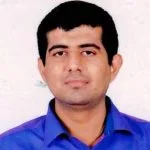
DR. HARISHCHANDER ANANDARAM
Dr Harishchander Anandaram is an Assistant Professor at Centre for Excellence in Computational Engineering and Networking, Amrita Vishwa Vidyapeetham, Coimbatore, Tamil Nadu, India. He received his Ph.D. Degree in Bioengineering from Sathyabama Institute of Science and Technology, Chennai, in 2020. . . .
Fee Structure
Student Fee
₹1799 | $70
Ph.D. Scholar / Researcher Fee
₹2799 | $80
Academician / Faculty Fee
₹3799 | $94
Industry Professional Fee
₹4799 | $110
What You’ll Gain
- Live & recorded sessions
- e-Certificate upon completion
- Post-workshop query support
- Hands-on learning experience
Join Our Hall of Fame!
Take your research to the next level with NanoSchool.
Publication Opportunity
Get published in a prestigious open-access journal.
Centre of Excellence
Become part of an elite research community.
Networking & Learning
Connect with global researchers and mentors.
Global Recognition
Worth ₹20,000 / $1,000 in academic value.
View All Feedbacks →