
To equip participants with the knowledge and practical skills to use AI and machine learning for analyzing, modeling, and predicting degradation in energy storage systems, helping improve battery health assessment, reliability, and lifetime prediction.
Workshop Registration End Date :22 Sep 2026

Virtual Workshop
AI for Degradation Modeling in Energy Storage Systems
Predicting Battery Lifetimes with the Power of Artificial Intelligence
Skills you will gain:
About Workshop:
The workshop “AI for Degradation Modeling in Energy Storage Systems” explores how AI and machine learning can be used to understand, predict, and model degradation in batteries and other energy storage devices. It covers key concepts such as battery aging, SOH, RUL, predictive analytics, and AI-driven prognostics, with insights inspired by recent MDPI research trends. Designed for researchers, academicians, and industry professionals, the workshop also includes hands-on sessions in Google Colab/Jupyter Notebook to help participants apply intelligent modeling techniques to real degradation data.
Aim:
Workshop Objectives:
-
To introduce the fundamentals of degradation mechanisms in energy storage systems.
-
To understand key battery health indicators such as SOC, SOH, and RUL.
-
To explore AI and machine learning techniques for degradation prediction.
-
To develop skills in analyzing battery datasets and building predictive models.
-
To provide hands-on experience using Python in Google Colab/Jupyter Notebook for energy storage data analysis.
What you will learn?
📅Day 1: Foundations of Energy Storage Degradation
- Overview of energy storage systems: Li-ion batteries, supercapacitors, grid storage
- Key degradation mechanisms: capacity fade, resistance growth, thermal effects
- Core health indicators: SOC, SOH, RUL
- Data-driven vs physics-based degradation modeling
- Research trends in battery degradation analytics
Hands-on: Exploratory analysis of battery degradation data in Google Colab (visualizing charge-discharge cycles, capacity fade, and SOH trends)
📅Day 2: Machine Learning for Degradation Prediction
- Feature extraction from voltage, current, temperature, and cycle data
- ML models for degradation prediction: Linear Regression, Random Forest, SVM
- Battery State of Health prediction workflows
- Model evaluation using MAE, RMSE, and validation strategies
- Recent AI trends in battery prognostics
Hands-on: Build a machine learning model to predict battery SOH using Python and Scikit-learn
📅Day 3: Advanced AI for Prognostics and Smart Battery Systems
- Deep learning for degradation modeling: LSTM and time-series forecasting
- Remaining Useful Life prediction
- Physics-informed AI for battery health estimation
- AI in Battery Management Systems and predictive maintenance
- Emerging trends: digital twins, smart diagnostics, and grid-scale storage analytics
Hands-on: Develop a Colab-based LSTM model for battery Remaining Useful Life prediction
Mentor Profile
Fee Plan
StudentINR 2499/- OR USD 80
Ph.D. Scholar / ResearcherINR 3499/- OR USD 90
Academician / FacultyINR 4499/- OR USD 90
Industry ProfessionalINR 6499/- OR USD 1120
Important Dates
Registration Ends
22 Sep 2026 Indian Standard Timing 4:30 IST
22 Sep 2026 Indian Standard Timing 4:30 IST
Workshop Dates
22 Sep 2026 to 24 Sep 2026 Indian Standard Timing 5:30 PM IST
22 Sep 2026 to 24 Sep 2026 Indian Standard Timing 5:30 PM IST
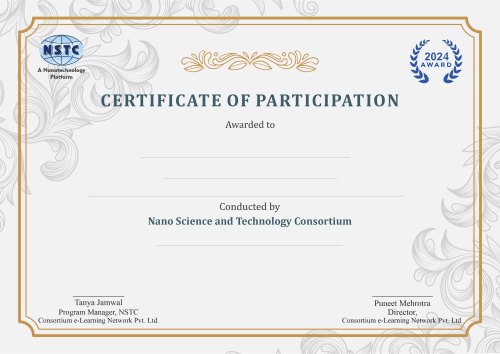
Get an e-Certificate of Participation!
Intended For :
-
Students interested in renewable energy, sustainability, and energy analytics
-
PhD scholars, researchers, and academicians in energy, environment, and climate studies
-
Industry professionals in renewables, utilities, grid systems, and decarbonization
-
Policy analysts and government professionals working on energy transition strategies
-
Data scientists and AI/ML practitioners applying analytics in the energy sector
-
Entrepreneurs and climate-tech innovators building energy-focused solutions
Career Supporting Skills
Workshop Outcomes