

Skills you will gain:
About Program:
An advanced professional workshop on protective coatings and corrosion engineering, equipping participants with cutting-edge techniques, industry best practices, and practical strategies to enhance material durability and performance.
Aim: To equip professionals and researchers with in-depth knowledge and practical skills in coatings and corrosion engineering, enabling them to design, implement, and optimize surface protection strategies for enhanced material longevity and industrial performance.
Program Objectives:
Objectives of the Workshop:
-
Provide a comprehensive understanding of corrosion mechanisms and their impact on materials.
-
Introduce advanced coating technologies and surface protection techniques.
-
Demonstrate practical methods for corrosion prevention and control in industrial applications.
-
Develop skills for evaluating and selecting appropriate protective coatings.
-
Foster problem-solving approaches for real-world corrosion challenges in engineering projects.
-
Encourage knowledge exchange between researchers, engineers, and industry professionals on best practices.
What you will learn?
📅 Day 1: Smart Materials & Autonomous Repair
Focus: Exploring extrinsic and intrinsic self-healing mechanisms (Epoxy-vitrimers, microcapsules)
- Bio-inspired protection: Moving from static barriers to “active immune” responses.
- Mechanisms of pH-triggered and rupture-triggered inhibitor release.
- Review of 2025 MDPI research on “Sustainable Bio-derived Epoxy Vitrimers.”
Hands-on (Google Colab)
Task: Kinetics of Healing Simulation. Use Python to model the diffusion of a healing agent into a micro-crack and calculate the theoretical recovery of barrier properties over time.
📅 Day 2: Advanced Nanocoatings & Surface Engineering
Focus: Leveraging 2D materials (h-BN, Graphene) and superhydrophobic structures
- The “Tortuous Path” theory: How 2D nanomaterials physically block electrolyte penetration.
- Superhydrophobicity: Trapping air layers (the Cassie-Baxter state) to minimize surface contact.
- Latest trends from MDPI Nanomaterials on ternary nanocomposites (BN-PDA-CeO2).
Hands-on (Google Colab)
Task: EIS Equivalent Circuit Fitting. Use the i.py library to fit experimental data to Randles circuits and calculate Coating Resistance (Rc) and Constant Phase Elements (CPE).
📅 Day 3: The AI Revolution in Corrosion Engineering
Focus: Machine Learning (ML) for failure prediction and material discovery
- Data-driven design: Using Random Forest and XGBoost to predict atmospheric corrosion rates.
- Computer Vision: Deep learning (CNNs) for automated corrosion detection in offshore structures.
- MDPI Case Study: “Virtual Corrosion Sensors” for industrial cooling water pipelines.
Hands-on (Google Colab)
Task: ML Corrosion Predictor. Build a simple Regression model (using scikit-learn) to predict the corrosion rate based on a synthetic MDPI-inspired dataset of environmental variables.
Mentor Profile
Fee Plan
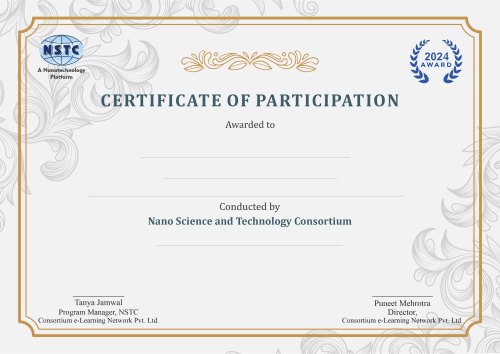
Get an e-Certificate of Participation!
Intended For :
-
Materials scientists, engineers, and R&D professionals.
-
Researchers/Ph.D. scholars in self-healing materials, nanocoatings, or surface engineering.
-
Industrial professionals in aerospace, automotive, marine, or infrastructure.
-
Data scientists and ML engineers applying AI for corrosion prediction.
-
Academicians seeking hands-on experience with simulations and modeling.
Career Supporting Skills
Program Outcomes
-
Gain a clear understanding of corrosion processes and their effects on different materials.
-
Acquire practical knowledge of advanced coatings and surface protection techniques.
-
Develop the ability to design and implement effective corrosion prevention strategies.
-
Learn to evaluate and select suitable coatings for industrial and engineering applications.
-
Enhance problem-solving skills to address real-world corrosion challenges.
-
Network and collaborate with peers and experts in coatings and corrosion