
New Year Offer End Date: 30th April 2024

Program
Physics-Informed Neural Networks (PINNs)
Physics-Guided AI for Faster, Data-Efficient Modeling
Skills you will gain:
About Program:
Learn how Physics-Informed Neural Networks (PINNs) combine data with physics-based ODE/PDE constraints to build accurate, data-efficient models for simulation, inverse problems, and parameter estimation.
Aim: To enable participants to build Physics-Informed Neural Networks (PINNs) that fuse data with physics constraints to solve ODE/PDE-driven modeling and inverse problems.
Program Objectives:
What you will learn?
📘 Day 1 — Foundations of PINNs and Basic Implementation
- Focus: Understanding the fundamentals of Physics-Informed Neural Networks (PINNs) and implementing a basic model
- Key Topics:
- Introduction to Scientific Machine Learning and the limitations of data-only models
- Physics-Informed Neural Networks (PINNs): concept, motivation, and architecture
- Governing equations: ODEs, PDEs, boundary conditions, and initial conditions
- Loss formulation: data loss and physics residual loss
- Training workflow and optimization challenges
- Hands-on (Google Colab):
- Task: Build a simple neural network in Python, solve a basic ODE using PINNs, and compare predicted results with the analytical solution
⚙️ Day 2 — Solving PDEs and Advanced PINN Techniques
- Focus: Extending PINNs to partial differential equations and improving model convergence
- Key Topics:
- Extending PINNs from ODEs to PDE problems
- Automatic differentiation for computing derivatives
- Applying boundary and initial conditions effectively
- Training stability, convergence issues, and scaling strategies
- Introduction to inverse problems
- Hands-on (Google Colab):
- Task: Implement a PINN to solve a simple PDE, apply boundary conditions, compute residual errors, and analyze training behavior
🌐 Day 3 — Inverse Problems, Parameter Estimation, and Applications
- Focus: Applying PINNs to inverse problems, sparse-data learning, and real-world scientific applications
- Key Topics:
- Parameter estimation and inverse problems using PINNs
- Data-efficient learning with sparse measurements
- Applications in engineering, fluid mechanics, materials, and physics
- Model validation and physical consistency checks
- Limitations and future directions of PINNs
- Hands-on (Google Colab):
- Task: Estimate an unknown parameter in a differential equation, train a PINN with limited synthetic data, and evaluate prediction accuracy
Mentor Profile
Fee Plan
INR 1999 /- OR USD 50
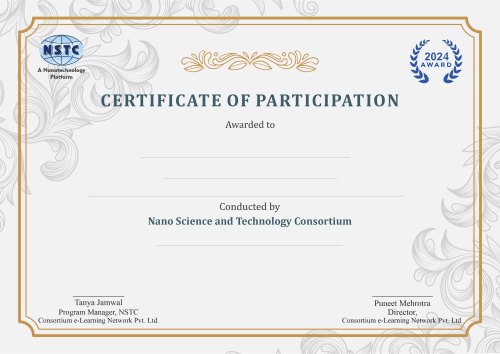
Get an e-Certificate of Participation!
Intended For :
- Undergraduate and postgraduate students in Engineering, Physics, Mathematics, or related fields.
- Ph.D. scholars and researchers working on computational modeling or scientific simulations.
- Faculty members and academicians interested in scientific machine learning.
- Industry professionals in AI/ML, data science, or engineering domains.
- Participants with basic knowledge of Python and differential equations.
Career Supporting Skills
Program Outcomes
- Build a strong foundation in PINNs and scientific machine learning.
- Formulate physics constraints using ODEs/PDEs and boundary/initial conditions.
- Train PINNs for forward modeling (solution prediction) and inverse problems.
- Perform parameter estimation and system identification using limited data.
- Implement PINNs workflows in Python using modern deep learning frameworks.
- Interpret results, debug training issues, and validate physical consistency.