

Hands-On Single-Cell & Spatial Omics with AI
Decode Cellular Landscapes with AI—From Single Cells to Spatial Biology
Skills you will gain:
About Program:
Single-cell omics has transformed biology by enabling researchers to study gene expression, chromatin states, and cellular heterogeneity at unprecedented resolution. Technologies such as scRNA-seq, scATAC-seq, and multi-modal single-cell profiling are now essential in cancer research, immunology, developmental biology, and regenerative medicine. Alongside this, spatial omics adds a new dimension by preserving tissue architecture, allowing scientists to map gene expression patterns directly within biological context.
AI is becoming indispensable for interpreting the massive, high-dimensional data generated from single-cell and spatial platforms. This workshop introduces machine learning methods for clustering, cell-type annotation, trajectory inference, spatial domain detection, and biomarker discovery. Participants will work with real datasets using Python-based tools, gaining practical skills in AI-driven single-cell analytics for cutting-edge biomedical research.
Aim:
This workshop aims to train participants in analyzing single-cell and spatial omics datasets using modern AI and machine learning tools. It focuses on extracting cell-type signatures, understanding tissue microenvironments, and identifying biomarkers at single-cell resolution. Participants will gain hands-on dry-lab experience with computational pipelines for scRNA-seq and spatial transcriptomics. The program bridges omics biology, AI analytics, and precision medicine applications.
Program Objectives:
- Understand the fundamentals of single-cell and spatial omics technologies.
- Learn AI-driven workflows for clustering, annotation, and trajectory modeling.
- Apply machine learning to identify cell states and tissue niches.
- Explore biomarker discovery and therapeutic target identification.
- Gain hands-on experience with real scRNA-seq and spatial datasets.
What you will learn?
Day 1 — Single-Cell + Spatial Omics foundations (and where AI/ML actually helps)
- scRNA-seq essentials: count matrix logic, UMI counts, dropout, noise vs biology
- QC that makes or breaks results: mitochondrial %, genes/cell, cells/gene, doublets (concept)
- Normalization + batch effects: why they happen, what “integration” really means
- Clustering & embeddings: PCA → neighbors → UMAP; what clusters mean (and don’t)
- Spatial transcriptomics basics: spot vs cell resolution, tissue images, spatial domains
- AI/ML framing: clustering, label transfer, automated cell annotation, spatial domain detection
Day 2 — Hands-on Lab 1: End-to-End scRNA-seq pipeline + AI-assisted cell annotation
Hands-on build:
- QC + filtering: thresholds, remove low-quality cells, optional doublet detection workflow
- Normalize + highly variable genes + scaling (clean, reproducible settings)
- Dimensionality reduction + clustering: PCA → neighbors → UMAP → Leiden clusters
- Marker discovery: top genes per cluster + sanity checks
- AI/ML-assisted annotation: marker-based labeling + automated/reference label transfer (practical)
- AI/ML-assisted annotation: confidence scoring: “high/medium/low” label confidence
Day 3 — Hands-on Lab 2: Spatial transcriptomics + single-cell → tissue mapping (integration)
Hands-on build:
- Load spatial dataset + tissue image; spatial QC + normalization
- Spatial domains with ML: identify regions/domains and visualize on tissue
- Map scRNA cell types onto spatial spots/regions (label transfer / deconvolution style workflow)
- Spatial markers + microenvironment insights: region-specific genes + “who sits where”
- Build a compact figure panel: tissue map + domains + 2–3 key genes + cell-type overlay
Mentor Profile
Fee Plan
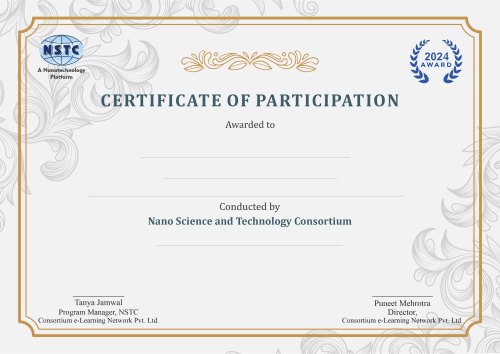
Get an e-Certificate of Participation!
Intended For :
- Doctoral Scholars & Researchers: PhD candidates seeking to integrate computational workflows into their molecular research.
- Postdoctoral Fellows: Early-career scientists aiming to enhance their data-driven publication profile.
- University Faculty: Professors and HODs interested in modern bioinformatics pedagogy and tool mastery.
- Industry Scientists: R&D professionals from the Biotechnology and Pharmaceutical sectors transitioning to genomic-driven discovery.
- Postgraduate Students: Final-year PG students looking for specialized research-grade exposure beyond standard curricula.
Career Supporting Skills
Program Outcomes
Participants will be able to:
- Analyze single-cell and spatial transcriptomics datasets using AI tools.
- Identify cell populations, states, and tissue-specific spatial niches.
- Perform trajectory and microenvironment analysis for disease insights.
- Apply ML methods for biomarker and target discovery.
- Build reproducible pipelines for modern omics research.