

Transformer Models for Non-Invasive BCI & Neural Signal Decoding
Decode Brainwaves with Transformers: From Raw EEG to Real-Time BCI Intelligence.
Skills you will gain:
About Program:
This intensive 3-day workshop explores the cutting edge of AI-driven brain–computer interfaces, focusing on Transformer architectures for EEG motor imagery decoding. Participants will learn how to clean and structure noisy brainwave signals using MNE-Python, translate attention-based Transformer models from NLP into time-series neural decoding, and train deep learning pipelines that classify left vs right motor imagery commands.
Designed for researchers, neuroscientists, and AI practitioners, the workshop blends neurophysiology with modern deep learning—delivering a complete workflow from raw EEG recordings to interpretable attention-based BCI outputs.
Aim: To equip participants with hands-on skills to preprocess EEG data, build Transformer-based deep learning models, and simulate motor imagery brain–computer interface (BCI) classification workflows.
Program Objectives:
-
Understand the physiological basis of motor imagery and why EEG signals are challenging for AI.
-
Preprocess raw EEG data using filtering, epoching, and artifact removal (ICA).
-
Implement Transformer Encoder architectures for multi-channel EEG time-series data.
-
Train deep learning models for motor imagery classification tasks.
-
Interpret attention maps to extract neurophysiological insight from model decisions.
-
Build an end-to-end EEG-to-command simulation pipeline for BCI research.
What you will learn?
📅 Day 1 — The Neural Pipeline & MNE-Python
- Focus: Taming the chaos of raw brainwave data before feeding it to an AI
- Physiological basis of Motor Imagery (Event-Related Desynchronization) and why neural data is uniquely difficult for AI (noise, artifacts, non-stationarity)
- Hands-On:
- Importing a raw multi-channel EEG dataset into Google Colab using MNE-Python
- Automating bandpass filtering (Alpha/Beta bands, 8–30 Hz)
- Applying Independent Component Analysis (ICA) to remove eye-blink and muscle artifacts
📅 Day 2 — Translating Transformers to Time-Series Data
- Focus: The architectural leap from text-based LLMs to brainwave decoding
- Deconstructing Multi-Head Self-Attention and how Transformers capture long-range temporal correlations in EEG signals
- Hands-On:
- Segmenting continuous EEG into discrete epochs (time windows)
- Implementing spatial-temporal embedding (mapping 22 EEG channels into Transformer-ready tokens)
- Building a foundational Transformer Encoder block in PyTorch
📅 Day 3 — Motor Imagery Classification & BCI Simulation
- Focus: Turning brainwaves into actionable commands
- Understanding loss functions and optimizers in neural decoding
- Interpreting Transformer attention maps for neurophysiological insight
- Hands-On:
- Training a PyTorch Transformer model to classify left-hand vs right-hand motor imagery
- Evaluating performance using confusion matrices and cross-validation
- Visualizing attention weights mapped back to physical scalp electrodes
Mentor Profile
Fee Plan
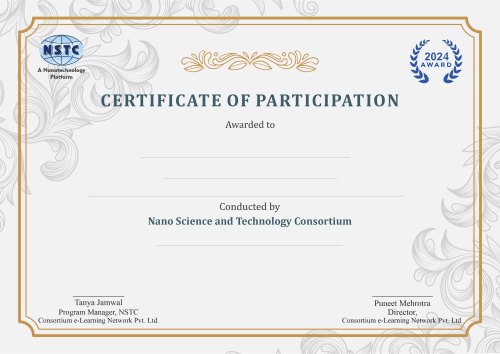
Get an e-Certificate of Participation!
Intended For :
-
Students, PhD scholars, researchers, and professionals in Neuroscience, Biomedical Engineering, AI/ML, Signal Processing, or Neurotechnology.
-
Basic Python familiarity recommended; prior EEG experience is helpful but not required.
Career Supporting Skills
Program Outcomes
-
Preprocess EEG using MNE-Python workflows.
-
Build Transformer models tailored for multi-channel brainwave decoding.
-
Classify motor imagery commands for BCI applications.
-
Interpret model attention as neurophysiological relevance maps.
-
Develop a reusable EEG → Transformer → BCI simulation pipeline.