

AI-Powered Organoid Drug Discovery & Data Analytics
Organoids + AI: Accelerating the Future of Precision Drug Discovery
Skills you will gain:
About Program:
Organoids—3D tissue models derived from patient or stem cell sources—are revolutionizing drug discovery by providing physiologically relevant systems that closely mimic real human organs and tumors. Unlike traditional 2D cultures, organoids preserve cellular heterogeneity, microenvironment interactions, and clinically meaningful drug response patterns. This makes them powerful platforms for screening anticancer therapies, testing drug combinations, and developing patient-specific treatment strategies.
AI and data analytics are now essential for interpreting the complex, high-dimensional datasets generated from organoid imaging, multi-omics profiling, and drug response assays. This workshop explores how machine learning models can predict therapeutic outcomes, classify responders vs non-responders, and uncover actionable biomarkers from organoid datasets. Participants will gain dry-lab experience in AI-powered analysis pipelines, translational applications, and the future of organoid-driven precision drug discovery.
Aim:
This workshop aims to train participants in applying artificial intelligence and data analytics to organoid-based drug discovery workflows. It focuses on how AI can enhance drug screening, response prediction, and biomarker identification using patient-derived organoid models. Participants will learn how computational tools accelerate personalized therapy development and translational oncology research. The program bridges organoid technology, precision medicine, and AI-driven pharmaceutical innovation.
Program Objectives:
- Understand organoid-based drug discovery workflows and clinical relevance.
- Learn AI approaches for analyzing organoid imaging and response data.
- Apply machine learning models for therapy prediction and stratification.
- Explore biomarker discovery using multi-omics organoid datasets.
- Discuss regulatory, translational, and industry adoption challenges.
What you will learn?
Day 1: Foundations of Organoid Biology & AI-Based Data Processing
- Introduction to organoids: 3D cell culture systems and their role in disease modeling & drug discovery
- Challenges in analyzing organoid imaging and phenotypic data
- Overview of AI/ML in biomedical image analysis
- Data acquisition and preprocessing of organoid images
- Image segmentation and feature extraction using ImageJ ML plugin
- Extracting morphological features (size, circularity, texture, intensity metrics)
- Preparing datasets for machine learning workflows
- Tools: Python (Google Colab), ImageJ ML plugin, Pandas, NumPy, Matplotlib, Jupyter/Colab
Day 2: Machine Learning for Organoid Drug Response Classification
- Feature engineering and dataset preparation for classification
- Applying ML algorithms (Logistic Regression, SVM, Random Forest) to classify drug-treated vs control organoids
- Model training, validation, and performance comparison
- Clustering techniques (K-means) to identify phenotypic subgroups
- Dimensionality reduction (PCA, t-SNE) for visualizing morphological patterns
- Understanding overfitting and model generalization in biological datasets
- Tools: Scikit-learn, Seaborn/Matplotlib, Pandas, NumPy, Google Colab
Day 3: Advanced AI Applications in Organoid-Based Drug Discovery
- Introduction to deep learning in biomedical imaging
- Using CNN concepts for automated organoid phenotype recognition
- High-content screening and predictive modeling in pharmaceutical research
- Model evaluation metrics (Accuracy, ROC-AUC, Precision-Recall, F1-score)
- Hyperparameter tuning (GridSearchCV) for improved performance
- Model interpretability (SHAP for feature importance analysis)
- Translating AI models into research publications and funding proposals
- Integrating AI workflows into organoid-based drug discovery pipelines
- Tools: TensorFlow/Keras (introductory), Scikit-learn, SHAP, Google Colab
Mentor Profile
Fee Plan
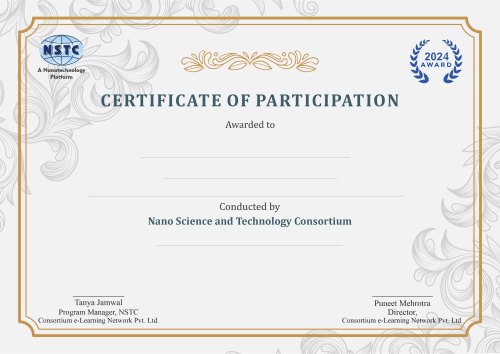
Get an e-Certificate of Participation!
Intended For :
- Doctoral Scholars & Researchers: PhD candidates seeking to integrate computational workflows into their molecular research.
- Postdoctoral Fellows: Early-career scientists aiming to enhance their data-driven publication profile.
- University Faculty: Professors and HODs interested in modern bioinformatics pedagogy and tool mastery.
- Industry Scientists: R&D professionals from the Biotechnology and Pharmaceutical sectors transitioning to genomic-driven discovery.
- Postgraduate Students: Final-year PG students looking for specialized research-grade exposure beyond standard curricula.
Career Supporting Skills
Program Outcomes
Participants will be able to:
- Explain the role of organoids in modern drug discovery.
- Apply AI models to organoid imaging and drug response datasets.
- Predict therapeutic outcomes and identify responder subgroups.
- Understand biomarker discovery workflows using organoid-derived data.
- Propose AI-powered organoid strategies for precision therapeutics.