

Predictive AI Models for Disaster Management and Climate Resilience
Forecast Extremes. Detect Damage. Deploy Resilience with AI
Skills you will gain:
About Program:
This 3-day hands-on workshop trains participants to build predictive AI systems for disaster management—from flood and heatwave forecasting to satellite-based damage detection and deployment-ready climate risk tools. Learners will work with physics-informed ML, multimodal satellite fusion (SAR + optical), GIS-integrated risk mapping, and explainable AI for stakeholder decision-making. Each day includes an applied Google Colab project using real NASA and Sentinel datasets, ending with deployment and fairness considerations for mission-critical climate action.
Aim: To equip participants with advanced AI skills to forecast climate disasters, generate real-time spatial risk intelligence, and deploy ethical, explainable models for climate resilience and disaster response.
Program Objectives:
-
Develop early-warning models for extreme climate events using time-series deep learning (LSTM, Transformers).
-
Apply Physics-Informed ML to model rare disasters under physical constraints.
-
Fuse SAR and optical satellite data for real-time storm and flood monitoring.
-
Build automated damage/change detection pipelines using Vision Transformers and Siamese Networks.
-
Integrate AI risk outputs into GIS and digital twin workflows for urban resilience planning.
-
Deploy lightweight edge-AI models for drones/IoT wildfire and remote sensing applications.
-
Use explainable AI (SHAP, LIME) and fairness principles to support equitable climate response.
What you will learn?
📅 Day 1 — Forecasting the Extreme (Predictive Analytics)
- Focus: Mastering the temporal aspect of natural disasters
- Physics-Informed Machine Learning (PIML): Integrating physical constraints (fluid dynamics, thermodynamics) into deep learning loss functions to model rare climate events
- Multivariate Time-Series for Early Warning: Implementing Transformer and LSTM architectures for sub-seasonal to seasonal (S2S) forecasting of droughts and heatwaves
- Industry Application: Transitioning from standard error metrics to decision-based risk modeling for insurance and agricultural sectors
- 🚀 Colab Hands-on: [DeepFlood-Predictor] – Build a flood forecasting model using NASA’s Global Flood Awareness System (GloFAS) open data
📅 Day 2 — Real-time Intelligence & Spatial Risk
- Focus: Leveraging computer vision and GIS for immediate climate response
- Multimodal Data Fusion: Synchronizing Synthetic Aperture Radar (SAR) and optical satellite imagery to “see” through cloud cover during active storms
- Automated Change Detection: Using Siamese Networks and Vision Transformers to identify post-disaster infrastructure damage (bridges, roads, buildings)
- Digital Twin Integration: Syncing AI-generated risk maps with ArcGIS/QGIS for urban climate adaptation planning
- 🚀 Colab Hands-on: [Sentinel-SAR-Detect] – Implement a change detection pipeline to identify deforestation or flooded urban zones using SAR imagery
📅 Day 3 — Deployment, Ethics & Resilient Infrastructure
- Focus: Moving from research notebooks to mission-critical environments
- Edge AI for Remote Sensing: Model quantization and deployment on drones or IoT sensors for offline-first wildfire detection
- Explainable AI (XAI) for Stakeholders: Using SHAP and LIME to provide interpretable justifications for AI-driven evacuation orders
- Algorithmic Fairness in Climate Action: Addressing data scarcity in “Data Deserts” to protect vulnerable populations equitably
- 🚀 Colab Hands-on: [Quantize-&-Explain] – Compress a Vision Transformer (ViT) using TensorFlow Lite and generate a SHAP heatmap to explain its risk classification
Mentor Profile
Fee Plan
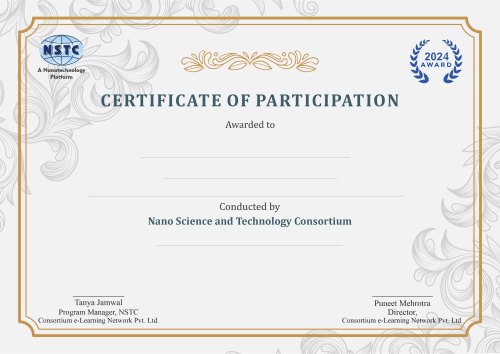
Get an e-Certificate of Participation!
Intended For :
-
Students, researchers, and professionals in AI/ML, climate science, remote sensing, GIS, disaster management, urban planning, or sustainability.
-
Basic Python and machine learning familiarity is recommended.
-
Interest in applying AI for real-world climate resilience and emergency response.
Career Supporting Skills
Program Outcomes
-
Build flood forecasting models using open NASA GloFAS datasets.
-
Implement satellite-based change detection for floods, deforestation, and infrastructure damage.
-
Generate GIS-ready climate risk maps for adaptation planning.
-
Quantize and deploy computer vision models for edge disaster monitoring.
-
Produce interpretable SHAP heatmaps to justify AI-driven emergency decisions.
-
Design ethical, fairness-aware AI systems that protect vulnerable communities.