

Environmental Remediation: Enzyme Technologies and Bioremediation
Harness Biology to Restore the Environment—Enzymes and Bioremediation in Action
Skills you will gain:
About Program:
Environmental pollution from industrial discharge, agricultural chemicals, plastics, dyes, petroleum hydrocarbons, and heavy metals poses a major global challenge. Conventional remediation methods are often costly, energy-intensive, and may generate secondary waste. Bioremediation, using microbes, plants, and enzymes, offers an eco-friendly alternative by naturally transforming contaminants into less harmful products through biological pathways.
This workshop provides a comprehensive understanding of enzyme technologies and bioremediation workflows used in environmental cleanup. Participants will explore microbial degradation mechanisms, enzyme-driven pollutant breakdown, biosorption strategies, and emerging tools such as immobilized enzymes and engineered microbial consortia. Case studies will cover wastewater treatment, oil spill remediation, pesticide degradation, and sustainable restoration of contaminated ecosystems.
Aim:
This workshop aims to introduce participants to enzyme-based technologies and bioremediation strategies for cleaning polluted water, soil, and industrial waste streams. It focuses on how microbial systems and engineered enzymes can degrade toxic compounds, remove heavy metals, and support sustainable environmental restoration. Participants will learn modern remediation approaches combining biotechnology, environmental science, and process optimization. The program bridges lab-scale remediation concepts with real-world environmental applications.
Program Objectives:
- Understand the fundamentals of bioremediation and enzyme-based remediation.
- Learn microbial and enzymatic pathways for pollutant degradation.
- Explore remediation strategies for water, soil, and industrial waste.
- Study immobilized enzymes and engineered microbial consortia for enhanced cleanup.
- Evaluate sustainability, scalability, and field-level challenges in remediation projects.
What you will learn?
Day 1: Microbial Strategies & Metabolic Mapping
- Bioremediation Fundamentals: In Situ vs Ex Situ Approaches
- Microbial Degradation of Hydrocarbons, Dyes, Pesticides, and Heavy Metals
- Bioremediation Pathways, Bioaugmentation and Biostimulation Strategies
- Catabolic Plasmids, Gene Transfer, and Adaptive Microbial Responses
- Monitoring Remediation Efficiency and Rate-Limiting Metabolic Steps
- Biodegradation Pathway Mapping and Enzyme Cascades
- Hands-On: KEGG, MetaCyc, Python Basics, Cytoscape Demo, and Oil Spill Mapping Case Study
Day 2: Nano-Enzymology & Enzyme Bioremediation
- Enzymes in Environmental Remediation: Laccases, Peroxidases, Hydrolases, and Oxidoreductases
- Immobilized Enzyme Systems and Enzyme Kinetics for Industrial Remediation
- Protein Engineering: Directed Evolution and Rational Design
- Optimizing Stability, Specificity, and Catalytic Efficiency
- Nanomaterial–Enzyme Conjugates and Nanozymes and their Catalytic Advantages in Pollutant Removal
- Hands-On: PDB Visualization, PyMOL Demo, Alpha Fold Workflow, Kinetic Modeling, and Laccase Dye-
- Degradation Case Study
Day 3: Eco technological Bioremediation Systems
- Designing Bioremediation Systems for Real-World Environments
- Bioreactor vs Open-Environment Remediation Applications
- Scaling from Laboratory Trials to Field Implementation
- Monitoring Contaminant Degradation in Soil and Water Systems
- Reactor Design: Flow Rate, Retention Time, and Oxygen Transfer
- Integration of Nanotechnology, Enzymes, and Biosensors in Field Units
- LCA, Regulatory Compliance, Risk Assessment, and Ecological Safety
- Hands-On: Reactor Modeling, Spreadsheet Kinetics, , LCA Overview, and Wastewater Treatment
- Design Case Study
Mentor Profile
Fee Plan
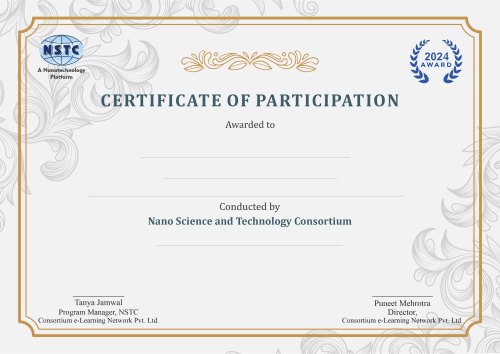
Get an e-Certificate of Participation!
Intended For :
- Doctoral Scholars & Researchers: PhD candidates seeking to integrate computational workflows into their molecular research.
- Postdoctoral Fellows: Early-career scientists aiming to enhance their data-driven publication profile.
- University Faculty: Professors and HODs interested in modern bioinformatics pedagogy and tool mastery.
- Industry Scientists: R&D professionals from the Biotechnology and Pharmaceutical sectors transitioning to genomic-driven discovery.
- Postgraduate Students: Final-year PG students looking for specialized research-grade exposure beyond standard curricula.
Career Supporting Skills
Program Outcomes
Participants will be able to:
- Explain key principles of enzyme-based and microbial remediation.
- Identify suitable bioremediation strategies for different pollutants.
- Understand degradation pathways for organic and inorganic contaminants.
- Evaluate enzyme immobilization and microbial consortia approaches.
- Propose sustainable remediation solutions for real environmental challenges.