

Biocatalysis Optimized: Quantitative Kinetic Analysis & Scaling
Measure, Optimize, Scale—Biocatalysis for Real-World Manufacturing
Skills you will gain:
About Program:
Biocatalysis is transforming modern biotechnology by enabling greener, more selective, and energy-efficient chemical transformations. Enzymes are widely used in pharmaceuticals, food, fine chemicals, biofuels, and sustainable manufacturing. However, successful biocatalytic development requires more than enzyme discovery—it demands quantitative kinetic evaluation, performance benchmarking, and rational optimization of reaction conditions for productivity and robustness.
This workshop provides a structured approach to enzyme kinetic analysis, catalytic efficiency assessment, and scale-up considerations. Participants will learn how to interpret Michaelis–Menten kinetics, calculate turnover rates, evaluate inhibition effects, and apply modeling tools for process optimization. The workshop emphasizes dry-lab quantitative workflows, helping learners translate enzyme performance data into scalable biocatalytic process strategies.
Aim:
This workshop aims to train participants in applying quantitative enzyme kinetics and biocatalysis optimization strategies for research and industrial scale-up. It focuses on measuring catalytic performance, interpreting kinetic parameters, and designing scalable bioprocess workflows. Participants will learn how to move from lab-scale enzyme assays to process-ready biocatalytic systems. The program bridges biochemical fundamentals with industrial biomanufacturing applications.
Program Objectives:
- Understand fundamentals of enzyme kinetics and catalytic efficiency metrics.
- Perform quantitative kinetic modeling and parameter estimation.
- Analyze enzyme inhibition, stability, and reaction constraints.
- Learn strategies for optimizing biocatalytic reaction conditions.
- Explore scale-up pathways from lab assays to industrial bioprocesses.
What you will learn?
Day 1: Quantitative Enzyme Kinetics & Nonlinear Modeling
- Review of Michaelis–Menten kinetics
- Assumptions in steady-state enzyme kinetics
- Relationship between reaction velocity and substrate concentration
- Linear vs nonlinear approaches in parameter estimation
- Converting raw absorbance data to reaction velocity
- Beer–Lambert Law and calibration curves
- Data preprocessing and error handling
- Nonlinear regression for determining Vmax and Km
- Goodness-of-fit and model validation
Hands-on Tools & Platforms
Python/SciPy/Matplotlib for kinetic curve visualization, Jupyter Notebook / Google Colab for live computation/Excel (optional quick comparison of linear vs nonlinear fits)
Day 2: Enzyme Inhibition & Mechanistic Characterization
- Types of enzyme inhibition:
- Mathematical representation of inhibition models
- Impact of inhibitors on Vmax and Km
- Michaelis–Menten vs Lineweaver–Burk transformations
- Diagnostic patterns in kinetic plots
- Estimating inhibition constants (Ki)
- Comparing model fits for inhibition types
- Transformations and interpretation pitfalls
- Residual analysis and confidence intervals
Hands-on Tools & Platforms
Python-based nonlinear fitting for inhibited models/SciPy for multi-parameter curve fitting/Matplotlib for double-reciprocal plotting/Comparative visualization of inhibition mechanisms/ Data-driven interpretation workflows
Day 3: Bioprocess Scaling & Oxygen Transfer Optimization
- Transition from shake flask to bioreactor
- Fundamentals of mass transfer in bioprocess systems
- Oxygen limitation in aerobic biocatalysis
- Understanding kLa (oxygen transfer coefficient)
- Impact of agitation, aeration, and reactor geometry
- Scale-up strategies and geometric similarity
- Methods for calculating kLa
- Relationship between kLa and product yield
- Oxygen uptake rate (OUR) and mass transfer rate (OTR)
- Identifying scale-up bottlenecks
- Productivity vs efficiency trade-offs
Mentor Profile
Fee Plan
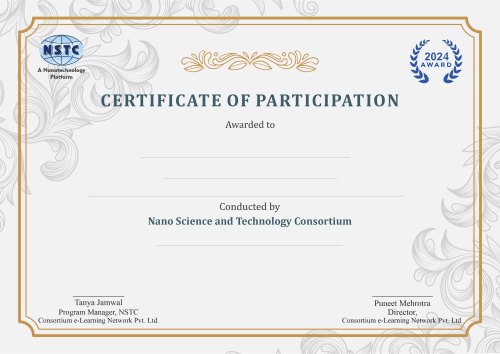
Get an e-Certificate of Participation!
Intended For :
- Biocatalysis / enzyme engineering researchers
- Bioprocess/biomanufacturing engineers
- Pharma process development / R&D scientists
- Industrial biotech / fermentation / biotransformation teams
- Chemists moving into biocatalysis
Career Supporting Skills
Program Outcomes
Participants will be able to:
- Quantitatively interpret enzyme kinetic data and performance parameters.
- Evaluate catalytic efficiency and inhibition behavior in enzyme systems.
- Design optimized reaction conditions for improved yield and productivity.
- Understand key challenges in scaling biocatalytic processes.
- Translate kinetic insights into industrial bioprocess development strategies.