

AI and Remote Sensing for Coastal Erosion and Habitat Monitoring
Empowering Marine Sustainability with Artificial Intelligence.
Skills you will gain:
About Program:
The International Workshop on AI and Remote Sensing for Coastal Erosion and Habitat Monitoring focuses on applying artificial intelligence and satellite data analytics to address coastal climate challenges. Participants will gain hands-on experience in shoreline detection, marine habitat mapping, coral reef monitoring, and predictive modeling. The program integrates machine learning, computer vision, and GIS tools to support sustainable coastal and marine resource management.
Aim: The aim of this workshop is to equip participants with practical skills in applying Artificial Intelligence and Remote Sensing techniques for monitoring coastal erosion, marine habitats, and biodiversity. It seeks to bridge the gap between environmental science and data-driven technologies by enabling participants to develop AI-based models for coastal resilience and sustainable marine resource management.
Program Objectives:
- To introduce the fundamentals of remote sensing and satellite data for coastal and marine applications.
- To develop practical skills in applying machine learning and computer vision for shoreline detection and habitat mapping.
- To enable participants to build predictive models for coastal erosion and habitat loss assessment.
- To demonstrate AI applications in coral reef monitoring, marine biodiversity analysis, and sustainable fisheries management.
- To promote data-driven decision-making for coastal resilience and environmental sustainability.
What you will learn?
Day 1: AI for Coastal Erosion Monitoring
- Coastal climate risks & remote sensing fundamentals
- Satellite data (Sentinel, Landsat) for shoreline analysis
- AI-based shoreline extraction & change detection
- Machine learning models for erosion assessment
Hands-On 1: Satellite image preprocessing & shoreline extraction
Hands-On 2: Coastal erosion detection using ML models
Day 2: AI for Marine Ecosystem & Coral Monitoring
- Marine habitat mapping (coral, mangroves, seagrass)
- Machine learning for ecosystem classification
- Computer vision for coral reef health monitoring
- AI-powered AUVs & underwater data analytics
Hands-On 1: Marine habitat classification using ML
Hands-On 2: Coral reef health detection with computer vision
Day 3: Predictive Modeling & Sustainable Marine Management
- Time-series modeling for habitat loss prediction
- AI-based marine biodiversity mapping
- AI for sustainable fisheries & aquaculture
- Decision-support systems for coastal restoration
Hands-On 1: Coastal change prediction using ML
Hands-On 2: Biodiversity mapping & fisheries analytics
Mentor Profile
Fee Plan
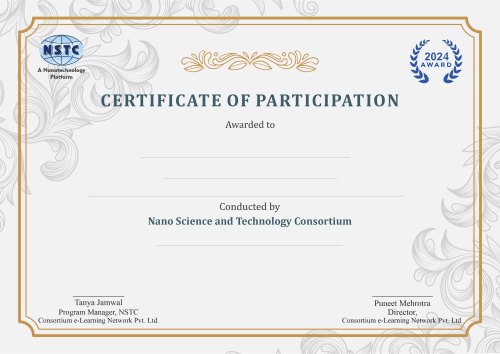
Get an e-Certificate of Participation!
Intended For :
- Doctoral Scholars & Researchers: PhD candidates seeking to integrate computational workflows into their molecular research.
- Postdoctoral Fellows: Early-career scientists aiming to enhance their data-driven publication profile.
- University Faculty: Professors and HODs interested in modern bioinformatics pedagogy and tool mastery.
- Industry Scientists: R&D professionals from the Biotechnology and Pharmaceutical sectors transitioning to genomic-driven discovery.
- Postgraduate Students: Final-year PG students looking for specialized research-grade exposure beyond standard curricula.
Career Supporting Skills
Program Outcomes
- Understand the principles of AI-driven remote sensing for coastal and marine monitoring.
- Apply machine learning techniques for shoreline detection and habitat classification.
- Develop basic predictive models to assess coastal erosion and habitat loss.
- Analyze marine biodiversity and coral reef health using computer vision approaches.
- Interpret satellite-derived environmental data to support sustainable coastal management decisions.