

Generative AI in Drug Discovery: From Molecules to Medicines
Designing the future of medicine with Generative AI.
Skills you will gain:
About Program:
This 3-day intensive workshop explores how Generative AI is transforming modern drug discovery—from molecular design to clinical translation. With 1.5 hours of expert-led lecture each day supported by guided demonstrations and conceptual hands-on sessions, participants will gain practical exposure to AI-driven molecular modeling, virtual screening, predictive analytics, and translational considerations. The workshop bridges artificial intelligence, cheminformatics, and biomedical research to equip participants with industry-relevant computational skills for next-generation drug development.
Aim:
To provide participants with conceptual foundations and practical skills in applying Generative AI tools and machine learning techniques to modern drug discovery workflows.
Program Objectives:
- To understand the complete drug discovery pipeline from target identification to clinical stages
- To introduce generative AI models (transformers, diffusion models) for molecular design
- To apply AI tools for literature mining, hypothesis generation, and evidence synthesis
- To perform molecular representation, screening, and drug-likeness prediction
- To understand QSAR, ADMET prediction, and structure–property relationships
- To explore AI-assisted docking and protein structure prediction
- To examine translational, ethical, and regulatory considerations in AI-driven drug discovery
What you will learn?
Day 1: Foundations of Generative AI in Drug Discovery
- Introduction to Drug Discovery Pipelines: From target identification to clinical translation
- Overview of Generative AI in Life Sciences: Large Language Models (LLMs), molecular generators, and predictive AI
- AI for Scientific Literature & Evidence Mining: Hypothesis generation, systematic reviews, and trend analysis
- Understanding Molecular Data: SMILES, chemical descriptors, biological datasets, and drug-likeness concepts
- Ethical and Responsible Use of AI in Drug Discovery and Biomedical Research
Hands-on Tools & Platforms:
- ChatGPT / Gemini (scientific reasoning, hypothesis generation)
- Consensus, SciSpace, Elicit (AI-assisted literature analysis)
- Notebook LLM (working with research papers and datasets)
- Python basics for molecular data handling
- Pandas & Matplotlib for exploratory data visualization
- Jupyter / Google Colab for interactive workflows
Day 2: Molecular Design, Screening & Optimization Using AI
- AI-Driven Molecular Representation: SMILES-based learning and embeddings
- Generative Models for Molecule Design: Conceptual understanding of transformers and diffusion models
- Virtual Screening & Drug-Likeness Prediction: ADMET, QSAR, and bioactivity prediction
- Structure–Property Relationships in Drug Optimization
- AI-Assisted Molecular Docking and Binding Affinity Prediction
Hands-on Tools & Platforms:
- RDKit (molecular fingerprints, visualization, and descriptors)
- DeepChem (QSAR modeling and screening workflows)
- PASS Online (biological activity prediction)
- ChemBERTa (transformer-based molecular understanding – demo-based)
- DiffDock (AI-powered docking – conceptual + demo)
- Scikit-learn, NumPy, Pandas for model building and evaluation
- Matplotlib for performance and result visualization
Day 3: Translation, Clinical Relevance & Future Directions
- Clinical Applications of AI-Driven Drug Discovery: Oncology, infectious diseases, rare diseases
- AI in Natural Product & Traditional Medicine-Based Drug Discovery
- Translational Challenges: Model interpretability, validation, bias, and reproducibility
- Regulatory & Ethical Considerations: AI governance, FDA perspectives, and compliance challenges
- Future Trends: Foundation models, multimodal AI, personalized medicine, and AI-native drug design
Hands-on Tools & Platforms:
- AlphaFold (protein structure prediction – workflow demonstration)
- TensorFlow / Keras (introductory model workflows)
- Scikit-learn (model deployment concepts)
- Streamlit (building simple AI-driven interfaces for drug discovery insights)
Mentor Profile
Fee Plan
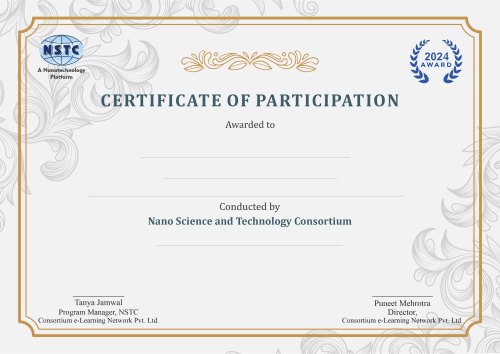
Get an e-Certificate of Participation!
Intended For :
- Doctoral Scholars & Researchers: PhD candidates seeking to integrate computational workflows into their molecular research.
- Postdoctoral Fellows: Early-career scientists aiming to enhance their data-driven publication profile.
- University Faculty: Professors and HODs interested in modern bioinformatics pedagogy and tool mastery.
- Industry Scientists: R&D professionals from the Biotechnology and Pharmaceutical sectors transitioning to genomic-driven discovery.
- Postgraduate Students: Final-year PG students looking for specialized research-grade exposure beyond standard curricula.
Career Supporting Skills
Program Outcomes
By the end of the workshop, participants will be able to:
- Explain how generative AI integrates into pharmaceutical R&D pipelines
- Use AI tools for scientific literature mining and hypothesis generation
- Handle molecular datasets using SMILES and cheminformatics tools
- Perform exploratory data analysis and build basic predictive models
- Apply AI-based virtual screening and QSAR approaches
- Interpret AI-assisted docking and protein structure prediction workflows
- Understand regulatory and ethical challenges in AI-driven biomedical innovation
- Conceptualize AI-enabled drug discovery projects for research or industry applications