

AI-Driven Primer Design, qPCR, dPCR & Diagnostic Applications
Harness AI for Precise Primer Design, Optimized PCR, and Accurate Diagnostics
Skills you will gain:
About Program:
PCR technology is foundational in molecular biology, enabling genetic analysis for diagnostics, gene expression quantification, and mutation detection. qPCR and dPCR are advanced techniques that allow for precise quantification of nucleic acids, with applications in clinical diagnostics, pathogen detection, and genetic research. However, optimizing PCR reactions, designing effective primers, and analyzing the resulting data can be time-consuming and prone to errors. This workshop leverages the power of artificial intelligence and machine learning to streamline these processes and enhance results.
Through hands-on sessions, participants will work with AI-driven primer design tools, qPCR protocols, and dPCR data analysis models. The workshop will cover topics such as primer optimization, real-time PCR, quantification techniques, and data interpretation for diagnostic applications. Participants will gain the skills to apply AI tools for improving PCR sensitivity, specificity, and clinical diagnostic workflows in research, diagnostics, and biotech applications.
Aim: This workshop aims to integrate AI-driven solutions in primer design, quantitative PCR (qPCR), digital PCR (dPCR), and diagnostic applications. Participants will learn to apply machine learning models to enhance primer selection, optimize PCR conditions, and improve diagnostic accuracy in molecular biology. The program focuses on using AI tools for precise data analysis, high-throughput diagnostics, and accurate quantification in PCR-based research and clinical applications.
Program Objectives:
- Learn AI techniques for primer design and sequence optimization.
- Apply machine learning models to optimize qPCR and dPCR reactions.
- Understand PCR quantification techniques and how AI enhances accuracy and sensitivity.
- Analyze PCR results using AI tools for better diagnostic accuracy.
- Integrate AI-driven solutions into clinical diagnostics, pathogen detection, and genetic research workflows.
What you will learn?
Day 1: AI-Driven Primer Design & Optimization for PCR
- Introduction to PCR: Techniques and Applications in Diagnostics
- Primer Design Fundamentals: Basics of primer design, specificity, and efficiency
- AI-Based Primer Design: Using machine learning algorithms to predict primer efficiency, melting temperatures, and specificity
- Tools for Primer Design: Primer3, Biopython, and ML algorithms for automated primer optimization
- Tools: Python, Biopython, Pandas, NumPy, Scikit-learn, Jupyter/Colab
Day 2: AI Applications in qPCR and dPCR for Accurate Quantification
- Introduction to qPCR and dPCR: Principles, advantages, and differences
- AI for qPCR Data Analysis: Real-time PCR signal interpretation, threshold setting, and amplification curve analysis
- AI in dPCR: Detecting low-frequency mutations and copy number variations
- Data Preprocessing for PCR: Signal normalization, background correction, and noise filtering using AI
- Model Building for PCR: Training models for quantification and detection accuracy
- Tools: Scikit-learn, TensorFlow, PyTorch, Seaborn, Matplotlib, Jupyter/Colab
Day 3: Advanced Diagnostic Applications & Automation with AI
- AI for Diagnostic Applications: Using AI to enhance diagnostic accuracy, sensitivity, and specificity
- Automated PCR Workflow: Integrating AI models to automate sample preparation, amplification, and analysis
- AI-Driven Error Detection: Identifying and correcting errors such as non-specific amplification, contamination, and reaction inconsistencies
- Reporting & Interpreting Results: Generating real-time diagnostic reports and visualizing results for clinical use
- Case Study: Build a diagnostic model using qPCR/dPCR data for detecting specific pathogens or mutations
Tools: TensorFlow/Keras, PyTorch (for deep learning), Streamlit (optional for deployment), Scikit-learn, Jupyter/Colab
Mentor Profile
Fee Plan
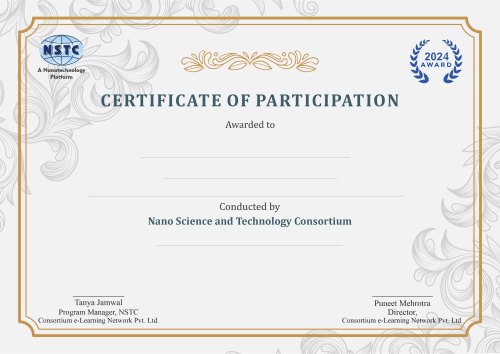
Get an e-Certificate of Participation!
Intended For :
- Doctoral Scholars & Researchers: PhD candidates seeking to integrate computational workflows into their molecular research.
- Postdoctoral Fellows: Early-career scientists aiming to enhance their data-driven publication profile.
- University Faculty: Professors and HODs interested in modern bioinformatics pedagogy and tool mastery.
- Industry Scientists: R&D professionals from the Biotechnology and Pharmaceutical sectors transitioning to genomic-driven discovery.
- Postgraduate Students: Final-year PG students looking for specialized research-grade exposure beyond standard curricula.
Career Supporting Skills
Program Outcomes
Participants will be able to:
- Design effective primers using AI tools and bioinformatics databases.
- Optimize qPCR and dPCR reactions for improved accuracy and sensitivity.
- Analyze PCR data using AI-based models for better disease diagnosis.
- Enhance diagnostic workflows with AI-driven PCR optimization.
- Implement AI-powered tools for clinical and research applications in molecular diagnostics.