

Next-Generation Bioinformatics Using Machine Learning and Deep Learning
Unlocking Biological Insights with Machine Learning and Deep Learning.
Skills you will gain:
About Program:
The emergence of next-generation sequencing (NGS) and high-throughput data has significantly enhanced biological research, enabling the study of genomes, gene expression, proteins, and metabolites at an unprecedented scale. However, the complexity and volume of this data pose challenges in terms of data processing, feature extraction, and pattern recognition. Machine learning and deep learning have become indispensable tools in bioinformatics to uncover hidden patterns and predict outcomes from this large-scale biological data.
This workshop will provide hands-on experience with modern ML and DL algorithms used in bioinformatics, focusing on data preprocessing, model building, interpretability, and application to real-world biological problems. Participants will learn to work with datasets from genomics, proteomics, and transcriptomics, applying cutting-edge tools like deep neural networks, convolutional neural networks (CNNs), and recurrent neural networks (RNNs). The program emphasizes practical workflows that integrate these techniques for personalized medicine, disease classification, and drug discovery.
Aim:
This workshop aims to explore the integration of machine learning (ML) and deep learning (DL) techniques in bioinformatics for analyzing large-scale biological data. It focuses on the application of advanced computational methods to genomic, transcriptomic, proteomic, and metabolomic datasets, enabling participants to extract deeper biological insights and improve predictions for precision medicine, biomarker discovery, and disease research. The program combines theory with hands-on experience to provide participants with a comprehensive understanding of cutting-edge bioinformatics methods.
Program Objectives:
- Understand the principles of machine learning and deep learning in the context of bioinformatics.
- Learn to process and clean biological data for ML/DL analysis.
- Apply supervised and unsupervised learning algorithms to genomic, transcriptomic, and proteomic datasets.
- Build and evaluate deep learning models (CNNs, RNNs, autoencoders) for biological data.
- Understand the interpretability of machine learning models in the biological context.
What you will learn?
Day 1: Introduction to Next-Gen Bioinformatics with AI/ML
- Introduction to omics data, NGS technologies, challenges in biological data analysis
- Data acquisition, quality control, alignment, variant calling, annotation, and visualization
- Fundamentals of machine learning and deep learning, their role in genomics, proteomics, and other omics data
- Cleaning, normalization, and transformation of biological datasets, handling NGS data formats (FASTQ, VCF, BAM, etc.)
- Tools: Python, Biopython, Pandas, NumPy, Scikit-learn, Jupyter/Colab, Matplotlib
Day 2: Machine Learning for Biological Data Analysis
- Applying machine learning algorithms (Logistic Regression, SVM, Random Forests) to genomic data analysis, mutation prediction, and disease classification
- Clustering techniques (K-means, DBSCAN) for gene expression profiling, discovering patterns in multi-omics data
- Introduction to Convolutional Neural Networks (CNNs) for protein structure prediction, Recurrent Neural Networks (RNNs) for sequence-based tasks
- PCA, t-SNE, Autoencoders for omics data, gene expression analysis, and high-dimensional feature reduction
- Cross-validation, ROC-AUC, Precision-Recall curves, F1-score for bioinformatics applications
- Tools: Scikit-learn, XGBoost, Keras, TensorFlow, Seaborn/Matplotlib, Jupyter/Colab
Day 3: Deep Learning and Advanced Applications in Bioinformatics
- Using deep learning models (e.g., AlphaFold) for protein structure and function prediction
- Mining literature, abstracts, and gene-disease relationships using NLP techniques to build knowledge bases
- Application of deep learning models in virtual screening, QSAR modeling, and predicting drug-target interactions
- GridSearchCV, RandomizedSearchCV, model tuning for improved accuracy
- Generating reproducible results, understanding model interpretability (SHAP, LIME), and integrating AI models into bioinformatics workflows
Tools: TensorFlow/Keras, PyTorch, SHAP, LIME, Streamlit (optional for deployment), Scikit-learn, Jupyter/Colab
Mentor Profile
Fee Plan
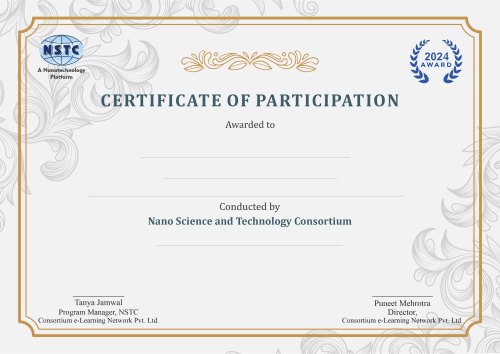
Get an e-Certificate of Participation!
Intended For :
- Doctoral Scholars & Researchers: PhD candidates seeking to integrate computational workflows into their molecular research.
- Postdoctoral Fellows: Early-career scientists aiming to enhance their data-driven publication profile.
- University Faculty: Professors and HODs interested in modern bioinformatics pedagogy and tool mastery.
- Industry Scientists: R&D professionals from the Biotechnology and Pharmaceutical sectors transitioning to genomic-driven discovery.
- Postgraduate Students: Final-year PG students looking for specialized research-grade exposure beyond standard curricula.
Career Supporting Skills
Program Outcomes
Participants will be able to:
- Preprocess and clean biological datasets (genomic, transcriptomic, proteomic).
- Build and evaluate ML/DL models for biological data analysis.
- Apply deep learning models for predictive analysis and classification.
- Interpret model predictions in the context of biological research and clinical applications.
- Develop reproducible and scalable ML/DL workflows for bioinformatics problems.