

Integrated Energy System Assessment
Design, Model, and Optimize: Tools for Sustainable Engineering
Skills you will gain:
About Program:
This 3-day hands-on workshop focuses on designing net-zero energy systems using thermodynamics, exergy analysis, life cycle thinking (LCA), and techno-economic optimization. Participants will learn how to analyze energy systems’ inefficiencies, assess environmental impacts, and evaluate the economic feasibility of sustainable systems. Through practical exercises, they will develop models and reports to optimize energy systems for minimal environmental and financial costs.
Aim: To equip participants with the knowledge and tools to design net-zero energy systems by integrating thermodynamics, exergy analysis, life cycle thinking, and techno-economic evaluation for optimized sustainability.
Program Objectives:
- Apply fundamental thermodynamics and exergy analysis to improve energy conversion efficiency.
- Use exergy analysis to identify inefficiencies and optimization opportunities in energy systems.
- Understand Life Cycle Assessment (LCA) methodology to evaluate the environmental impact of energy systems.
- Integrate exergy analysis with LCA for holistic system design.
- Perform techno-economic analyses of net-zero energy systems to balance energy, cost, and environmental performance.
- Optimize net-zero energy systems using Python or optimization tools.
What you will learn?
📅 Day 1 — Thermodynamics and Exergy Analysis in Sustainable Systems
- Fundamental thermodynamic principles for sustainable energy and process systems
- Introduction to exergy analysis and its role in identifying inefficiencies in energy systems
- Application of exergy analysis for system optimization and improving energy conversion efficiency
- Hands-on:
- Perform a basic exergy analysis on a hypothetical process system to identify energy losses and optimization opportunities
- Deliverable: Exergy analysis report highlighting inefficiencies and potential improvements in energy systems
📅 Day 2 — Life Cycle Thinking (LCA) and Environmental Impact Assessment
- Introduction to Life Cycle Assessment (LCA): methodology, stages, and tools
- Evaluating the environmental impacts of energy systems over their life cycle: from raw materials to disposal
- Link between LCA and exergy analysis in the design of sustainable systems
- Hands-On : Use LCA software or a Python-based tool to perform a basic life cycle assessment of a renewable energy system (e.g., solar or wind)
- Deliverable: LCA report with environmental impact assessments and optimization suggestions
📅 Day 3 — Techno-Economics and Optimization of Net-Zero Systems
- Techno-economic analysis: integrating technical performance and economic feasibility
- Cost-benefit analysis of sustainable systems: considering both environmental and financial impacts
- Strategies for designing net-zero energy systems by balancing energy generation and consumption
- Hands-on :Develop a techno-economic model for a net-zero energy system using Python or an optimization tool to assess costs, efficiency, and environmental impact
- Deliverable: Techno-economic model with a cost analysis and optimized recommendations for a net-zero energy system
Mentor Profile
Fee Plan
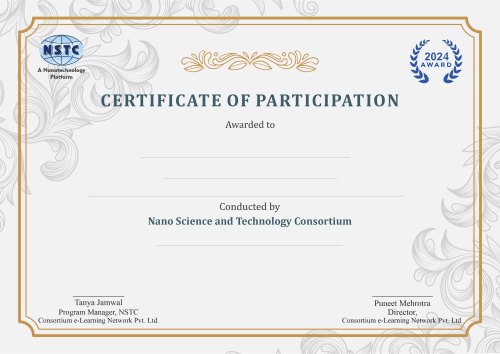
Get an e-Certificate of Participation!
Intended For :
- Students, researchers, and professionals in Renewable Energy, Environmental Engineering, Sustainability, or related fields.
- Basic knowledge of thermodynamics and energy systems is recommended but not required.
- No prior experience with LCA or exergy analysis tools needed (guidance will be provided).
Career Supporting Skills
Program Outcomes
- Conduct exergy analysis to identify and address inefficiencies in energy systems.
- Generate an exergy analysis report with recommendations for system optimization.
- Perform a life cycle assessment of renewable energy systems using LCA software or Python tools.
- Develop a techno-economic model to evaluate the costs, efficiency, and environmental impact of net-zero systems.
- Provide optimized recommendations for designing and implementing net-zero energy systems.