

Computational Ocean Acoustics: Propagation Modeling and Sonar Signal Processing
Mastering Sound in the Sea: Advanced Modeling and Signal Processing for Ocean Acoustics
Skills you will gain:
About Program:
This program covers computational ocean acoustics, focusing on sound propagation modeling and sonar signal processing. Participants will gain hands-on experience with MATLAB and Python, applying these techniques in marine research, environmental monitoring, and underwater exploration.
Aim: The aim of this program is to equip participants with the knowledge and skills in computational ocean acoustics, focusing on sound propagation modeling and sonar signal processing for marine research and underwater applications.
Program Objectives:
- Understand the principles of ocean acoustics and sound propagation in marine environments.
- Learn methods for modeling acoustic propagation, including Ray, Beam, and Parabolic Equation models.
- Explore sonar system components and their applications in marine research.
- Gain proficiency in signal processing techniques for sonar signal analysis and noise reduction.
- Apply computational tools like MATLAB and Python for hands-on modeling and data analysis.
- Explore advanced topics in acoustic simulations and collaboration opportunities across academia and industry.
What you will learn?
📅 Day 1 — Introduction to Ocean Acoustics and Acoustic Propagation Modeling
- Global Overview of Ocean Acoustics: Importance of sound propagation in marine environments
- Basics of Acoustics: Principles of sound in water, sound speed profiles, and environmental parameters (temperature, salinity, depth)
- Introduction to Sonar Systems: Active vs. passive sonar, sonar technology, and applications in marine exploration
- Ocean Acoustic Propagation Modeling: Understanding sound speed variations, methods for modeling sound propagation (Ray, Beam, Parabolic Equation)
🛠️ Hands-on:
- Analyze sound speed profile data and simulate basic underwater acoustic propagation in Python/Notebook
📅 Day 2 — Sonar Systems, Signal Processing, and Acoustic Measurements
- Sonar System Components: Types of sonar systems, components, and their functions in marine research and military
- Signal Processing Techniques: Basics of Digital Signal Processing (DSP), signal detection, classification, noise reduction
- Advanced Signal Processing: Techniques for signal localization and adaptive filtering
- Acoustic Measurements and Data Collection: Tools and techniques for oceanographic data collection, methods for processing and analyzing acoustic signals
🛠️ Hands-on:
- Process a sample sonar signal, apply filtering, and visualize acoustic patterns using Python/Notebook
📅 Day 3 — Applications of Ocean Acoustics, Advanced Topics, and Research Collaboration
- Applications of Sonar in Marine Research: Use of sonar for environmental monitoring, marine biology, and underwater exploration
- Acoustic Communication Systems: Underwater modems, data transmission challenges, and acoustic communication networks
- Advanced Topics in Ocean Acoustics: Computational modeling techniques (Finite Element Methods, Boundary Element Methods) for high-performance acoustic simulations
- Collaboration Between Academia, Research, and Industry: Approaches for collaboration on marine acoustic research, industry applications, and research design
🛠️ Hands-on:
- Build a simple underwater acoustic communication or propagation model and interpret results in Python/Notebook
Mentor Profile
Fee Plan
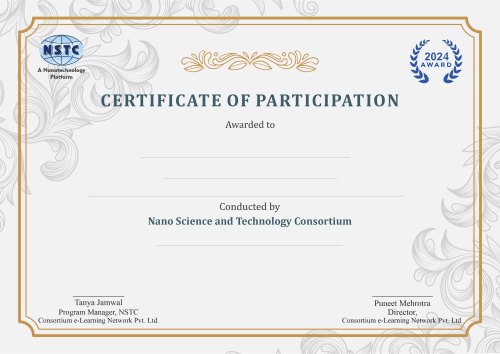
Get an e-Certificate of Participation!
Intended For :
-
Marine Scientists & Researchers – Focused on ocean acoustics, sonar systems, and environmental monitoring.
-
Acoustics Engineers – Interested in underwater acoustics, sonar technology, and signal processing.
-
Signal Processing Professionals – Specializing in digital signal processing, noise reduction, and signal localization.
-
Oceanographers – Involved in ocean data collection, acoustic measurements, and propagation modeling.
-
Academics & Graduate Students – In marine sciences, acoustics, or ocean engineering.
-
Industry Professionals – Working with sonar systems, marine exploration, or underwater communication technologies.
-
Data Scientists & ML Engineers – Applying machine learning to ocean acoustics and signal analysis.
Career Supporting Skills
Program Outcomes
- Ability to model and analyze sound propagation in ocean environments using computational techniques.
- Proficiency in sonar system design and application for marine research and exploration.
- Skill in applying advanced signal processing methods for sonar signal detection and noise reduction.
- Hands-on experience with MATLAB and Python for modeling, simulation, and data analysis in ocean acoustics.
- In-depth understanding of advanced acoustic simulation techniques and their real-world applications.
- Enhanced collaboration skills between academia, industry, and research in the field of ocean acoustics.