

Programming in R to Analyze Biological Data
Analyze, Visualize, and Interpret Biological Data with R
Skills you will gain:
About Program:
R is one of the most widely used programming languages in biology, bioinformatics, and biostatistics due to its powerful statistical capabilities and rich ecosystem of packages. From gene expression data to ecological measurements and clinical datasets, R enables researchers to clean, analyze, visualize, and interpret complex biological data efficiently.
This workshop provides a structured, beginner-to-intermediate level introduction to R programming tailored specifically for biological data. Participants will work through dry-lab, hands-on sessions covering data import, manipulation, visualization, and statistical testing using real-world datasets. The focus is on practical problem-solving and reproducible research workflows relevant to modern biosciences.
Aim: This workshop aims to equip participants with practical skills in R programming for biological data analysis. It focuses on data handling, visualization, and statistical analysis commonly used in life sciences research. Participants will learn how to analyze real biological datasets using R and apply appropriate statistical methods. The program is designed to build strong computational foundations for research, thesis work, and industry applications.
Program Objectives:
Participants will learn to:
- Understand R syntax and programming fundamentals.
- Import, clean, and manage biological datasets.
- Perform exploratory data analysis and visualization.
- Apply basic statistical tests relevant to biology.
- Create reproducible analysis scripts and reports.
What you will learn?
Day 1: R Foundations & Working with Biological Data
- R vs RStudio, projects, scripts, working directory
- Installing packages, using help, reading documentation
- Core R Programming Basics
- Operators, functions, if/else, loops (minimal but useful)
- Indexing/subsetting; handling missing values (NA)
- Quick data QC: str, summary, table, basic sanity checks
- Hands-on: Load a sample gene expression / protein abundance table, clean column types, subset rows/columns, compute simple summaries
Day 2: Data Wrangling with dplyr & Tidy Data
Common biology tasks: log-transform, fold change, sample grouping, feature filtering
Tidy Data for Biology: Wide vs long format (expression matrices vs tidy tables)
Reshaping: tidy pivot_longer, pivot_wider
Joining metadata: left_join (sample sheet + expression data)
Hands-on: Create a tidy dataset from an expression matrix + metadata, compute group-wise mean, log2FC, and a ranked gene list
Day 3: Visualization + Intro Statistics for Biological Insights
- ggplot2 for Publication-Ready Plots
- Grammar of graphics: aesthetics & geoms
- Scatter, box/violin, bar, line plots for biology
- Themes, labels, facets, annotations (clean plots for papers)
- Basic Statistics in R: t-test vs ANOVA; assumptions (quick checks)
- Correlation & simple linear regression for biological variables
- Multiple testing concept (why FDR matters—high-level)
- Hands-on: Plot expression by condition + run t-test/ANOVA, add p-values (intro via ggpubr optional), create a final “results figure”
Mentor Profile
Fee Plan
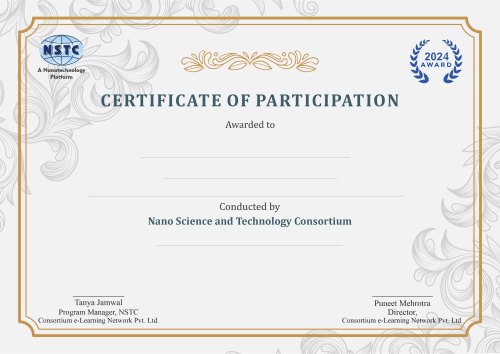
Get an e-Certificate of Participation!
Intended For :
- Doctoral Scholars & Researchers: PhD candidates seeking to integrate computational workflows into their molecular research.
- Postdoctoral Fellows: Early-career scientists aiming to enhance their data-driven publication profile.
- University Faculty: Professors and HODs interested in modern bioinformatics pedagogy and tool mastery.
- Industry Scientists: R&D professionals from the Biotechnology and Pharmaceutical sectors transitioning to genomic-driven discovery.
- Postgraduate Students: Final-year PG students looking for specialized research-grade exposure beyond standard curricula.
Career Supporting Skills
Program Outcomes
Participants will:
- Gain confidence in using R for biological data analysis.
- Be able to clean, analyze, and visualize datasets independently.
- Understand which statistical tests to apply for biological questions.
- Generate publication-ready plots and summary tables.
- Be prepared to apply R in research projects, theses, or industry tasks.