

Bioremediation & Environmental Biotechnology for Water and Soil
Harnessing Biology to Restore the Planet—From Polluted Sites to Healthy Ecosystems
Skills you will gain:
About Program:
Bioremediation leverages microorganisms, plants, and biological processes to detoxify pollutants such as heavy metals, hydrocarbons, pesticides, microplastics, and industrial wastes. With increasing global emphasis on climate resilience and sustainable development, biotechnological approaches for environmental cleanup have become essential tools for researchers, policy makers, and industry professionals.
This workshop covers the scientific principles, environmental applications, and case studies of bioremediation—ranging from microbial degradation pathways to engineered bio-systems. Participants will explore cutting-edge environmental biotechnologies including biosensors, metagenomics for microbial community profiling, and bioaugmentation strategies. Practical demonstrations and data-analysis sessions will allow learners to design bioremediation plans and interpret real environmental datasets.
Aim: This workshop aims to introduce participants to modern bioremediation strategies and environmental biotechnology tools used for cleaning contaminated water, soil, sediments, and wastewater systems. The program focuses on microbial, plant-based, and enzymatic remediation approaches while integrating advancements in molecular biology, bioinformatics, and environmental monitoring. Participants will develop the skills to design remediation workflows, assess pollutant degradation, and understand how biotechnology supports sustainable ecosystem recovery.
Program Objectives:
- Understand the principles and mechanisms of microbial, phytoremediation, and enzymatic bioremediation.
- Analyze pollutant degradation pathways and evaluate soil/water contamination.
- Apply environmental biotechnology tools such as metagenomics, biosensors, and microbial consortia.
- Design small-scale bioremediation strategies for real-world contamination scenarios.
- Interpret environmental datasets for monitoring remediation performance.
What you will learn?
Day 1 – Fundamentals of Bioremediation & Microbial Degradation (1.5 hours)
- In situ vs ex situ, bioaugmentation vs biostimulation.
- Key microbial groups (bacteria, fungi, algae) in water and soil cleanup.
- Environmental factors affecting degradation (pH, temperature, nutrients, oxygen).
Hands-on:
Virtual/lab experiment: microbial degradation of a model pollutant (e.g., dye or simple organic).
Setting up controls vs treated flasks, Basic observation: color change / turbidity / simple growth or degradation indicators.
Day 2 – Case Studies: Heavy Metals, Dyes, Pesticides & Oil Spills (1.5 hours)
- Mechanisms: biosorption, bioaccumulation, biodegradation, biofilms.
- Overview of bioremediation approaches for: Heavy metals, Industrial dyes, Pesticides, Oil spills
- Hands-on:
Group case-study analysis (water + soil examples): One heavy metal case, One dye/pesticide or oil spill case.
Identify pollutant, source, microbial/biotech solution used, and monitoring indicators.
Brief group sharing of proposed improvements/alternatives.
Day 3 – Designing a Local Bioremediation Plan & Regulations (1.5 hours)
- Steps in designing a bioremediation strategy (site assessment → treatment → monitoring).
- Environmental monitoring basics: BOD/COD idea, toxicity tests, microbial indicators.
- Environmental regulations and guidelines (water/soil quality standards – concept only).
Hands-on:
Design a conceptual bioremediation plan for a local water or soil pollution problem.
Define pollutant and source, Choose microbial/biotech approach (e.g., bioreactor, constructed wetland, biosorption, slurry bioreactor).
Suggest basic monitoring parameters and timeline.
Mentor Profile
Fee Plan
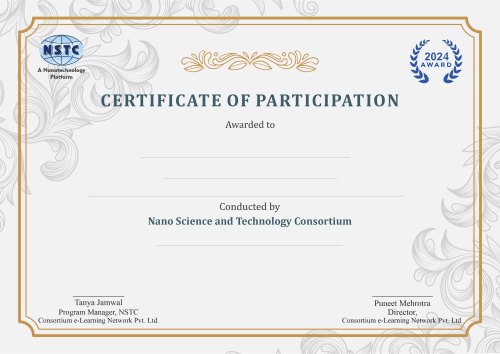
Get an e-Certificate of Participation!
Intended For :
- Undergraduate/postgraduate degree in Environmental Science, Biotechnology, Microbiology, Ecology, Life Sciences, Agriculture, or related fields.
- Professionals working in wastewater treatment, environmental monitoring, pollution control, sustainability, or bioprocess industries.
- Individuals interested in bioremediation, microbial ecology, and environmental impact assessment.
- Data scientists/engineers wishing to apply their skills to environmental datasets and ecological modeling.
Career Supporting Skills
Program Outcomes
- Understand how microbes, plants, and enzymes detoxify environmental pollutants.
- Learn tools for pollutant analysis, microbial profiling, and remediation design.
- Explore case studies of oil spill cleanup, heavy metal removal, and wastewater treatment.
- Gain exposure to data-driven environmental assessment and modeling.
- Be able to propose actionable bioremediation strategies.