
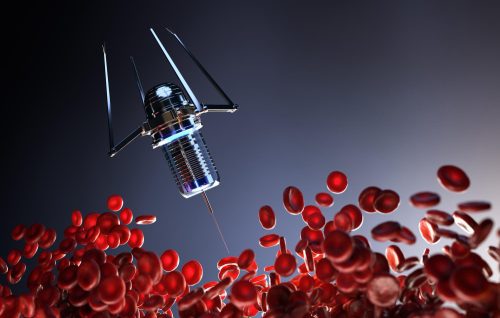
AI-Guided Design of Smart Nanocarriers for Targeted Cancer Therapy
Where smart nanocarriers meet smart algorithms for next-generation cancer therapy.
Skills you will gain:
About Program:
Smart nanocarriers, such as liposomes, polymeric nanoparticles, micelles, dendrimers, and inorganic nanomaterials, are widely used to improve drug stability, tumor accumulation, controlled release, and reduced systemic toxicity. However, building an effective nanocarrier is a multi-parameter challenge involving carrier selection, surface engineering, payload loading, microenvironment response, immune interactions, and scalable formulation decisions.
This workshop introduces how AI/ML can accelerate nanocarrier design by learning from experimental and literature datasets to predict performance trends such as uptake, biodistribution, toxicity signals, and release behavior. Participants will work through dry-lab (computational) design frameworks, feature mapping, model interpretation, and decision-making strategies to select and optimize nanocarrier candidates for targeted cancer therapy.
Aim:
This workshop aims to train participants to design smart nanocarriers for targeted cancer therapy using AI/ML-guided workflows. You will learn how formulation variables (size, charge, coating, ligand targeting, release triggers) influence tumor delivery, efficacy, and safety. The program connects nanomedicine concepts with data-driven prediction and optimization methods. It is designed to help learners build translation-ready nanocarrier strategies for research and industry.
Program Objectives:
- Understand key nanocarrier platforms and their therapy-fit selection criteria.
- Learn design parameters: size, charge, ligand targeting, stability, loading, release kinetics.
- Apply ML logic to rank and optimize nanocarrier candidates using datasets.
- Interpret model outputs to balance efficacy vs safety vs manufacturability.
- Create a nanocarrier design brief with evaluation metrics and risk considerations.
What you will learn?
Day 1 Foundations of Smart Nanocarriers & Cancer Targeting
- Introduction to nanomedicine and smart nanocarriers
- Liposomes, polymeric nanoparticles, dendrimers, inorganic and hybrid systems
- Tumor microenvironment (TME): the basis for targeted therapy
- Passive targeting (EPR effect) vs. active targeting (ligands, antibodies, peptides)
- Key design parameters: size, charge, surface chemistry, release triggers
- Case studies: Nanocarriers in clinical trials for cancer therapy
Day 2 AI & Machine Learning Tools for Nanocarrier Design
- Why AI in nanomedicine? Data-driven design vs. experimental trial-and-error
- Introduction to machine learning for nano–bio interactions
- Types of models used:
- Regression models (for drug loading, release kinetics)
- Classification models (cellular uptake, toxicity prediction)
- Neural networks for predicting biodistribution
- Feature engineering for nanomaterials:
- Physicochemical descriptors
- Ligand density, surface modifications
- TME-sensitive triggers
Day 3 Integrating AI Insights for Optimized Cancer Nanomedicine
- AI-guided optimization for targeting efficiency and controlled release
- Decision-making workflows: Selecting best nanocarrier candidates
- Evaluating toxicity, stability, and in vivo pharmacokinetics via ML predictions
- Translational challenges: Data scarcity, model generalization, regulatory pathways
- Future directions: Digital twins & In silico trials
- Personalized nanomedicine using patient-specific data
Mentor Profile
Fee Plan
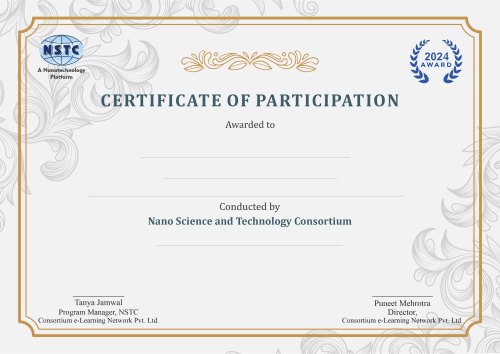
Get an e-Certificate of Participation!
Intended For :
- Doctoral Scholars & Researchers: PhD candidates seeking to integrate computational workflows into their molecular research.
- Postdoctoral Fellows: Early-career scientists aiming to enhance their data-driven publication profile.
- University Faculty: Professors and HODs interested in modern bioinformatics pedagogy and tool mastery.
- Industry Scientists: R&D professionals from the Biotechnology and Pharmaceutical sectors transitioning to genomic-driven discovery.
- Postgraduate Students: Final-year PG students looking for specialized research-grade exposure beyond standard curricula.
Career Supporting Skills
Program Outcomes
Participants will be able to:
- Explain the design and function of smart nanocarriers for oncology applications.
- Use AI/ML concepts to understand how nanoparticle performance can be predicted.
- Identify key physicochemical parameters influencing cancer targeting and biodistribution.
- Interpret datasets related to nanocarrier toxicity, cellular uptake, and tumor microenvironment interactions.
- Assess the potential of AI-assisted nanomedicine for next-generation cancer therapies.