

Hands-on Medical Wearable Data Lab: From Biosignals to Remote Monitoring App
Transforming Biosignals into Real-Time Health Insights
Skills you will gain:
About Program:
The “Hands-on Medical Wearable Data Lab” offers a practical experience in collecting and analyzing biosignals from wearable devices. Participants will develop skills in building remote health monitoring applications, exploring real-time data processing, and advancing wearable technology for improved healthcare solutions.
Aim: The aim of the “Hands-on Medical Wearable Data Lab” is to provide participants with practical experience in collecting, analyzing, and interpreting biosignals from wearable medical devices. The lab focuses on building skills in developing remote monitoring applications, enabling real-time health tracking, and fostering innovation in wearable technology for personalized healthcare solutions.
Program Objectives:
- To introduce participants to the fundamentals of medical wearables and biosignals, including ECG, PPG, IMU, and SpO₂.
- To provide hands-on experience in processing, cleaning, and analyzing wearable data for health monitoring.
- To teach signal exploration and feature extraction techniques for biosignal-based applications.
- To demonstrate the integration of machine learning models for heart rate variability, activity tracking, and predictive health analytics.
- To build practical skills in designing and developing remote patient monitoring (RPM) dashboards and applications.
- To equip participants with the knowledge to create real-time data ingestion systems and clinician-focused user interfaces.
- To foster an understanding of the ethical considerations and privacy issues in wearable health technology.
What you will learn?
📅 Day 1 – Basics & Health Signal Lab (App – Part 1)
- Intro to medical wearables (ECG, PPG, IMU, SpO₂) & use-cases
- Set up Vibe Code IDE, clone template, run starter app
- Import & clean wearable datasets (file upload, timestamps, basic stats)
- Explore signals (time-series plots, signal explorer)
- Improve signal quality (basic filters, raw vs filtered views)
👉 Outcome: Health Signal Lab v1 – upload, clean, visualize, and filter biosignals.
📅 Day 2 – Features, ML & Health Signal Lab (App – Part 2)
- Heart rate & HRV (peak detection, HR/HRV metrics)
- IMU feature extraction & activity summaries
- Build a simple ML pipeline (features, labels, LogReg/RandomForest)
- Auto “Train Model” + accuracy & confusion matrix in-app
- Generate summary report & mini-project using full pipeline
👉 Outcome: Health Signal Lab v2 – full analytics + basic ML + reporting.
📅 Day 3 – Remote Monitoring & Mini RPM Dashboard
- Intro to Remote Patient Monitoring (RPM) architecture & examples
- Set up Mini RPM Dashboard template in Vibe Code IDE
- Simulate multi-patient HR/SpO₂ streams & data ingestion
- Build live clinician dashboard (patient cards, time-series, auto-refresh)
- Add simple alert rules + discuss ethics, privacy & consent
- Participant demos of both apps
👉 Outcome: Working Mini RPM Dashboard + end-to-end workflow from wearable data → analytics → remote monitoring.
Mentor Profile
Fee Plan
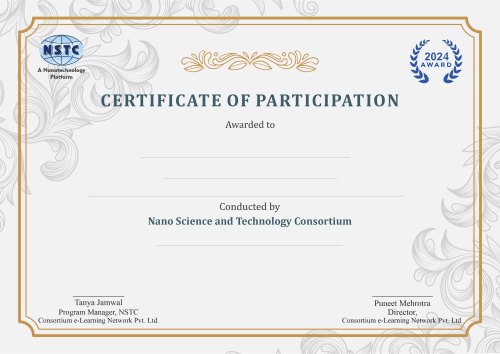
Get an e-Certificate of Participation!
Intended For :
- Healthcare professionals, clinicians, and researchers interested in wearable technology and remote patient monitoring
- Data scientists and engineers looking to work with biosignal data and machine learning in healthcare
- Developers and students interested in building apps for health data analysis and remote monitoring
- Individuals keen on learning about medical wearables, signal processing, and real-time health analytics
Career Supporting Skills
Program Outcomes
- Proficiency in handling and processing wearable biosignals (ECG, PPG, IMU, SpO₂) from data import to cleaning and visualization.
- Development of machine learning models for heart rate, HRV, and activity tracking using wearable data.
- Ability to integrate feature extraction and real-time analytics for improved health monitoring.
- Hands-on experience in creating a remote patient monitoring (RPM) dashboard with live data ingestion, alerting systems, and clinician-friendly interfaces.
- Understanding of the full workflow from biosignal collection to remote monitoring application deployment.