
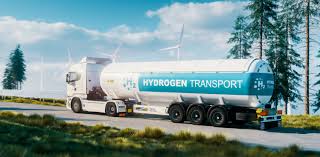
Hydrogen Hubs: Electrolyzers, Storage, Transport, and End-Use Cases
Design, size, and dispatch real-world hydrogen hubs.
Skills you will gain:
A three-day, hands-on program to design a bankable hydrogen hub end-to-end—from electrolyzers to end use. You’ll size grid/RE coupling, compare storage & transport pathways, apply safety/codes, and quantify LCOH and carbon intensity. Leave with a preliminary hub design, sizing + LCOH worksheet, storage/transport mix, and a dispatch plan with CI/KPI snapshot.
Aim:
Equip participants to design, size, and dispatch an end-to-end, bankable and certifiable hydrogen hub—from electrolyzers to storage, transport, and end-use—by applying techno-economic analysis (CAPEX/OPEX, LCOH), safety & codes compliance, logistics optimization, and carbon-intensity accounting, culminating in a defensible hub plan with KPIs and a CI snapshot.
-
Compare electrolyzer options (PEM/Alkaline/SOEC) for target duty cycles.
-
Size production + BoP for grid vs RE coupling.
-
Build/stress-test an LCOH model with sensitivities.
-
Choose storage/transport pathways (CGH₂/LH₂/LOHC/NH₃) with quantified losses/costs.
-
Specify end-use requirements (purity, pressure, dynamics) across sectors.
-
Compute CI (kg CO₂e/kg H₂) and align with certification/GoO.
-
Apply H₂ safety/codes: ventilation, detection, zoning, siting.
-
Draft a dispatch plan and governance (telemetry/KPIs, SLAs, risk).
What you will learn?
📅 Day 1 – Electrolyzers & Production
- Tech overview: PEM, Alkaline, SOEC (efficiency, dynamics, water quality, degradation)
- Sizing & coupling: grid vs RE (PV/wind), capacity factor, curtailment absorption, power quality
- Economics & policy: CAPEX/OPEX, stack replacement, LCOH levers, incentives/permitting
- Safety basics: H₂ properties, ventilation, detection, area classification
- Hands-on: Quick plant-sizing + LCOH calculator for a sample hub
📅 Day 2 – Storage & Transport
- Storage options: CGH₂, LH₂, LOHC, NH₃ — energy penalties, boil-off, turnaround
- Assets/codes: vessels, cryo tanks, tube trailers; siting setbacks, key standards
- Networks: trucking vs pipelines, blending limits, compression energy, hub-and-spoke design
- Risk/HSE: leak scenarios, dispersion, sensors, emergency response
- Hands-on: Size storage and choose a transport mix; estimate logistics cost and losses
📅 Day 3 – End-Use & Hub Integration
- Uses: refining, DRI steel, chemicals, turbines/engines, fuel cells (mobility/backup); purity & duty cycles
- Integration: demand portfolios, temporal matching, hybrid H₂–power ops, curtailment valorization
- Carbon & certification: CI (kg CO₂e/kg H₂), guarantees of origin, low-carbon labeling
- Ops & governance: telemetry, SLAs, risk register, stakeholder coordination
- Hands-on: Build a hub dispatch plan matching production, storage, and deliveries; output CI and KPI snapshot
Intended For :
-
Energy, process, chemical, mechanical, or electrical engineers
-
Project developers, EPCs, and hydrogen/OEM teams (electrolyzers, storage, transport)
-
Industrial users: refining, DRI steel, ammonia/chemicals, power & mobility integrators
-
Utilities, IPPs, and RE planners (PV/wind + grid coupling)
-
City/state energy planners, ports & logistics operators, and hub consortia leads
-
HSE/risk professionals and compliance officers (codes/standards)
-
Policy, permitting, and regulatory officials
-
Investors, lenders, and commercial/finance analysts
-
Researchers and senior students in energy systems
Career Supporting Skills