
Deep Learning for Histopathology Image Analysis
Transforming Histopathology Analysis with Deep Learning for Faster, More Accurate Diagnoses
Skills you will gain:
About Program:
Histopathology remains the gold standard for disease diagnosis, especially in cancer. With the digitization of pathology slides, deep learning has emerged as a powerful tool to analyze tissue morphology at scale, enabling reproducible and objective decision support for pathologists. Convolutional neural networks and modern AI architectures now play a central role in tumor detection, grading, and outcome prediction.
This workshop provides a structured introduction to histopathology image analysis using deep learning, covering image preprocessing, patch-based learning, classification, and model evaluation. Through hands-on dry-lab sessions, participants will work with real histopathology datasets and learn best practices for performance assessment and explainability, preparing them for research or industry roles in digital pathology.
Aim: This workshop aims to train participants in applying deep learning techniques to histopathology images for disease detection, classification, and biomarker analysis. It focuses on computational (dry-lab) workflows for handling large pathology images, feature extraction, and model development. Participants will gain practical skills in building, evaluating, and interpreting deep learning models for medical image analysis. The program bridges AI research with real-world digital pathology applications.
Program Objectives:
What you will learn?
Day 1 – Introduction to Histopathology Imaging and AI Workflows
- Introduction to Histopathology Imaging and AI Workflows
- Data Preprocessing, Augmentation & Normalization
- Image Segmentation and Annotation Techniques
Day 2 – Building Deep Learning Models for Tumor Detection
- Deep Learning Architectures for Tumor Detection
- Dataset Splitting, Validation & Evaluation Metrics
- Hands-on: Applying U-Net / Mask R-CNN for Segmentation
Day 3 – Model Optimization and Transfer Learning
- Model Optimization & Transfer Learning
- Hyperparameter Tuning & Regularization Techniques
- Hands-on: Grad-CAM for Model Interpretability
Mentor Profile
Fee Plan
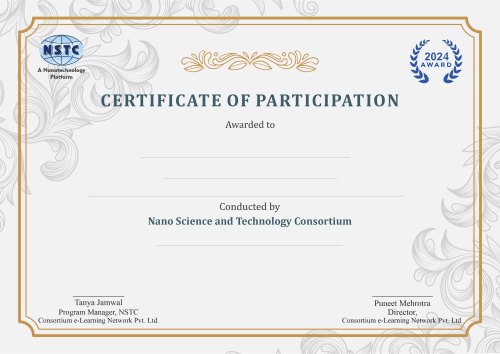
Get an e-Certificate of Participation!
Intended For :
- Doctoral Scholars & Researchers: PhD candidates seeking to integrate computational workflows into their molecular research.
- Postdoctoral Fellows: Early-career scientists aiming to enhance their data-driven publication profile.
- University Faculty: Professors and HODs interested in modern bioinformatics pedagogy and tool mastery.
- Industry Scientists: R&D professionals from the Biotechnology and Pharmaceutical sectors transitioning to genomic-driven discovery.
- Postgraduate Students: Final-year PG students looking for specialized research-grade exposure beyond standard curricula.
Career Supporting Skills
Program Outcomes