
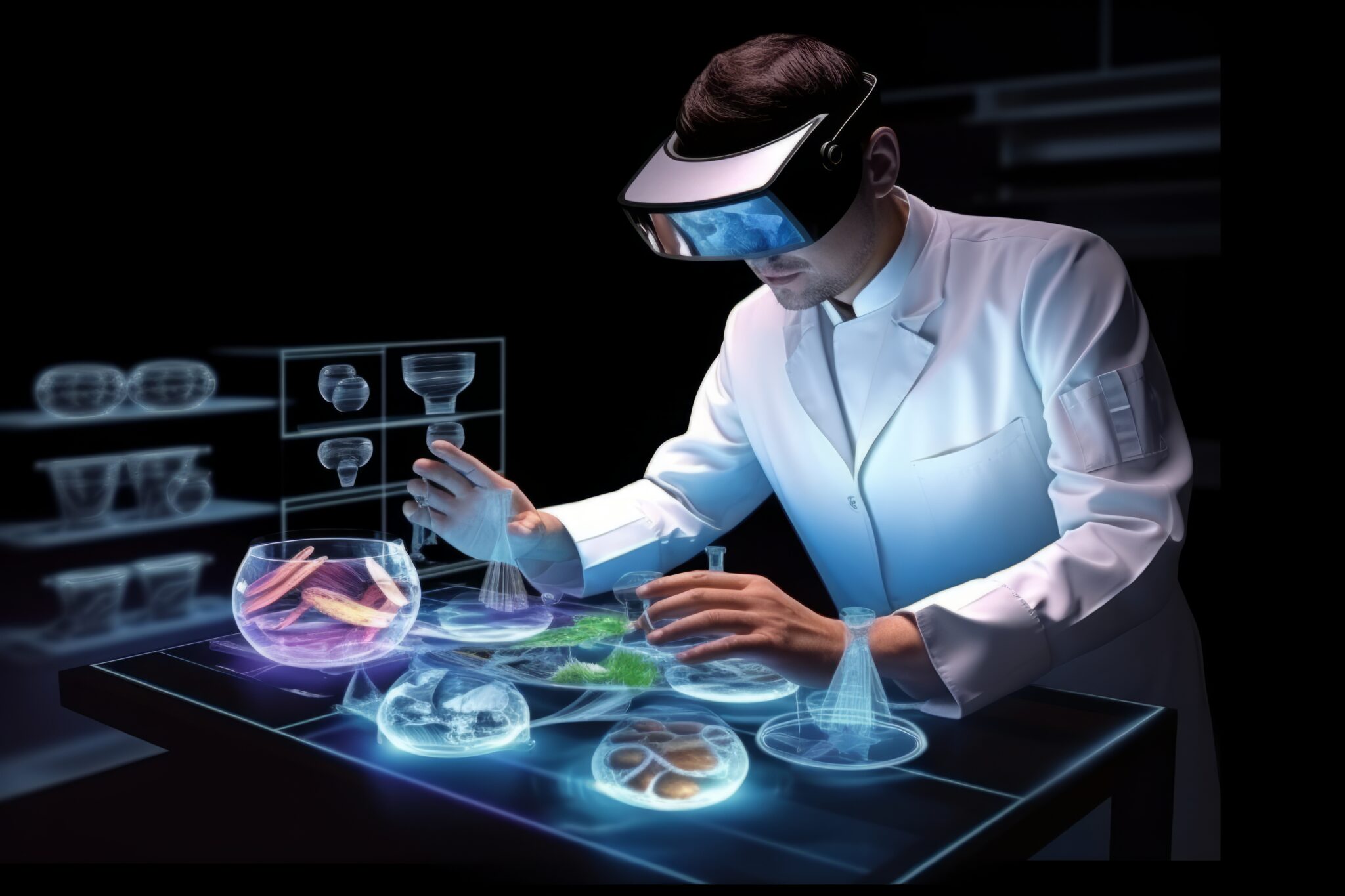
AI Model Development for Digital Pathology
“Transforming Pathology Diagnostics with AI-Powered Models.”
Skills you will gain:
About Program:
Digital pathology has revolutionized diagnostic workflows by converting histological slides into high-resolution digital images. The integration of AI allows pathologists to analyze large datasets with increased speed, precision, and reproducibility. This workshop covers the fundamentals of AI in pathology, including image preprocessing, feature extraction, and model training for disease detection and classification.
Participants will learn to apply AI algorithms to real-world pathology datasets, develop predictive models, and validate their performance. Emphasis will be placed on practical applications in oncology, hematology, and other clinical specialties, providing insights into improving diagnostic accuracy and enabling personalized patient care.
Aim: This workshop aims to provide participants with hands-on experience in developing AI models for digital pathology. It focuses on leveraging machine learning and deep learning techniques to analyze histopathological images, identify disease patterns, and assist in accurate diagnostics, ultimately enhancing clinical decision-making
Program Objectives:
- Understand digital pathology workflows and challenges.
- Learn image preprocessing, annotation, and feature extraction techniques.
- Develop machine learning and deep learning models for histopathological analysis.
- Evaluate and validate AI models for clinical relevance and accuracy.
- Apply AI models to real-world pathology datasets and case studies.
What you will learn?
Day 1 – Convolutional Neural Networks
- CNNs and their role in pathology
- CNN architecture (convolution, pooling, activation)
- Pathology-specific challenges: stain variation, magnification levels
- Data preparation: WSI patching, color normalization, augmentation
Day 2 – Model Building
- Choosing architectures (ResNet, VGG, DenseNet, EfficientNet)
- Dataset splitting & validation methods
- Handling class imbalance and selecting evaluation metrics
- Hands-on: Training a CNN model for tissue classification
Day 3 – Optimization & Transfer Learning
- Hyperparameter tuning & regularization methods
- Early stopping and learning rate scheduling
- Transfer learning: pre-trained models & fine-tuning for pathology
- Hands-on: Implementing transfer learning + model interpretability (Grad-CAM)
Mentor Profile
Fee Plan
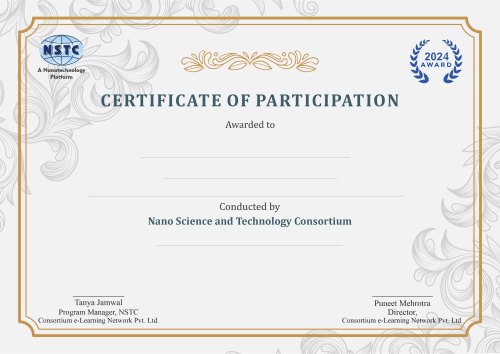
Get an e-Certificate of Participation!
Intended For :
- Undergraduate/postgraduate degree in Pathology, Biotechnology, Bioinformatics, Medical Imaging, Computational Biology, or related fields.
- Professionals in healthcare, diagnostics, hospitals, or pharmaceutical sectors.
- Data scientists and AI/ML engineers interested in medical imaging and pathology applications.
- Individuals with an interest in AI-assisted clinical diagnostics and healthcare innovation.
Career Supporting Skills
Program Outcomes
- Ability to develop AI models for pathology image analysis.
- Knowledge of preprocessing and annotating digital pathology slides.
- Skills in training, testing, and validating AI models for clinical application.
- Understanding the integration of AI models in pathology workflows.
- Insights into AI-driven precision diagnostics and personalized patient care.