

Deep Learning for Structural Health Monitoring
International Workshop on AI-Driven Condition Assessment and Failure Prediction in Civil & Mechanical Structures
Skills you will gain:
About Program:
Deep Learning for Structural Health Monitoring is a cutting-edge international workshop that explores how AI—particularly convolutional neural networks (CNNs), recurrent neural networks (RNNs), and transformers—can be applied to monitor the health and integrity of physical structures.
Participants will learn to work with sensor data, vibration signals, thermal imagery, and inspection footage to build deep learning models for crack detection, damage localization, fatigue prediction, and condition classification. The workshop bridges the fields of structural engineering, machine learning, and IoT, offering rich insights and practical tools for researchers and industry professionals alike.
Aim: To provide participants with practical and theoretical expertise in applying deep learning techniques for Structural Health Monitoring (SHM), enabling early fault detection, predictive maintenance, and safety assurance in civil infrastructure, aerospace, mechanical systems, and smart cities.
Program Objectives:
-
Bridge the knowledge gap between AI and structural/mechanical engineering
-
Teach deep learning architectures tailored to SHM datasets
-
Foster innovation in safe, automated, and scalable monitoring tools
-
Enable participants to prototype real-world solutions for infrastructure safety
-
Promote AI integration in regulatory, public safety, and industrial maintenance practices
What you will learn?
📅 Day 1: Deep Learning Foundations for Structural Materials
Topics Covered
-
Fundamentals of Artificial Intelligence and Deep Learning
-
Applications of Deep Learning in Structural and Building Materials
-
Model Training, Testing, and Validation Workflows
-
Dataset Preparation, Processing, and Visualization Techniques
-
Hands-on Training: Deep Learning Models for Structural Monitoring Data
-
Frameworks and Libraries: Python, PyTorch, Keras, TensorFlow
Tools & Platforms
-
Google Colab
-
Python Programming Environment
Capstone Project
Convolutional Neural Networks (CNNs):
Detection and classification of structural cracks using image datasets.
📅 Day 2: Time Series Modeling with LSTM in Structural Applications
Topics Covered
-
Introduction to Long Short-Term Memory (LSTM) Networks
-
LSTM Architecture and Use Cases in Structural Engineering
-
End-to-End Workflow: Training, Testing, and Validating LSTM Models
-
Time Series Dataset Preparation and Visualization
-
Practical Implementation on Real-World Structural Monitoring Data
-
Frameworks and Libraries: Python, PyTorch, Keras, TensorFlow
Tools & Platforms
-
Google Colab
-
Python Programming Environment
Capstone Project
LSTM for Structural Dynamics:
Time-series prediction and vibration analysis using LSTM networks.
📅 Day 3: Generative AI & IoT Integration for Smart Infrastructure
Topics Covered
-
Introduction to Generative AI: Concepts and Use Cases
-
Overview of Internet of Things (IoT) in Smart Monitoring Systems
-
Generative AI Model Development for Sensor Nodes and IoT Devices
-
Training, Testing, and Validation of Generative AI on Time Series Data
-
Dataset Handling and Visualization
-
Frameworks and Libraries: Python, PyTorch, Keras, TensorFlow
Tools & Platforms
-
Google Colab
-
Hugging Face Transformers
-
Python Programming Environment
Capstone Project
Generative AI for Edge Deployment:
Deploying generative AI models on IoT sensor nodes for predictive infrastructure monitoring.
Mentor Profile
Fee Plan
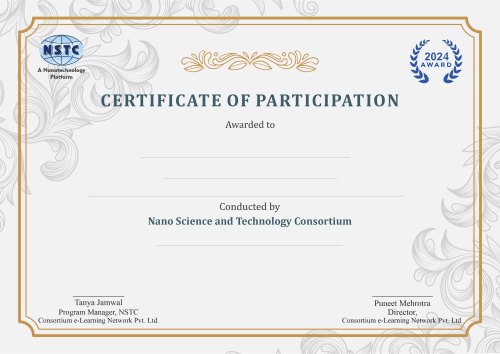
Get an e-Certificate of Participation!
Intended For :
-
Civil, mechanical, aerospace, and materials engineers
-
AI/ML developers interested in engineering applications
-
Researchers in smart infrastructure, IoT, and NDE (non-destructive evaluation)
-
Urban safety and infrastructure monitoring teams
-
PhD/MS students in engineering or data science
Career Supporting Skills
Program Outcomes
-
Understand key deep learning models applicable to SHM
-
Analyze sensor and image data using AI for crack, stress, and defect detection
-
Build predictive tools to estimate deterioration and structural failure
-
Integrate SHM with IoT and real-time monitoring systems
-
Earn a certification to validate your AI-engineering expertise