

3D Bioprinting of Functional Human Organs
Shaping the Future: Innovate, Print, and Heal with 3D Bioprinting.
Skills you will gain:
About Program:
This intensive 3-day workshop provides an in-depth exploration of 3D bioprinting technologies and their applications in modern medicine. Participants will learn about the various materials and methods used in bioprinting, including the integration of cells, stem cells, and biomaterials to create tissue-like structures. The workshop covers theoretical, offering insights into how these technologies can be used to fabricate complex, functional organs for medical research and therapeutic applications. Ethical and regulatory challenges will also be discussed, alongside the future possibilities of bioprinting in personalized medicine.
Aim: Explore the revolutionary field of 3D bioprinting, a pivotal technology with the potential to transform medical treatments by creating functional human organs. This workshop will delve into the processes, materials, applications, and ethical considerations involved in 3D bioprinting, equipping participants with the knowledge and skills to pioneer advancements in this dynamic and promising field.
Program Objectives:
- Understand the fundamental principles of 3D printing and bioprinting.
- Explore various biomaterials used in the creation of bioprinted scaffolds.
- Analyze the interaction between printed structures and biological systems.
- Examine the applications of bioprinting in creating functional human organs.
- Discuss the ethical, regulatory, and commercial aspects of bioprinting.
What you will learn?
Day 1: Introduction and Fundamentals
- Session 1: Introduction to 3D Printing
- Overview of 3D printing technologies
- Evolution from 3D printing to 3D bioprinting
- Session 2: Understanding 3D Bioprinting
- Definition and process of 3D bioprinting
- Advantages and disadvantages
- Session 3: Materials Used in 3D Bioprinting
- Types of materials: hydrogels, polymers, ceramics, metals
- Selection criteria based on application
- Session 4: Biological Aspects of 3D Bioprinting
- Types of cells and biomolecules used (stem cells, proteins, etc.)
- Integration of pharmaceutical agents
Day 2: Applications and Techniques
- Session 1: Enhancing Biocompatibility and Function
- Techniques to reduce infection and inflammation
- Enhancing tissue growth on bioprinted scaffolds
- Session 2: Cellular Interaction with Scaffolds
- Mechanisms of cell adhesion and growth
- Bioactive scaffolds for tissue engineering
- Session 3: Specialized Applications in Medicine
- Orthopedic applications: hard and soft tissue engineering
- In vitro testing as an alternative to animal models
Day 3: Advanced Applications and Ethical Considerations
- Session 1: Bioprinting for Organ Systems
- Cardiovascular, spine, bladder, brain, and nervous system
- Challenges and current research in each area
- Session 2: Future Horizons in 3D Bioprinting
- New developments: sensors, integrated electronics
- Commercialization and scaling production
- Session 3: Ethical and Regulatory Landscape
- Ethical considerations in bioprinting human organs
- Navigating regulatory frameworks and approval processes
- Closing Session: Roundtable and Q&A
- Open discussion on future directions and real-world applications
- Q&A with experts in the field
Mentor Profile
Fee Plan
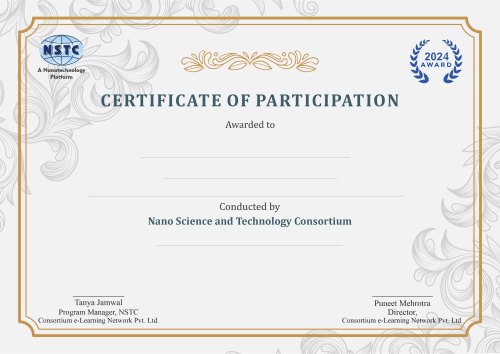
Get an e-Certificate of Participation!
Intended For :
- Undergraduate degree in Biomedical Engineering, Biotechnology, or related fields.
- Medical professionals interested in innovative treatment methods.
- Researchers and academics focusing on tissue engineering and regenerative medicine.
Career Supporting Skills
Program Outcomes
Participants will:
- Gain foundational knowledge of 3D bioprinting technology and its medical applications.
- Understand the materials and methods used in bioprinting.
- Learn about the integration of bioprinting in therapeutic strategies.
- Be able to identify ethical and regulatory considerations in bioprinting.
- Prepare for future trends and advancements in bioprinting technologies.