

Analysis of Biomedical Data and Application of Machine Learning using R
Transforming Biomedical Data into Insights with R and Machine Learning
Skills you will gain:
About Program:
Machine learning (ML) is a branch of artificial intelligence (AI) that concentrates on creating algorithms and statistical models that allow computer systems to learn from data and make predictions or decisions. Essentially, it is a discipline where computers are trained to carry out tasks without the need for explicit programming for each individual task. Recent developments in Artificial Intelligence (AI) and Machine Learning (ML) technology have led to significant progress in predicting and identifying health emergencies, disease demographics, and immune responses, among other areas. However, there is still skepticism about the practical use and interpretation of outcomes from ML-based methods in healthcare environments, even as the adoption of these methods rapidly increases.
In this workshop, we present a concise summary of machine learning techniques and algorithms, which encompass supervised, unsupervised, and reinforcement learning, complete with examples. Additionally, we explore the use of machine learning in the biomedical sector to gain insights into disease prevalence and diagnosis.
Aim: The aim is to assist bio-medical scientists and medical professionals by identifying and summarizing meaningful patterns from large datasets.
Program Objectives:
- To examine extensive datasets of medical information in order to uncover patterns and forecast disease progression, diagnosis, treatment responses, and patient outcomes.
- To expedite medical discoveries and enhance healthcare by delivering greater insights into intricate biological systems and diseases via data analysis.
This workshop intends to provide an arena for students, faculty and researchers in discussing the following topics as well as to provide hands on training.
What you will learn?
Day 1: Introductionto ML/AI and its Foundational Principles
- Overview of Artificial Intelligence, Machine Learning, and Deep Learning.
- Supervised Leaning, Unsupervised Learning, Reinforcement learning LDA (Linear Discriminant Analysis), KNN (K-Nearest Neighbours), SVM (Support Vector Machine), Random Forest, AdaBoost (Adaptive Boosting)
Day 2: R studio and Bioconductor packages
- R and Bioconductor packages installation
- Application of Machine Learning for Biomedical Research
Day 3: Biomedical Data analysis and Machine Learning
- Machine learning prediction model via data extraction, data analysis, data visualization and data modelling
- Performance testing of the model
Mentor Profile
Fee Plan
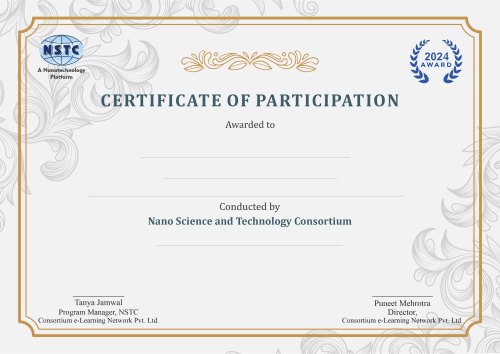
Get an e-Certificate of Participation!
Intended For :
- Undergraduate degree in Biomedical Sciences, Bioinformatics, Data Science, or related fields.
- Professionals working in healthcare, clinical research, or biotechnology sectors.
- Individuals with a keen interest in biomedical data analysis and machine learning applications.
Career Supporting Skills
Program Outcomes
- Master R programming for biomedical data analysis.
- Gain expertise in machine learning techniques for healthcare.
- Learn to build predictive models for disease and drug studies.
- Develop insights into real-world applications of bioinformatics.
- Acquire job-ready skills for roles in health tech and research.