

Next-Gen Yeast Engineering: Sustainable Bioethanol from Waste Biomass
Fueling Sustainability: Transforming Waste into Renewable Energy
Skills you will gain:
About Program:
This workshop focuses on the sustainable production of bioethanol using non-conventional yeasts and agro-industrial wastes. Traditional bioethanol production often faces challenges such as high feedstock costs and limited sustainability. By utilizing dairy and agricultural residues, we aim to address these barriers while promoting a circular economy.
Participants will explore the fundamentals of bioethanol production, delve into the metabolic engineering of yeasts, and analyze innovative pre-treatment and fermentation technologies.
Aim: To explore innovative metabolic engineering techniques for non-conventional yeasts to produce bioethanol from dairy and agricultural waste, contributing to renewable energy solutions. Participants will gain knowledge on waste valorization, yeast optimization, and sustainability.
Program Objectives:
- Understand the fundamentals of bioethanol production and its importance.
- Analyze the potential of dairy and agricultural wastes as bioethanol feedstocks.
- Gain insights into metabolic engineering and synthetic biology approaches for yeast optimization.
- Explore advanced fermentation technologies and scaling-up strategies.
- Foster innovation in sustainable bioethanol production practices.
What you will learn?
Day 1: Introduction and Fundamentals
- Welcome and Orientation
- Introduction to the workshop: purpose, key objectives, and expected outcomes.
- Detailed agenda outline to set clear expectations.
- Ice-breaking activity to encourage participant engagement and networking.
- Session 1: Introduction
- Overview of Bioethanol Production: Importance and relevance in the context of renewable energy and sustainability.
- Challenges of Traditional Feedstocks: Environmental and economic limitations of conventional raw materials like corn and sugarcane.
- Role of Non-Conventional Yeasts: An introduction to their unique advantages and potential as alternative bioethanol producers.
- Session 2: Overview of Bioethanol Production
- Conventional vs. Non-Conventional Approaches: A comparative analysis of processes, efficiency, and sustainability.
- Key Case Studies: Real-world applications of non-conventional yeasts in bioethanol production, highlighting successes and challenges.
- Interactive Session
- Group discussion: “Global Bioethanol Demand and Waste Management Challenges.”
- Facilitated Q&A sessions to address participant queries and spark meaningful discussions.
Day 2: Feedstocks and Metabolic Engineering Techniques
- Recap of Day 1
- Summary of key learnings, participant reflections, and feedback from Day 1 activities.
- Session 3: Dairy and Agricultural Wastes as Feedstocks
- Understanding Feedstocks: Composition and characteristics of dairy and agricultural wastes.
- Challenges and Solutions: Strategies to overcome technical and economic barriers in waste utilization.
- Innovative Techniques: Insights into pre-treatment methods and enzymatic processes to maximize yield.
- Session 4: Metabolic Engineering of Yeast
- Introduction to Metabolic Engineering: Principles and importance in optimizing bioethanol production.
- Enhancing Yeast Efficiency: Tools and techniques to improve sugar utilization and stress tolerance.
- Synthetic Biology Approaches: Cutting-edge methods to design and implement synthetic metabolic pathways.
- Case Study
- Case study analysis: Engineering yeasts for improved ethanol production from dairy and agri-wastes.
- Problem-solving activity: Develop strategies to overcome real-world challenges in bioethanol production.
Day 3: Advanced Applications and Future Directions
- Recap of Day 2
- Summary of the previous day’s modules and activities with participant insights.
- Addressing outstanding questions and setting the stage for advanced topics.
- Session 5: Advances in Fermentation Technologies
- Fermentation Systems for Non-Conventional Yeasts: Batch, fed-batch, and continuous systems.
- Bioreactor Design: Industrial applications, challenges, and innovations in bioreactor technology.
- Scaling Up: Solutions for transitioning from lab-scale to industrial-scale bioethanol production.
- Session 6: Future Directions
- Emerging Trends: Next-generation yeast strains, synthetic biology platforms, and metagenomics.
- Circular Economy Integration: Opportunities for incorporating waste-to-energy systems into sustainable business models.
- Biorefinery Approaches: Producing multiple value-added products (ethanol, biogas, animal feed) from the same feedstocks.
Mentor Profile
Fee Plan
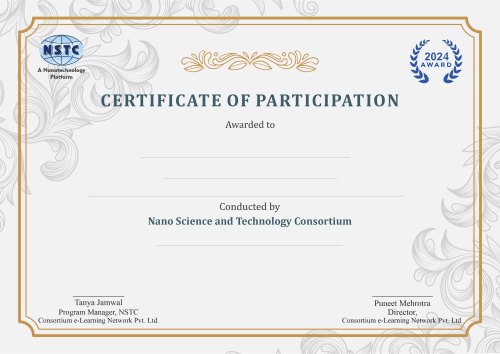
Get an e-Certificate of Participation!
Intended For :
- Undergraduate degree in Biotechnology, Microbiology, Environmental Science, Chemical Engineering, or related fields.
- Professionals in the renewable energy or agricultural industries.
- Individuals with a keen interest in bioethanol production, waste management, and sustainability practices.
Career Supporting Skills
Program Outcomes
- Deep understanding of bioethanol production processes using non-conventional yeast.
- Practical knowledge of feedstock utilization and yeast engineering.
- Familiarity with advanced fermentation and bioreactor technologies.
- Insights into circular economy practices for waste management.
- Career guidance in the bioethanol and renewable energy sectors.