

AI in Immunoinformatics and Vaccine Development
Accelerating Global Health Solutions: AI in Vaccine Development and Immunoinformatics
Skills you will gain:
About Program:
This specialized program integrates AI with immunology to advance vaccine development. Participants will learn how AI tools can analyze vast biological datasets to identify potential vaccine candidates, predict immune responses, and streamline the vaccine development pipeline. The course covers bioinformatics, machine learning models, and simulation techniques critical to modern vaccine research.
Aim: The aim of the AI in Immunoinformatics and Vaccine Development program is to empower professionals to harness advanced AI technologies to accelerate and refine the vaccine development process. This program focuses on utilizing AI to enhance predictive accuracy, streamline research, and foster innovative approaches in creating effective immunological responses.
Program Objectives:
- Understand the role of AI in immunoinformatics and vaccine development.
- Explore AI-driven techniques for epitope mapping and immune response modeling.
- Apply AI tools to predict vaccine efficacy and safety.
- Evaluate the integration of AI in clinical trial design for vaccines.
- Discuss the ethical implications of using AI in vaccine research.
- Foster interdisciplinary collaborations between immunologists, data scientists, and clinical researchers.
- Enhance skills in managing and analyzing large-scale immunological data using AI.
What you will learn?
Day 1: Basics of Immunology and AI Applications in Immunology
Introduction to Immunology and Immunoinformatics
- Overview of the immune system: components and functions
- Key concepts in immunoinformatics
- Types of data in immunology: epitope data, HLA typing, etc.
AI in Immunology
- Overview of AI applications in immunology research
- Predicting antigen-antibody interactions using AI
- Modeling immune responses to pathogens
- Tools and techniques for AI modeling in immunoinformatics
Day 2: AI in Vaccine Development
AI-Driven Vaccine Development
- Reverse vaccinology approaches
- Role of AI in identifying novel vaccine candidates
- Case studies: Recent AI-driven vaccine developments (e.g., COVID-19 vaccines)
Peptide-Based Vaccine Design Using AI
- Designing peptide-based vaccines: steps and challenges
- AI tools for designing peptide-based vaccines
Day 3: Advanced Topics and Ethical Considerations
AI in Autoimmune Diseases
- How AI helps in understanding autoimmune diseases
- Current research and advancements in AI-driven autoimmune disease research
Integrating Immunoinformatics with Systems Biology
- Overview of systems biology approaches
- How immunoinformatics and AI can be integrated with systems biology for vaccine
development
Ethical and Safety Considerations in AI-Driven Vaccine Development
- Addressing vaccine hesitancy and misinformation
- Balancing rapid vaccine development with safety assessments
- Discussion on the ethical challenges and the importance of transparency
Mentor Profile
Fee Plan
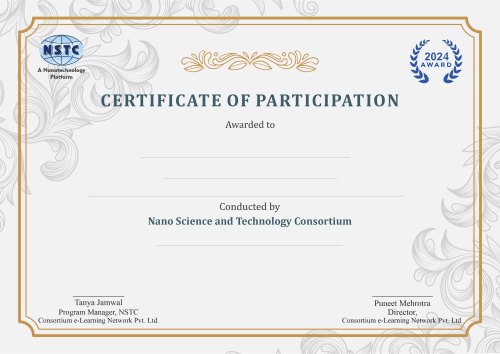
Get an e-Certificate of Participation!
Intended For :
- Immunologists and Virologists
- Bioinformaticians and Data Scientists
- PhD Scholars and Postgraduate Students
- Healthcare Professionals
- Biomedical Researchers
- Public Health Policymakers
- Pharmaceutical Professionals
Career Supporting Skills
Program Outcomes
- AI and Machine Learning Proficiency: Mastery of AI methodologies applicable to immunological data and vaccine research.
- Data Analysis and Management: Skills in handling complex biological data sets for vaccine development.
- Predictive Modeling: Ability to build and interpret models predicting immune responses and vaccine outcomes.
- Ethical Research Practices: Understanding ethical considerations in deploying AI for health interventions.
- Collaborative Research Techniques: Expertise in working across multidisciplinary teams to develop vaccines.
- Innovative Problem Solving: Capacity to apply AI for solving complex problems in vaccine development.
- Effective Communication: Skills to communicate complex AI concepts and results to non-specialist audiences, including policymakers and the public.