
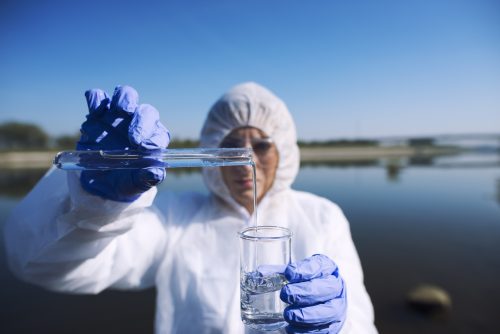
NanoPurify: Transforming Wastewater with Nanotech
Clear Solutions, Brighter Future: Harnessing Nanotech for Water Purity
Skills you will gain:
About Program:
This program introduces cutting-edge nanotechnology applications designed to tackle complex wastewater challenges. Participants will explore the mechanisms of nano-filtration, adsorption processes, and catalytic degradation, understanding how these technologies can be implemented to treat and reuse wastewater in various sectors effectively.
Aim: To provide environmental engineers, researchers, and sustainability professionals with comprehensive knowledge and practical skills in applying nanotechnology to wastewater treatment, driving innovation and environmental sustainability.
Program Objectives:
- Understand the fundamentals of nanotechnology in wastewater treatment.
- Explore various nanomaterials and their properties relevant to purification processes.
- Learn about the design and implementation of nano-based water treatment systems.
- Analyze the efficiency and effectiveness of nanotechnology in removing pollutants.
- Examine the environmental impacts and sustainability of nano-treatment methods.
- Discuss regulatory and safety aspects of using nanotechnology in environmental applications.
What you will learn?
Day 1: Dye Removal from Textile Dyeing Industry Wastewater
Session 1: Introduction to Nanotechnology in Wastewater Treatment
• Overview of Nanotechnology for Wastewater Treatment
• Photocatalysis and Adsorption Methods for Wastewater Treatment
Session 2: Physicochemical Characteristics of Textile Dyeing Industry Wastewater
• Overview of Physicochemical Properties (pH, COD, BOD, TSS, etc.)
• Impact of Untreated Textile Wastewater on the Environment
• Analytical Techniques for Measuring Wastewater Characteristics
Session 3: Selection of Dyes and Dye Characterization
• Methylene Blue (Basic Blue 9)
• Methyl Orange (Acid Orange 52)
• Crystal Violet (Basic Violet 3)
• Understanding the Environmental Impact of Dyes
• Practical Session: Preparing Dye Solutions for Experimental Analysis
Session 4: Selection and Synthesis of Functional Nanomaterials
• Synthesis of Graphene Oxide/Titanium Dioxide (GO/TiO2), Graphene Oxide/Zinc Oxide
(GO/ZnO) and Copper Oxide/Zinc Oxide-Tetrapods (CuO/ZnO-T) Nanocomposites
• Characterization of GO/TiO2, GO/ZnO and CuO-ZnO-T Nanocomposites
• Workshop: Laboratory Preparation of GO/TiO2, GO/ZnO and CuO-ZnO-T Nanocomposites
Session 5: Performance Evaluation of Nanomaterials for Dye Removal
• Designing and implementing Methylene Blue, Methyl Orange, and Crystal Violet Dyes Removal Experiments
• Techniques for Measuring Dyes Concentration
• Workshop: Setting Up and Conducting Dye Removal Experiments
Day 2: Heavy Metal Ion Removal from Textile Dyeing and Oil Industry Wastewater
Session 1: Understanding Heavy Metal Pollution
• Sources and Impacts of Heavy Metal Ion Pollution in Industrial Wastewater
• Focus on Hexavalent Chromium: Industrial Applications and Hazards
• Case Studies: Real-World Incidents of Heavy Metal Pollution
Session 2: Functional Nanomaterials for Heay Metal Ion Removal
• Synthesis of CuO/ZnO-T and ZnO-T/AC Nanocomposites
• Characterization of CuO/ZnO-T and ZnO-T/AC Nanocomposites
• Workshop: Laboratory Preparation of CuO/ZnO-T and ZnO-T/AC Nanocomposites
Session 3: Performance Evaluation of Nanomaterials for Heavy Metal Ion Removal
• Designing and implementing Hexavalent Chromium (Cr(VI)) ions Removal Experiments
• Techniques for Measuring Heavy Metal Ion Concentration
• Workshop: Setting Up and Conducting Heavy Metal Ion Removal Experiments
Session 4: Analyzing and Optimizing Performance
• Data Collection and Statistical Analysis of Experiment Results Techniques for Measuring Heavy Metal Ion Concentration
• Discussion: Factors Affecting the Efficiency of Heavy Metal Removal
Day 3: Oil Removal from Oil Industry Wastewater
Session 1: Understanding Oil Pollution
• Sources and Impacts of Oil Pollution in Industrial Wastewater
• Case Studies: Real-World Incidents of Oil Pollution
Session 2: Functional Nanomaterials for Oil Removal
• Synthesis of Polydimethylsiloxane@Zinc Oxide-Tetrapods@Iron Oxide-Nanorods
• (PZF) Nanohybrid
• Characterization of PZF Nanohybrid
• Workshop: Laboratory Preparation of PZF Nanohybrid
Session 3: Performance Evaluation of Nanomaterials for Oil Removal
• Designing and Implementing Oil Removal Experiments
• Techniques for Measuring Oil Concentration in Water
• Workshop: Setting Up and Conducting Oil Removal Experiments
Session 4: Analyzing and Optimizing Performance
• Data Collection and Statistical Analysis of Experiment Results
• Discussion: Factors Affecting the Efficiency of Oil Removal
Mentor Profile
Fee Plan
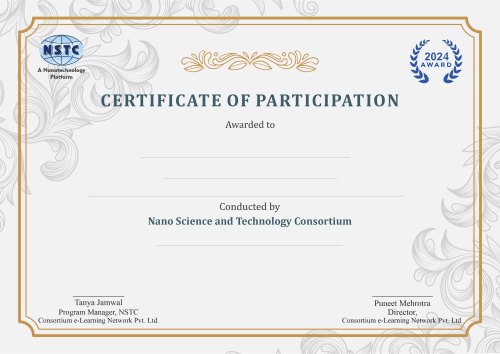
Get an e-Certificate of Participation!
Intended For :
- Environmental engineers and water treatment professionals seeking to implement advanced technologies.
- Researchers and academics in environmental science, nanotechnology, or related fields.
- Sustainability professionals exploring innovative solutions for water and wastewater management.
- Policy makers and regulatory officials focusing on water quality and treatment technologies.
Career Supporting Skills
Program Outcomes
- Nanomaterials Handling
- System Design
- Pollutant Analysis
- Sustainability Practices
- Regulatory Compliance
- Innovative Problem Solving
- Technical Communication