
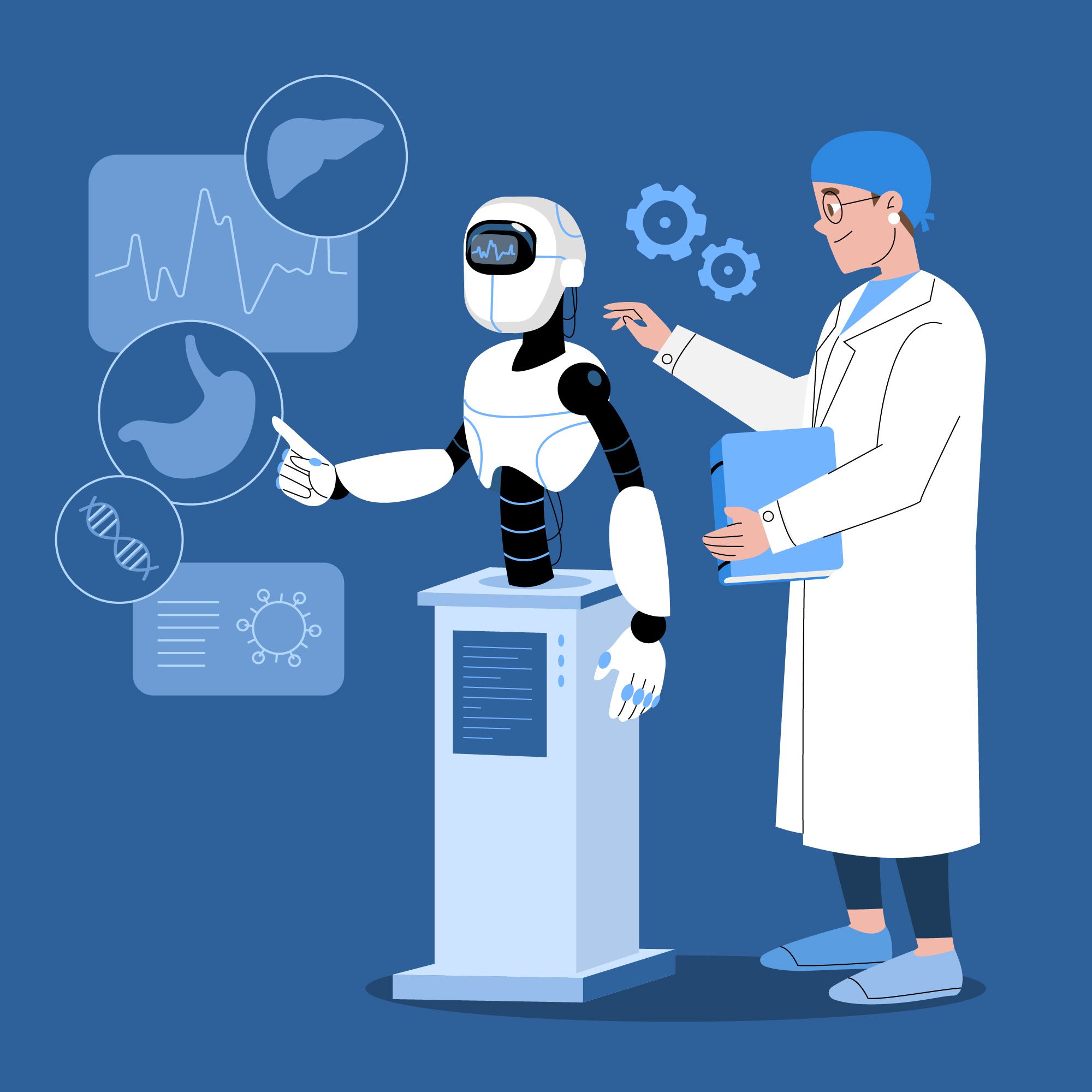
Advanced AI in Clinical Analytics
Empowering Clinical Excellence Through AI Innovation
Skills you will gain:
The Advanced AI in Clinical Analytics program is tailored for professionals seeking to lead the integration of AI into clinical settings. This course provides comprehensive training in the latest AI methodologies for analyzing complex medical data sets, designing predictive models, and implementing AI-driven decision support systems in healthcare.
Aim: This program aims to equip PhD scholars and academicians with the skills to apply advanced AI techniques to clinical analytics, transforming the way healthcare data is analyzed and used for patient care. It focuses on developing expertise in leveraging AI to uncover deep insights from clinical data, optimizing healthcare delivery, and improving patient outcomes.
Program Objectives:
- Master advanced AI techniques to enhance clinical data analysis.
- Develop predictive models that improve patient care and clinical outcomes.
- Implement AI-driven decision support systems in real-world healthcare settings.
- Navigate the ethical and regulatory issues surrounding clinical AI.
- Lead interdisciplinary teams in the adoption and integration of AI technologies in healthcare.
What you will learn?
Week 1: Clinical Data Foundations and Modeling Approaches
Module 1: Foundations of Clinical Data Science
-
Chapter 1.1: Clinical Data Types – EHRs, Lab Data, Imaging, Claims
-
Chapter 1.2: Data Quality, Standardization (FHIR, HL7), and Governance
-
Chapter 1.3: Data Preprocessing for AI: Missingness, Imputation, Labeling
-
Chapter 1.4: Ethical and Legal Considerations in Clinical Data Use
Module 2: Predictive Modeling in Healthcare
-
Chapter 2.1: Risk Prediction Models (Readmission, Mortality, LOS)
-
Chapter 2.2: Feature Engineering for Clinical Use Cases
-
Chapter 2.3: Handling Longitudinal and Time-Series Clinical Data
-
Chapter 2.4: Evaluation Metrics: AUROC, Precision/Recall, Calibration
Week 2: Deep Learning, NLP, and Imaging in Clinical Contexts
Module 3: Advanced Modeling Techniques
-
Chapter 3.1: Deep Neural Networks for Structured EHR Data
-
Chapter 3.2: Time-Series Models: RNNs, LSTMs, Transformers in Healthcare
-
Chapter 3.3: Multi-modal Models: Combining Text, Labs, and Images
-
Chapter 3.4: Transfer Learning and Pretrained Models in Clinical Tasks
Module 4: Clinical NLP and Imaging AI
-
Chapter 4.1: Information Extraction from Clinical Notes
-
Chapter 4.2: Named Entity Recognition and ICD Code Prediction
-
Chapter 4.3: Clinical Imaging Models: Radiology, Pathology, Ophthalmology
-
Chapter 4.4: Annotating and Validating NLP/Imaging Models
Week 3: Deployment, Fairness, and Real-World Integration
Module 5: AI Deployment in Health Systems
-
Chapter 5.1: Integrating Models into Clinical Workflows
-
Chapter 5.2: Model Monitoring, Drift Detection, and Retraining
-
Chapter 5.3: Clinical Decision Support and User Interface Design
-
Chapter 5.4: Validation in Multi-Site and Real-World Settings
Module 6: Fairness, Interpretability, and Governance
-
Chapter 6.1: Bias in Clinical AI: Causes, Detection, and Mitigation
-
Chapter 6.2: Explainability in Clinical Predictions
-
Chapter 6.3: Regulatory Pathways: FDA, HIPAA, and AI Oversight
-
Chapter 6.4: Capstone – Design a Clinical AI Model Pipeline with Governance Plan
Intended For :
Designed for healthcare professionals, data scientists, and academicians in fields like medicine, nursing, public health, or health informatics who have foundational knowledge in AI and seek to specialize in its application to clinical analytics.
Career Supporting Skills