
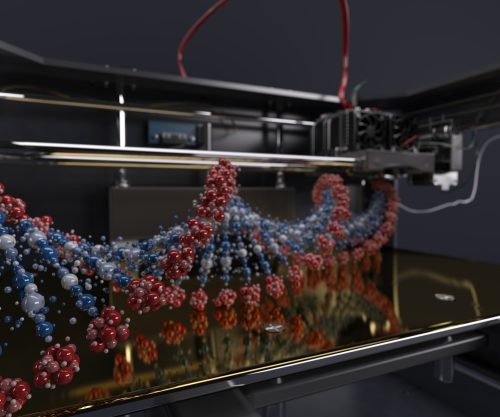
Bioprinting: From Tissues to Organs
Printing the future of healthcare: Biofabrication from fundamentals to function.
Skills you will gain:
This intensive program delves into the exciting world of bioprinting, exploring its potential to revolutionize regenerative medicine and drug development. Through a combination of lectures, workshops, and discussions, participants will gain a thorough understanding of the scientific principles, technical aspects, and future directions of this rapidly evolving field.
Aim: To equip participants with a comprehensive understanding of bioprinting technologies, their applications in tissue and organ regeneration, and the future landscape of this transformative field.
Program Objectives:
- Understand the core principles and techniques of bioprinting.
- Explore the development of bioinks and their properties.
- Gain insights into cell selection, viability, and differentiation in bioprinting.
- Analyze the current state of bioprinting for tissue and organ engineering.
- Discuss the ethical considerations and challenges associated with bioprinting.
- Identify potential applications of bioprinting in drug discovery and personalized medicine.
What you will learn?
Week 1: Foundations of Bioprinting and Biofabrication
-
Principles of tissue engineering and regenerative biology
-
Types of bioprinters: inkjet, extrusion, and laser-assisted
-
Bioink properties and cell-material compatibility
-
Structural design strategies: scaffolds, hydrogels, and biomimicry
Week 2: Cell Biology and Biomaterials in Bioprinting
-
Cell sourcing, expansion, and differentiation
-
Stem cells and induced pluripotent stem cells (iPSCs)
-
Natural vs. synthetic biomaterials in tissue construction
-
Vascularization and nutrient diffusion challenges
Week 3: 3D Printing for Functional Tissues and Organs
-
Organ-specific printing: skin, cartilage, liver, heart prototypes
-
Integration of sensors and smart biomaterials
-
3D bioprinting with microfluidics and organ-on-chip systems
-
Deep tech in simulation and model-based design
Week 4: Translational Pathways and Future Trends
-
Clinical applications and preclinical validation pipelines
-
Regulatory landscape: FDA, ISO, and GMP considerations
-
AI and robotics in precision bioprinting
-
Future outlook: 4D bioprinting, personalized organ fabrication
Intended For :
-
Students & Postgraduates in Biotechnology, Biomedical Engineering, Tissue Engineering, or Regenerative Medicine
-
PhD Scholars & Researchers in biomaterials, stem cells, or translational tissue science
-
Industry Professionals in bioprinting, medtech, biotech R&D, and biofabrication
-
Innovators & Tech Enthusiasts exploring AI-powered bioengineering, 3D/4D printing, or future-ready healthcare devices
Career Supporting Skills