
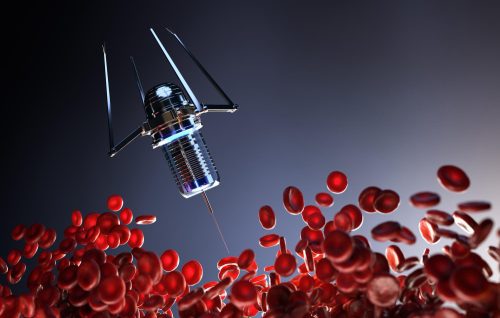
Nano materials in Medicine: Shaping the Future of Implant Technology
Transforming Healthcare: Mastering Nanomaterials for Revolutionary Implant Technology
This program delves into the fascinating world of nanotechnology and its transformative impact on medical implants. Participants will explore the properties of nanomaterials, their integration into medical devices, and the future trends shaping this cutting-edge field.
Aim: The aim of this program is to provide a thorough understanding of nanomaterials in medicine, focusing on their application in implant technology. It seeks to equip participants with the knowledge to innovate and improve medical implants, enhancing patient outcomes.
Program Objectives:
- Understand the Fundamentals of Nanotechnology and Nanomaterials: Define and explain the core concepts of nanotechnology and nanomaterials, providing participants with a foundational understanding of their characteristics and applications.
- Explore the Unique Features of Nanomaterials: Investigate the distinctive properties that make nanomaterials special, focusing on their behavior at the nanoscale and how these properties differ from bulk materials.
- Examine Altered Properties of Nanomaterials and Their Underlying Mechanisms: Delve into the reasons behind the altered properties of nanomaterials, emphasizing the mechanisms that drive these changes and their implications in various applications.
- Learn Techniques to Control Surface Energy Using Nanomaterials: Provide participants with practical knowledge on how to manipulate surface energy through nanomaterials, enabling them to understand and control interactions with biological systems.
- Identify Three Design Criteria for Improved Implant Performance: Define and elaborate on three essential design criteria for incorporating nanomaterials to enhance the performance of medical implants, considering both theoretical principles and practical applications.
- Gain Insights into Predictive Equations for Nanomaterial-Enhanced Implant Performance: Familiarize participants with predictive equations and modeling techniques that guide the selection and application of nanomaterials, facilitating informed decision-making in implant design.
- Comprehend Water Interactions with Nanomaterials: Explore the interactions between nanomaterials and water, understanding how these interactions influence the performance and biocompatibility of medical implants.
- Investigate Protein Interactions with Nanomaterials: Examine the interactions between nanomaterials and proteins, elucidating the implications for implant biocompatibility and tissue responses.
- Understand Cellular Interactions with Nanomaterials: Explore the ways in which cells interact with nanomaterials, emphasizing the impact on tissue integration around implants and overall biocompatibility.
What you will learn?
The program is structured into modules covering:
- Introduction to Nanotechnology and Nanomaterials
- Nanomaterials in Medicine
- Implant Technology and Nanomaterials
- Case Studies and Research
- Future Trends in Nanotechnology
Intended For :
This program is designed for:
- Medical professionals and researchers.
- Students in biomedical engineering and related fields.
- Industry professionals seeking to enhance their knowledge in nanotechnology.
Career Supporting Skills
Nanotechnology Proficiency Biosensors Development Biocompatible Materials Selection Regenerative Medicine Techniques Advanced Imaging Techniques 3D Printing for Implants