

AI-Powered Drug Repurposing: Network Pharmacology, Knowledge Graphs & Explainable AI
From Existing Drugs to New Therapies with Graph AI, Knowledge Graphs & Predictive Drug Discovery.
Skills you will gain:
About Workshop:
This 3-day hands-on workshop explores how network pharmacology, biomedical knowledge graphs, and artificial intelligence can identify new therapeutic applications for existing drugs.
Participants will learn to analyze drug–target interactions, identify disease-associated genes, investigate molecular pathways, and apply Graph Neural Networks (GNNs), knowledge graph embeddings, and AI-based drug–disease prediction using Open Targets, ChEMBL, STRING, Cytoscape, NetworkX, and PyKEEN.
Through hands-on experimentation with the Repurpose Drug Discovery Lab at Live-Labs.org, participants will explore drug–disease relationships, evaluate biomedical evidence, prioritize therapeutic candidates, and develop research hypotheses relevant to AI-driven drug discovery, computational pharmacology, and precision medicine.
Aim: To develop practical expertise in AI-driven drug repurposing by integrating network pharmacology, biomedical knowledge graphs, Graph Neural Networks (GNNs), and predictive modeling to identify drug–disease associations, prioritize therapeutic candidates, and generate evidence-based hypotheses for precision medicine and next-generation drug discovery.
Workshop Objectives:
Participants will learn to:
- Identify disease-associated genes and therapeutic targets.
- Analyze drug–target interactions and molecular pathways.
- Construct and interpret biomedical knowledge graphs.
- Explore graph embeddings and Graph Neural Networks.
- Apply AI-based drug–disease link prediction.
- Evaluate therapeutic candidates using biological and clinical evidence.
- Investigate drug safety and prediction reliability.
- Perform virtual drug repurposing experiments using Live Labs.
What you will learn?
📅 Day 1 – Network Pharmacology, Drug–Target Interactions & Disease Pathway Analysis
Focus: Understanding disease biology and identifying scientifically relevant therapeutic targets.
- Introduction to computational drug repurposing and network pharmacology.
- Disease-associated gene identification and evidence assessment using Open Targets.
- Drug–target interaction retrieval and bioactivity filtering using ChEMBL.
- Protein interaction network construction using STRING.
- Molecular network visualization and hub-gene analysis using Cytoscape.
- Pathway enrichment and functional interpretation using Reactome.
- Integration of disease, gene, drug, and pathway information into a structured dataset for graph-based analysis.
🛠️ Hands-On Lab: Disease-Specific Drug–Target Network Construction and Pathway Enrichment
Identify disease-associated genes, retrieve drug–target interactions, construct protein interaction networks, and perform pathway enrichment analysis to build a structured biomedical evidence dataset.
📊 Deliverable: Disease–target–drug evidence table, network visualization, and enriched pathway results.
🧰 Tools Covered: Open Targets | ChEMBL | STRING | Cytoscape | Reactome
📅 Day 2 – Biomedical Knowledge Graph Construction, Graph Embeddings & AI-Based Drug–Disease Prediction
Focus: Transforming biomedical evidence into a graph-based prediction framework.
- Introduction to biomedical knowledge graphs and heterogeneous biological relationships.
- Biomedical entity mapping, relation modeling, and dataset preparation.
- Knowledge graph construction and visualization using Python and NetworkX.
- Introduction to graph embeddings: TransE, DistMult, and ComplEx.
- Hands-on drug–disease relationship prediction using TransE and PyKEEN.
- Introduction to Graph Neural Networks and their applications in drug repurposing.
- Model evaluation using MRR, Hits@K, and data-leakage checks.
- Candidate ranking and interpretation of graph-based predictions.
🛠️ Hands-On Lab: Biomedical Knowledge Graph Construction and Drug–Disease Link Prediction Using PyKEEN
Construct a biomedical knowledge graph using Python and NetworkX, train a TransE embedding model using PyKEEN, evaluate prediction performance, and rank potential drug–disease associations.
📊 Deliverable: Biomedical knowledge graph, trained embedding model, and ranked candidate list with evaluation metrics.
🧰 Tools Covered: Python | Google Colab | NetworkX | PyKEEN
📅 Day 3 – Explainable Drug Repurposing, Evidence-Based Candidate Prioritization & Live-Lab Validation
Focus: Interpreting and critically evaluating computational predictions.
- Integration of network pharmacology results and graph AI predictions.
- Model-score interpretation and evidence-path analysis.
- Biological plausibility assessment and drug–target mechanism evaluation.
- Evidence-weighted candidate prioritization and sensitivity analysis.
- Screening for safety concerns and adverse effect evidence.
- Literature verification using PubMed.
- Clinical development and trial-evidence evaluation using ClinicalTrials.gov.
- Guided drug repurposing experiment using the Repurpose Drug Discovery Lab.
- Development of testable research hypotheses and a concise evidence report.
🛠️ Hands-On Lab: AI-Driven Drug Repurposing and Therapeutic Candidate Prioritization
Perform a guided drug repurposing experiment using the Repurpose Drug Discovery Lab at Live-Labs.org. Explore drug–disease associations, interpret graph predictions, examine supporting biological evidence, prioritize therapeutic candidates, and develop an evidence-based research report.
📊 Deliverable: Evidence-based drug repurposing research report with candidate ranking, supporting evidence, limitations, and proposed next-step validation.
🧰 Tools Covered: Repurpose Drug Discovery Lab | Open Targets | ChEMBL | PubMed | ClinicalTrials.gov
Mentor Profile
Fee Plan
Important Dates
12 Nov 2026 Indian Standard Timing
12 Nov 2026 to 14 Nov 2026 Indian Standard Timing 5:30 PM
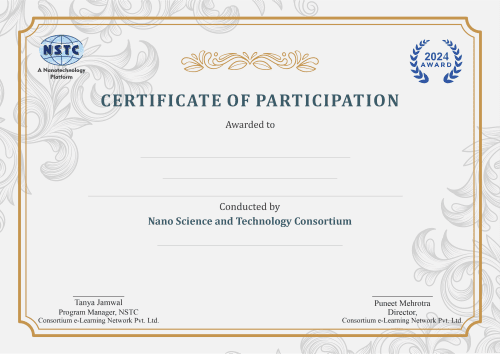
Get an e-Certificate of Participation!
Intended For :
- Pharmacy & Pharmacology Students
- Drug Discovery & Medicinal Chemistry Researchers
- Bioinformatics & Computational Biology Researchers
- Biotechnology & Biomedical Science Professionals
- AI & Machine Learning Researchers
- Systems Biology & Network Medicine Researchers
- Ph.D. Scholars & Postdoctoral Researchers
- Academicians & Pharmaceutical Industry Professionals
Career Supporting Skills
Workshop Outcomes
After completing the workshop, participants will be able to:
- Identify disease-associated genes and potential therapeutic targets.
- Analyze drug–target interactions and molecular pathways using network pharmacology.
- Construct and interpret biomedical knowledge graphs using Python.
- Apply knowledge graph embeddings for drug–disease link prediction.
- Explore Graph Neural Networks (GNNs) for AI-driven drug repurposing.
- Evaluate and rank potential therapeutic candidates using predictive models.
- Interpret AI predictions and assess biological relevance using explainable AI concepts.
- Validate drug repurposing hypotheses using biomedical literature and clinical evidence.
- Perform guided drug repurposing experiments using the Repurpose Drug Discovery Lab.
- Generate evidence-based research reports and testable therapeutic hypotheses for precision medicine.