

Oxford Nanopore Sequencing & Long-Read Genomics: Bioinformatics, Multi-Omics Analysis & Clinical Applications
Decode complex genomes with Nanopore long-read data—from structural variants to methylation, pathogens and AMR insights.
Skills you will gain:
About Program:
This 3-day mentor-led workshop introduces advanced Oxford Nanopore bioinformatics workflows for human genomics, structural variants, native DNA methylation, adaptive sequencing, long-read transcriptomics, clinical metagenomics and antimicrobial-resistance research.
Participants will work with curated public nanopore datasets and learn how to convert long-read sequencing data into meaningful genomic, epigenomic and microbiological insights.
Aim: To provide participants with practical, research-oriented training in Oxford Nanopore long-read data analysis, with a focus on structural variants, native epigenomics, transcriptomics, clinical metagenomics and AMR-related genomic interpretation.
Program Objectives:
- Understand modern Oxford Nanopore sequencing data workflows
- Evaluate long-read sequencing quality, mapping and coverage
- Detect and interpret structural variants from nanopore datasets
- Understand complex genomic regions, repeat expansions and haplotype-aware analysis
- Explore adaptive sampling and targeted sequencing concepts
- Analyse native DNA methylation from nanopore reads
- Understand long-read transcript and isoform profiling
- Perform nanopore-based microbial and metagenomic classification
- Identify pathogens and antimicrobial-resistance determinants
- Visualize genomic and epigenomic results using IGV
- Build reproducible nanopore bioinformatics workflows for research applications
What you will learn?
📅 Day 1: Long-Read Human Genomics & Structural Variant Discovery
- Focus: Understanding how nanopore long reads enable detection and interpretation of genomic variation that may be difficult to resolve using short-read sequencing.
- Understanding the nanopore analysis workflow: POD5 → Basecalling → FASTQ/BAM → Alignment → Variant Analysis.
- Evaluating read quality using Q-score, N50, sequencing coverage, read length, and mapping statistics.
- Performing long-read genome alignment and exploring reference-based genomic analysis.
- Detecting structural variants including deletions, insertions, duplications, inversions, and translocations.
- Understanding copy-number variation, repeat expansions, and difficult-to-map genomic regions.
- Introduction to haplotype phasing, allele-specific variation, and complex genomic interpretation.
- Applications of long-read structural-variant analysis in rare disease, cancer, and clinical genomics.
🛠️ Hands-on:
- Structural variant discovery from a public nanopore human genome dataset, including read QC, alignment, variant calling, and genome visualization.
🧰 Tools Covered: NanoPlot, Minimap2, SAMtools, Sniffles2, IGV, Python, Google Colab
🎯 Deliverable: Long-read QC report, structural-variant table, and genomic visualization of selected variants.
📅 Day 2: Native DNA Methylation, Adaptive Sampling & Long-Read Transcriptomics
- Focus: Exploring how nanopore sequencing enables real-time targeted sequencing, direct DNA methylation detection, and full-length transcript analysis.
- Introduction to adaptive sampling and real-time selective nanopore sequencing.
- Understanding target enrichment, host-DNA depletion, and targeted sequencing strategies.
- Native DNA methylation analysis and direct detection of 5mC using nanopore sequencing.
- Working with modified-base BAM files and analysing CpG-level methylation patterns.
- Understanding haplotype-resolved methylation and integration of genetic and epigenetic information.
- Comparing cDNA and direct RNA nanopore sequencing approaches.
- Exploring full-length transcripts, transcript isoforms, and alternative splicing.
- Applications in cancer genomics, rare disease, functional genomics, and epigenomics research.
🛠️ Hands-on:
- Nanopore native DNA methylation analysis with haplotype-aware genomic interpretation and visualization.
💡 Mini-Demo:
- Long-read transcript and isoform profiling using nanopore RNA sequencing concepts.
🧰 Tools Covered: Dorado Concepts, Modkit, Minimap2, SAMtools, IGV, BEDTools Concepts, Python, Google Colab
🎯 Deliverable: Regional methylation profile with genomic and epigenomic visualization and interpretation.
📅 Day 3: Clinical Metagenomics, Pathogen Genomics & AMR Profiling
- Focus: Using nanopore sequencing for microbial identification, pathogen genomics, antimicrobial-resistance profiling, and clinical metagenomic interpretation.
- Introduction to nanopore sequencing applications in microbial genomics and infectious-disease research.
- Understanding shotgun metagenomics versus targeted sequencing approaches.
- Real-time pathogen identification from nanopore sequencing data.
- Detection and interpretation of bacterial, viral, and fungal sequences.
- Taxonomic classification and species-level microbial interpretation.
- Long-read microbial genome assembly and reconstruction.
- Analysis of plasmids, mobile genetic elements, and genome-associated resistance determinants.
- Identification of antimicrobial-resistance genes and resistance-associated mutations.
- Understanding pathogen–AMR associations for genomic surveillance and clinical research.
- Clinical metagenomics quality control, contamination, false-positive interpretation, and reporting considerations.
- Introduction to reproducible nanopore bioinformatics pipelines and Nextflow workflow concepts.
🛠️ Hands-on:
- Pathogen identification and antimicrobial-resistance profiling using a public nanopore metagenomic dataset.
🧰 Tools Covered: Kraken2, Minimap2, Flye, AMRFinderPlus / ResFinder Concepts, IGV, Nextflow Concepts, Python, Google Colab
🎯 Deliverable: Microbial taxonomic profile, pathogen summary, AMR profile, and research-ready genomic analysis report.
Mentor Profile
Fee Plan
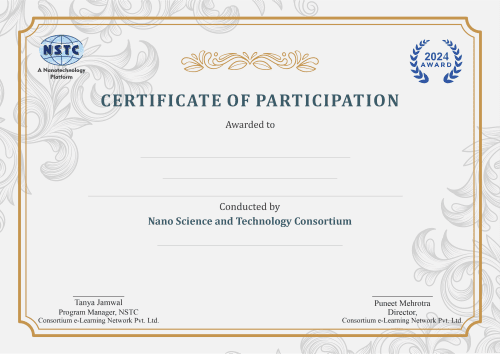
Get an e-Certificate of Participation!
Intended For :
- Students from biotechnology, bioinformatics, genetics, microbiology, molecular biology and life sciences
- Ph.D. scholars and researchers working in genomics, epigenomics, transcriptomics, metagenomics or AMR research
- Faculty members and academicians interested in advanced sequencing and bioinformatics workflows
- Professionals from biotechnology, diagnostics, clinical research, genomic surveillance and sequencing-based R&D
- Learners who want to move beyond basic sequencing and explore modern long-read genomic analysis
Career Supporting Skills
Program Outcomes
- Process and analyse nanopore long-read sequencing data
- Generate long-read QC reports and mapping summaries
- Identify candidate structural variants using nanopore bioinformatics tools
- Interpret methylation profiles and epigenomic patterns
- Understand targeted sequencing and adaptive sampling workflows
- Explore long-read transcriptomics and isoform-level analysis
- Perform microbial taxonomic profiling from nanopore metagenomic data
- Screen pathogen data for AMR-associated determinants
- Prepare research-ready genomic, epigenomic and metagenomic analysis summaries