

AI-Driven Antimicrobial Intelligence: AMR Genomics, Microbial Prediction & Next-Generation Drug Discovery
Decode Resistance. Predict Microbial Threats. Discover Smarter Antimicrobials with AI.
Skills you will gain:
About Program:
This three-day hands-on workshop integrates antimicrobial resistance genomics, microbial bioinformatics, machine learning, and AI-assisted drug discovery into one practical workflow. Participants will learn how to identify resistance genes and mutations from bacterial genomic data, build predictive models for antimicrobial-resistance phenotypes, and apply cheminformatics and machine learning to prioritise promising antimicrobial compounds. Using tools such as CARD/RGI, AMRFinderPlus, Python, Scikit-learn, RDKit, DeepChem, PubChem, and ChEMBL, participants will gain practical exposure to modern AMR surveillance and computational antibiotic-discovery workflows.
Aim:
Program Objectives:
What you will learn?
📅 Day 1: AMR Genomics and Resistance Intelligence
- Focus: Understanding antimicrobial resistance through bacterial genomics and resistance profiling.
- AMR fundamentals, multidrug resistance, and major resistance mechanisms.
- Chromosomal mutations, resistance genes, plasmids, and horizontal gene transfer.
- Bacterial whole-genome sequencing and the FASTQ → assembly → annotation workflow.
- Understanding microbial resistomes and clinically important resistant pathogens.
- AMR genomic surveillance and outbreak intelligence.
- Detection and interpretation of resistance genes, mutations, antibiotic classes, and mechanisms using CARD/RGI and AMRFinderPlus.
🛠️ Hands-on:
- Build and interpret a basic genomic AMR profile from a bacterial dataset.
🧰 Tools Covered: Google Colab, Python, Pandas, NCBI, AMRFinderPlus, CARD/RGI
📅 Day 2: AI-Based Microbial Resistance Prediction
- Focus: Using machine learning to predict antimicrobial-resistance patterns from microbial data.
- Genotype–phenotype relationships and resistant, intermediate, and susceptible phenotypes.
- Preparing genomic, metadata, and susceptibility datasets for machine learning.
- Feature engineering, data preprocessing, and train–test preparation.
- Resistance classification using Logistic Regression, Random Forest, and gradient boosting.
- Model evaluation using accuracy, precision, recall, F1 score, and ROC-AUC.
- Feature importance and explainable AI for identifying major resistance predictors.
🛠️ Hands-on:
- Build and evaluate a machine-learning model for antimicrobial-resistance prediction.
🧰 Tools Covered: Google Colab, Python, Pandas, NumPy, Scikit-learn, Matplotlib
📅 Day 3: AI-Driven Antimicrobial Drug Discovery
- Focus: Applying cheminformatics and AI for antimicrobial activity prediction and candidate prioritisation.
- Linking AMR intelligence with antimicrobial drug-discovery strategies.
- Exploring antimicrobial compounds and bioactivity data from PubChem and ChEMBL.
- Molecular representations: SMILES, descriptors, fingerprints, and RDKit.
- QSAR and machine-learning approaches for antimicrobial activity prediction.
- AI-based virtual screening and candidate ranking.
- Drug-likeness, toxicity, ADMET, selectivity, and emerging AI approaches in antibiotic discovery.
🛠️ Hands-on:
- Build an AI-assisted workflow to screen and rank promising antimicrobial candidates.
🧰 Tools Covered: Google Colab, Python, RDKit, Scikit-learn, DeepChem, PubChem, ChEMBL
Mentor Profile
Fee Plan
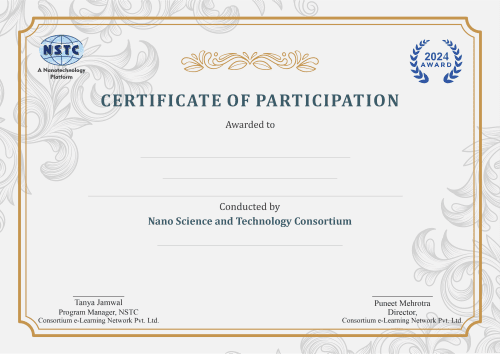
Get an e-Certificate of Participation!
Intended For :
- Graduate and postgraduate students in Biotechnology, Microbiology, Bioinformatics, Biochemistry, Pharmacy, Pharmaceutical Sciences, Life Sciences, Biomedical Sciences, and related fields
- Ph.D. scholars and researchers working in antimicrobial resistance, microbial genomics, infectious diseases, bioinformatics, computational biology, or drug discovery
- Academicians and faculty members interested in AMR genomics, AI/ML, microbial data analysis, and computational drug discovery
- Industry professionals from pharmaceutical, biotechnology, CRO, diagnostics, genomics, bioinformatics, and AI-driven drug-discovery sectors
- Public-health and clinical researchers involved in AMR surveillance, resistant pathogens, and genomic epidemiology
Career Supporting Skills
Program Outcomes