

AI-Guided Catalyst Discovery for Sustainable Industrial Chemical Processes
Transform atomic structures into prioritised catalyst candidates using machine learning, graph neural networks and virtual high-throughput screening.
Skills you will gain:
About Program:
This advanced three-day workshop introduces AI-guided catalyst discovery for sustainable industrial chemical processes. Participants will learn to represent catalyst structures, predict adsorption energies, perform AI-assisted atomic relaxation and build virtual high-throughput screening pipelines.
Hands-on Google Colab exercises will cover applications in CO₂ reduction, green hydrogen and electrocatalysis using tools such as Matminer, DeepChem, ASE, FAIR-Chem, PyTorch Geometric and Hugging Face Transformers.
Aim: To provide practical knowledge of integrating artificial intelligence, materials informatics and computational catalysis for faster catalyst screening and candidate prioritisation.
Program Objectives:
Participants will learn to:
- Convert catalyst structures and adsorbates into machine-readable descriptors.
- Build ML models for adsorption-energy prediction.
- Apply graph neural networks and pretrained interatomic potentials.
- Perform AI-guided catalyst–adsorbate structure relaxation.
- Develop multi-objective virtual screening workflows.
- Rank catalysts by activity, selectivity, stability, cost and material availability.
What you will learn?
🗓️ Day 1: Material Representation & Machine Learning Surrogate Models
- Understanding the limitations of traditional Density Functional Theory (DFT) for large-scale catalyst discovery.
- Vectorizing solid-state crystal structures, adsorbates, and catalytic surface facets for machine learning models.
- Computing electronic descriptors, coordination numbers, and site-specific electronegativity features.
- Building, training, and benchmarking machine learning surrogate models to predict catalyst binding energies.
- Evaluating model reliability using Mean Absolute Error (MAE), R² scores, and cross-validation metrics.
🧰 Tools
- Matminer: Materials descriptors and feature engineering.
- RDKit: Molecular representation and chemical descriptor generation.
- DeepChem: Machine learning model development for chemical and materials data.
🧪 Hands-on Lab (Google Colab)
- Notebook: Predicting CO₂ Reduction Binding Energy Using Matminer Descriptors and DeepChem ML.
- Task: Generate catalyst descriptors and train a surrogate model to predict adsorption and binding energies.
- Deliverable: Produce a validated catalyst-property prediction model with MAE, R², and cross-validation results.
🗓️ Day 2: 3D Graph Neural Networks & AI-Guided Structure Relaxation
- Understanding 3D rotation equivariance and graph-based representations of atomic coordinates.
- Applying Graph Neural Networks (GNNs) to model complex atomic interactions and potential-energy surfaces.
- Replacing computationally expensive Quantum ESPRESSO and VASP calculations with neural network force fields.
- Running automated 3D surface–adsorbate structural relaxations to identify local energy minima.
- Accelerating energy-relaxation calculations by up to 1,000× for alloy and metal-oxide catalyst interfaces.
🧰 Tools
- Open Catalyst Project: Pre-trained checkpoints for catalyst energy and force prediction.
- ASE: Atomic structure construction, manipulation, simulation, and relaxation.
- PyTorch Geometric: Graph neural network development for atomic systems.
- EquiformerV2: Equivariant transformer architecture for accurate 3D atomic modelling.
🧪 Hands-on Lab (Google Colab)
- Notebook: 1,000× Accelerated Atomic Relaxation for Green H₂ Electrocatalysts Using EquiformerV2.
- Task: Construct a catalyst–adsorbate system and perform AI-guided atomic structure relaxation.
- Deliverable: Generate an optimized 3D catalyst structure with predicted energies, forces, and relaxation trajectories.
🗓️ Day 3: Generative AI, Chemical Transformers & Virtual High-Throughput Screening
- Understanding language models trained on SMILES, SELFIES, and materials representations.
- Fine-tuning pre-trained chemical transformer architectures for catalytic activity and property prediction.
- Designing multi-objective Virtual High-Throughput Screening (VHTS) pipelines for catalyst discovery.
- Filtering candidate libraries based on predicted overpotential, selectivity, binding energy, and structural stability.
- Ranking computational catalyst candidates using performance, reliability, and feasibility criteria.
- Formatting computational discovery workflows and visualizations for high-impact research publications.
🧰 Tools
- Hugging Face Transformers: Access to ChemBERTa, MolFormer, and related chemical language models.
- PyXSF / ASE Visualizer: Visualization of atomic structures, surfaces, and catalyst candidates.
- Open Catalyst API: Access to catalyst structures, energies, and pre-trained model predictions.
🧪 Hands-on Lab (Google Colab)
- Notebook: Fine-Tuning ChemBERTa and Building a Virtual High-Throughput Catalyst Screening Engine.
- Task: Fine-tune a chemical transformer and screen a virtual catalyst library against multiple performance criteria.
- Deliverable: Generate a ranked shortlist of computational catalyst candidates with predicted properties and publication-ready visualizations.
Mentor Profile
Fee Plan
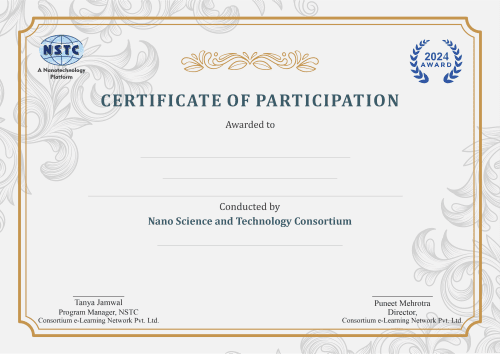
Get an e-Certificate of Participation!
Intended For :
This workshop is suitable for postgraduate students, PhD scholars, faculty members, researchers and industry professionals working in:
- Chemical engineering
- Computational chemistry
- Materials science
- Heterogeneous catalysis
- Electrocatalysis
- Surface science
- Green hydrogen
- CO₂ conversion
- Nanocatalysis
- Materials informatics
- AI-driven materials discovery
- Sustainable industrial processes
Career Supporting Skills
Program Outcomes
By the end of the workshop, participants will be able to:
- Prepare catalyst datasets for machine learning.
- Train and evaluate catalyst-property prediction models.
- Use AI models for atomic structure and energy prediction.
- Screen large catalyst libraries computationally.
- Identify promising candidates for further DFT or experimental validation.
- Generate publication-ready catalyst-ranking reports and visualisations.