

AI-Powered Carbon Footprint & Circular Economy Modeling
Model the Footprint. Design the Loop. Optimize the Path to Net-Zero.
Skills you will gain:
About Program:
A 3-day hands-on workshop on applying AI and optimization to sustainability challenges — automate Scope 1-3 carbon accounting, model circular material flows, and generate optimal decarbonization strategies. Combines core concepts with guided Colab labs using industry-standard open-source tools.
Aim: To build practical skills in using machine learning and optimization algorithms to measure, model, and reduce carbon footprints across supply chains and industrial systems.
Program Objectives:
- Automate Scope 1, 2, and 3 GHG emissions tracking with ML
- Predict missing emission factors and forecast dynamic carbon intensity
- Model circular supply chains using graph-based Material Flow Analysis
- Apply ML for waste sorting, decomposition, and end-of-life routing
- Quantify Material Circularity Indicators and embodied carbon savings
- Build multi-objective optimization models for net-zero roadmaps
- Apply reinforcement learning to industrial energy efficiency
What you will learn?
📅 Day 1: AI-Driven Carbon Accounting & Life Cycle Assessment (LCA)
Core Objective: Automate Scope 1-3 emissions tracking and Life Cycle Assessment using machine learning.
- Machine learning for automated Scope 1, 2, and 3 GHG emissions mapping
- Predicting missing supply chain emission factors with regression models
- Dynamic carbon intensity forecasting based on real-time grid data
🛠️ Hands-on Lab: Build an automated Python pipeline to track live compute emissions and run Scope 3 supply-chain LCA models using Google Colab.
🧰 Tools Covered: Brightway2, CodeCarbon, EcoLogits, Google Colab
📅 Day 2: Predictive Material Flow Analysis & Circular Economy Design
Core Objective: Model closed-loop recycling networks and track resource flows using graph algorithms.
- Graph-based Material Flow Analysis (MFA) to track raw and waste material lifecycles
- Machine learning for waste sorting, material decomposition, and end-of-life routing
- Quantifying Material Circularity Indicators (MCI) and embodied carbon savings
🛠️ Hands-on Lab: Map a circular supply chain using NetworkX to optimize waste recovery and calculate circularity scores using Google Colab.
🧰 Tools Covered: NetworkX, Scikit-learn, OpenLCA Python API, Google Colab
📅 Day 3: Generative System Optimization & Decarbonization Roadmaps
Core Objective: Generate optimal net-zero strategy pathways using multi-objective optimization algorithms.
- Multi-objective optimization balancing operational cost, resource depletion, and carbon ROI
- Reinforcement learning for industrial energy efficiency and byproduct exchange
- Automated scenario analysis for climate risk reporting and ESG compliance
🛠️ Hands-on Lab: Implement a Pyomo optimization model to determine the lowest-cost decarbonization strategy for an industrial system using Google Colab.
🧰 Tools Covered: Pyomo, SciPy Optimize, Pandas, Google Colab
Mentor Profile
Fee Plan
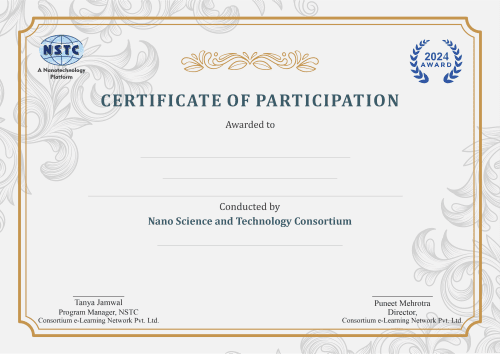
Get an e-Certificate of Participation!
Intended For :
- Sustainability/ESG analysts and consultants
- Supply chain and operations professionals
- Data scientists/ML engineers entering climate tech
- Environmental engineers and LCA practitioners
- Corporate sustainability and net-zero strategy teams
Career Supporting Skills
Program Outcomes
Participants will be able to:
- Build a Python pipeline to track live compute emissions and run Scope 3 LCA models
- Map circular supply chains and calculate circularity scores using NetworkX
- Build a Pyomo optimization model for lowest-cost decarbonization strategy
- Generate automated scenario analyses for ESG/climate risk reporting
- Walk away with reusable Colab notebooks for carbon and circularity modeling