

Hands-On AI for Targeted Protein Degradation: PROTAC Structural Analysis, Ternary Complexes & Candidate Prioritization
From Protein Structures to PROTAC Prioritization : Hands-On Ternary-Complex Analysis and Machine Learning with PDB, Google Colab and RDKit.
Skills you will gain:
About Workshop:
Targeted Protein Degradation (TPD) is an emerging therapeutic strategy that eliminates disease-causing proteins by directing them to the cell’s natural protein degradation machinery. Technologies such as PROTACs (Proteolysis Targeting Chimeras) and Molecular Glues have transformed modern drug discovery by enabling the selective degradation of previously “undruggable” proteins. Artificial Intelligence (AI), structural bioinformatics, and molecular modeling are increasingly used to accelerate the identification, design, and optimization of these novel therapeutic molecules.
This 3-day international workshop introduces participants to the fundamentals of Targeted Protein Degradation and demonstrates how computational tools, structural databases, molecular visualization, and AI-assisted workflows can support the design and evaluation of PROTACs and Molecular Glues. Through practical hands-on sessions using Google Colab, Protein Data Bank (PDB), molecular visualization software, and AI-based analysis tools, participants will gain practical experience in computational TPD research.
Aim: To provide participants with a practical understanding of Targeted Protein Degradation (TPD) and demonstrate how AI, structural bioinformatics, and computational modeling can support the design, analysis, and optimization of PROTACs and Molecular Glues for next-generation drug discovery.
Workshop Objectives:
- Understand the principles of Targeted Protein Degradation and its role in modern drug discovery.
- Learn the mechanisms of PROTACs and Molecular Glues.
- Explore protein structures and ligand interactions using public structural databases.
- Understand computational approaches for protein–ligand interaction analysis.
- Learn how AI can support PROTAC design and candidate prioritization.
- Explore current research trends and future applications of AI in targeted protein degradation.
What you will learn?
📅 Day 1: Foundations of Targeted Protein Degradation and Structural Bioinformatics
- Introduction to Targeted Protein Degradation (TPD): Protein inhibition versus protein degradation
- Understanding PROTACs and molecular glues: Mechanisms and key differences
- Protein degradation pathways and the ubiquitin–proteasome system
- Components of a PROTAC: Target-binding ligand, linker and E3-ligase-binding ligand
- Introduction to structural bioinformatics: Protein chains, ligands and binding regions
- Exploring the BRD4–MZ1–VHL ternary complex using PDB 5T35
- Understanding experimental structure quality and the limitations of computational predictions
🛠️ Hands-on Activity:
Exploring Protein Structures and PROTAC Components
Participants will use RCSB Protein Data Bank (PDB) and the browser-based Mol* viewer to explore PDB 5T35. They will identify BRD4, VHL and the PROTAC MZ1, distinguish the ligand-binding regions and linker, and save annotated structural views using a guided worksheet.
📅 Day 2: Ternary-Complex Modeling and Molecular Interaction Analysis
- Fundamentals of protein–ligand contacts and protein–protein interfaces
- Binary binding versus PROTAC-mediated ternary-complex formation
- Role of linker orientation, flexibility and steric clashes
- Introduction to cooperativity and its relevance to ternary-complex formation
- Distance-based identification of binding-site and interface residues
- Molecular docking concepts: Interpreting predicted poses and scoring limitations
- Structural comparison of PROTACs and molecular glues
- Distinguishing structural compatibility from experimentally demonstrated protein degradation
🛠️ Hands-on Activity:
Mapping Molecular Contacts and Comparing Structural Arrangements
Participants will use a prepared Google Colab notebook with Biopython, NumPy and Pandas to analyse the Day 1 structure and generate a distance-based contact table. Using Mol*, they will compare the experimental complex with a mentor-prepared alternative pose, identify potential clashes and disrupted contacts, and summarise the structural differences.
📅 Day 3: Molecular Property Analysis and AI-Assisted PROTAC Prioritization
- Exploring curated PROTAC records: Chemical structures, targets, E3 ligases and assay conditions
- Understanding degradation measurements: DC50 and Dmax, and their distinction from binding affinity
- Molecular descriptor calculation: Molecular weight, polar surface area, hydrogen-bond counts and rotatable bonds
- Interpreting physicochemical properties beyond conventional small-molecule drug-likeness rules
- Preparing assay-compatible activity data and preventing duplicate-compound leakage
- Introduction to Random Forest regression for a defined degradation endpoint
- Model evaluation against a simple baseline and interpretation of feature importance
- Combining experimental evidence, predicted activity and molecular properties for exploratory prioritization
🛠️ Hands-on Activity:
Molecular Descriptor Analysis and Exploratory PROTAC Activity Modeling
Participants will use a prepared Google Colab notebook with RDKit, Pandas and Scikit-learn to analyse a mentor-curated PROTAC dataset and calculate molecular descriptors. Using a prevalidated, assay-compatible dataset, they will run an introductory model to estimate pDC50, compare held-out predictions with a baseline and generate a candidate-comparison table. The exercise will highlight prediction limitations and the need for experimental validation.
Mentor Profile
Fee Plan
Important Dates
19 Nov 2026 Indian Standard Timing 4:30 pm
19 Nov 2026 to 21 Nov 2026 Indian Standard Timing 5:00 pm
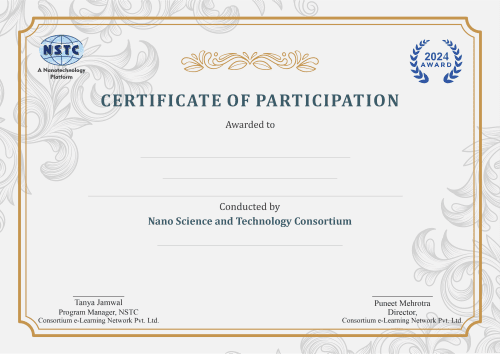
Get an e-Certificate of Participation!
Intended For :
This workshop is designed for undergraduate and postgraduate students, Ph.D. scholars and research fellows, faculty members and academicians, bioinformatics and computational biology researchers, structural biologists, medicinal chemists, drug discovery scientists, pharmaceutical and biotechnology professionals, AI and machine learning researchers, and industry professionals working in computational drug discovery, structural biology, and precision therapeutics.
Career Supporting Skills
Workshop Outcomes
- Understand the principles and applications of Targeted Protein Degradation.
- Explain the mechanisms of PROTACs and Molecular Glues in drug discovery.
- Explore protein structures and ligand interactions using structural bioinformatics tools.
- Interpret protein–ligand interaction data and ternary complex formation.
- Apply AI-assisted approaches for computational screening and prioritization of PROTAC candidates.
- Gain practical experience with molecular visualization, structural databases, and computational drug discovery workflows.
- Explore emerging trends in AI-driven targeted protein degradation and precision therapeutics.