

AI-Powered Structural Biology: AlphaFold-Based Protein Prediction, Validation & Biological Discovery
From AI Predictions to Biological Confidence: Validating Protein Structures with Explainable AI
Skills you will gain:
About Program:
Artificial Intelligence has transformed protein structure prediction through models such as AlphaFold, enabling rapid advances in structural biology and drug discovery. However, ensuring the reliability, confidence, and biological validity of AI-generated protein structures remains a critical challenge.
This 3-day international workshop introduces participants to practical methods for validating and interpreting AI-predicted protein structures using structural bioinformatics tools, public protein databases, Explainable AI (XAI), and Google Colab. Through hands-on sessions, participants will learn to assess prediction confidence, evaluate structural quality, and develop trustworthy AI workflows for protein research.
Aim: To provide participants with comprehensive knowledge of trustworthy AI in protein structure prediction by integrating structural bioinformatics, machine learning, confidence assessment, validation techniques, and Explainable AI to improve the reliability and interpretability of computational protein models for biological research and drug discovery.
Program Objectives:
- Understand the principles of AI-driven protein structure prediction.
- Explore AlphaFold confidence metrics and structural quality assessment.
- Retrieve and analyze protein structures from public databases.
- Perform structural validation using widely used bioinformatics tools.
- Compare experimentally determined and AI-predicted protein structures.
- Apply Explainable AI (XAI) methods to interpret AI-based biological predictions.
- Understand uncertainty estimation and failure modes in protein AI.
- Design reproducible validation workflows for structural bioinformatics research.
- Explore industrial applications of trustworthy AI in biotechnology and pharmaceutical research.
What you will learn?
Day 1 : AI Protein Structure Prediction: From Model Generation to Confidence
Core Topics
- Evolution of AI-driven protein structure prediction
- AlphaFold, RoseTTAFold and protein language model-based approaches
- Experimental structures vs AI-predicted structures
- PDB and AlphaFold DB for structural retrieval
- Understanding pLDDT, PAE and residue-level confidence
- Local vs global structural confidence
- Why a high-confidence prediction is not automatically a biologically correct model
- Common limitations: intrinsically disordered regions, flexible loops, multi-domain proteins and unusual conformations
- Introduction to trustworthy structural AI and model validation
🛠️ Hands-on : AI Structure Confidence Analysis
Google Colab + PDB + AlphaFold DB + Mol*
Participants will:
- Select a protein with both experimental and AlphaFold structures.
- Retrieve the structures from PDB and AlphaFold DB.
- Visualize the predicted structure and confidence information.
- Generate a pLDDT profile and PAE heatmap using a prepared Colab notebook.
- Identify high- and low-confidence regions.
- Compare the confidence pattern with the experimentally determined structure.
Skill gained: Reading AI structural confidence instead of treating an AI prediction as ground truth.
Day 2 : Structural Validation, Uncertainty & Explainable Protein AI
Core Topics
- What makes an AI-generated protein structure trustworthy?
- Structural validation beyond confidence scores
- RMSD, TM-score and residue-level structural deviation
- Experimental-vs-predicted structure benchmarking
- Detecting local structural errors
- Uncertainty quantification and confidence assessment
- AI failure modes in protein structure prediction
- Explainable AI (XAI) for biological models
- Interpreting model outputs rather than simply reporting prediction scores
- Reproducibility and transparent computational workflows
🛠️ Hands-on : Experimental vs AI Structure Benchmarking
Google Colab + PDB + AlphaFold DB + TM-align
Participants will:
- Load an experimental PDB structure and corresponding AI prediction.
- Align the two structures using a prepared notebook/workflow.
- Calculate RMSD and TM-score.
- Generate a per-residue deviation plot.
- Locate regions with the largest structural differences.
- Compare those regions against Day 1 pLDDT/PAE results.
- Build a simple interpretation:
High confidence + low deviation → stronger structural agreement
Low confidence + high deviation → region requiring caution
Skill gained: Quantitatively validating an AI prediction and connecting uncertainty with structural error.
Day 3 : Biological Interpretation & Trustworthy AI for Drug Discovery
Core Topics
- From predicted structure to biological interpretation
- AI-assisted protein function prediction
- Sequence–structure–function relationships
- Protein language models and structure-aware representations
- Functional domains and conserved regions
- UniProt, InterPro and Pfam annotation
- Mapping biological annotations onto predicted structures
- Using structural AI for:
- therapeutic target discovery
- protein engineering
- functional annotation
- drug discovery
- Trustworthy AI considerations for pharmaceutical and biomedical applications
- FAIR and reproducible computational workflows
- Emerging directions: protein language models, multimodal protein AI, structure-aware models and foundation models
These topics align well with recent MDPI research trends, including protein language models, multimodal structure/function prediction, structure-aware representations and AI-assisted protein function prediction.
🛠️ Hands-on : Build a Protein Trustworthiness Report
Google Colab + UniProt + InterPro + Pfam + AlphaFold DB
Participants will:
- Enter a UniProt protein ID into a prepared Colab notebook.
- Retrieve the corresponding AlphaFold structure.
- Automatically obtain functional/domain annotations.
- Map conserved domains onto the predicted structure.
- Combine:
- structural confidence
- structural validation
- functional annotation
- domain information
- Generate a one-page protein AI assessment report.
- Produce a simple Green / Amber / Red trustworthiness summary based on predefined criteria.
Skill gained: Moving from AI prediction → validation → biological interpretation → evidence-based confidence assessment.
Mentor Profile
Fee Plan
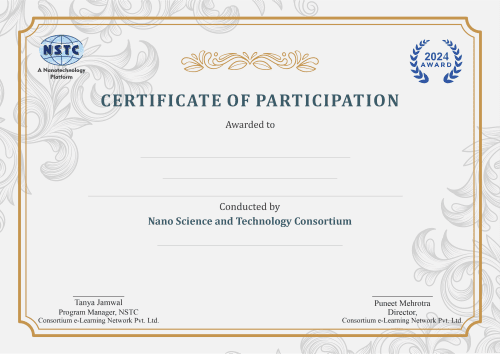
Get an e-Certificate of Participation!
Intended For :
-
Undergraduate and postgraduate students in biology, biochemistry, or bioinformatics
-
Ph.D. scholars and postdoctoral researchers working with protein structures
-
Structural biologists and computational biology researchers
-
Faculty members and academicians
-
Biotechnology and pharmaceutical professionals
-
AI/ML researchers interested in biological applications
Career Supporting Skills
Program Outcomes
- Understand AI-based protein structure prediction technologies and their limitations.
- Retrieve, visualize, and analyze protein structures from public repositories.
- Assess prediction confidence using established structural validation metrics.
- Compare AI-generated and experimentally determined protein structures.
- Apply Explainable AI methods to improve biological interpretation and model transparency.
- Design reproducible validation workflows for protein AI research.
- Evaluate the reliability of AI-generated protein models before downstream biological experiments.
- Explore emerging applications of trustworthy AI in structural biology, biotechnology, and pharmaceutical research.