

AI in Bioinformatics & Multi-Omics: Hands-On Genomics, Biomarker Discovery and Drug Discovery
Transforming Life Science Research with AI-Driven Data Analysis, Automation, and Discovery Workflows
Skills you will gain:
About Program:
The Digital Biologist Paradigm: AI-Driven Discovery in the Life Sciences is a 3-day workshop designed to introduce participants to the emerging role of artificial intelligence as a collaborative partner in biological research. The workshop focuses on how AI-driven systems can support data analysis, multi-omics integration, hypothesis generation, drug discovery, biomarker identification, precision medicine, and biological workflow automation. Participants will gain conceptual and hands-on exposure to biological datasets, AI-assisted tools, and practical discovery pipelines used in modern life science research.
Aim: The aim of this workshop is to help participants understand how AI can transform biological research by enabling faster data interpretation, automated workflow design, multi-omics analysis, and intelligent hypothesis generation for life science discovery.
Program Objectives:
- To explain the shift from traditional biology to data-driven and AI-assisted discovery.
- To familiarize participants with key biological data types such as genomics, transcriptomics, proteomics, imaging data, and electronic health records.
- To introduce basic machine learning concepts relevant to biologists and life science researchers.
- To demonstrate how AI can support biological data preprocessing, visualization, and interpretation.
- To explain the structure of a digital discovery pipeline, including data acquisition, integration, knowledge extraction, hypothesis generation, validation, and iteration.
- To explore real-world applications such as drug discovery, protein structure prediction, biomarker identification, and precision medicine.
- To introduce AI tools such as scientific LLMs, bioinformatics AI platforms, protein-design tools, single-cell analysis tools, and knowledge graph systems.
- To guide participants in building a basic AI-assisted biological workflow.
- To create awareness about ethical considerations and responsible AI use in biomedical and life science research.
What you will learn?
📅 Day 1: Vision of the Digital Biologist
- Core Objective: Understand the evolution of biology from traditional research approaches to AI-enabled discovery.
- Digital Biologist: evolution from traditional biology to AI-enabled discovery
- Current challenges in biological research: data overload and multi-omics integration
- Hypothesis generation and experimental scalability
- Machine learning fundamentals for biologists
- Biological data types: genomics, transcriptomics, proteomics, imaging, and electronic health records
🛠️ Hands-on:
- Hands-on Lab: Explore biological datasets for AI-driven research applications.
- Hands-on Lab: Perform biological data preprocessing and visualization.
🧰 Tools Covered: Biological datasets, data preprocessing tools, visualization workflows
📅 Day 2: Digital Discovery Pipeline
- Core Objective: Learn how AI-driven discovery pipelines support biological data integration, knowledge extraction, hypothesis generation, and validation.
- Biological data acquisition and data integration
- Knowledge extraction from datasets and scientific literature
- AI-assisted hypothesis generation
- Experimental design, validation, and iterative discovery
- Applications in drug discovery, protein structure prediction, biomarker identification, and precision medicine
🛠️ Hands-on & Case Studies:
- Case Study: AI-driven drug discovery workflow
- Case Study: Protein structure prediction for biological research
- Case Study: Biomarker identification using biological datasets
- Case Study: Precision medicine and personalized biological insights
🧰 Tools Covered: AI discovery pipelines, biological data integration tools, knowledge extraction workflows
📅 Day 3: AI Tools for the Digital Biologist
- Core Objective: Explore AI tools and platforms used to build AI-assisted biological workflows.
- Scientific LLMs for biological research and literature understanding
- Bioinformatics AI platforms for biological data interpretation
- Protein-design tools for structure and function exploration
- Single-cell analysis tools for cellular-level biological insights
- Knowledge graph systems for biological relationship mapping
- Ethical considerations and responsible AI in biomedicine
🛠️ Hands-on:
- Hands-on Lab: Select a biological problem for AI-assisted analysis.
- Hands-on Lab: Analyze a biological dataset using AI tools.
- Hands-on Lab: Apply AI platforms to support biological interpretation.
- Hands-on Lab: Build an AI-assisted biological discovery workflow.
🧰 Tools Covered: Scientific LLMs, bioinformatics AI platforms, protein-design tools, single-cell analysis tools, knowledge graph systems
Application Themes: Cancer genomics, drug repurposing, microbiome analysis, and protein function prediction.
Mentor Profile
Fee Plan
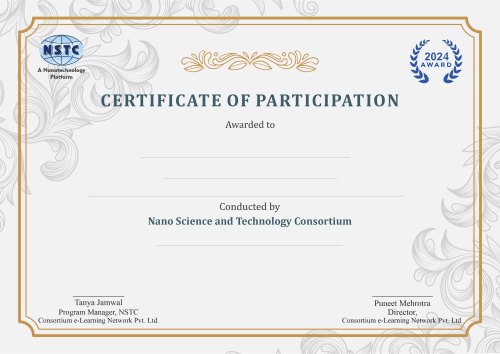
Get an e-Certificate of Participation!
Intended For :
- Undergraduate and postgraduate students from biotechnology, bioinformatics, life sciences, biomedical sciences, microbiology, biochemistry, genetics, pharmacy, and related fields
- PhD scholars and research scholars working in biological, biomedical, pharmaceutical, or computational biology research
- Faculty members, academicians, and research mentors interested in AI-enabled life science research
- Bioinformatics professionals and data analysts working with biological datasets
- Biotechnology, pharmaceutical, healthcare, and life science industry professionals
- Beginners with basic knowledge of biology and an interest in AI-driven biological discovery
Career Supporting Skills
Program Outcomes
- Understand the concept of the Digital Biologist and its importance in modern life science research.
- Explain how AI can support biological discovery, data analysis, and research automation.
- Identify different biological data types, including genomics, transcriptomics, proteomics, imaging data, and clinical health records.
- Perform basic exploration, preprocessing, and visualization of biological datasets.
- Understand the structure of an AI-driven digital discovery pipeline.
- Apply AI-assisted thinking to biological problems such as drug discovery, biomarker identification, protein structure prediction, and precision medicine.
- Explore scientific LLMs, bioinformatics AI platforms, protein-design tools, single-cell analysis tools, and knowledge graph systems.
- Build a basic AI-assisted biological workflow for a selected biological problem.
- Understand how AI can help in hypothesis generation and experimental planning.
- Recognize ethical issues related to responsible AI use in biomedical and life science research.
- Gain foundational skills for future learning in AI-driven biotechnology, computational biology, bioinformatics, and digital biology research.