

From Foundation Models to Autonomous Agents: Bridging AI, LLMs, and Biological Sciences
Bridging Artificial Intelligence, LLMs, and Biological Sciences for Next-Generation Discovery
Skills you will gain:
About Workshop:
This interdisciplinary workshop explores the connection between Artificial Intelligence, Foundation Models, Large Language Models, autonomous agents, neuroscience, cognitive science, and biological sciences. The course introduces participants to the evolution of AI, emergent capabilities of LLMs, biological intelligence, autonomous agent architectures, and the growing applications of AI in bioinformatics, DNA sequence analysis, protein structure prediction, and molecular biology.
Participants will gain conceptual and practical exposure to AI agents, multi-agent systems, fine-tuning, RAG, MCP-based workflows, and protein transformer models such as ESM-2 for biological data interpretation.
Aim: This workshop aims to provide participants with an understanding of how biological principles inspire the development of AI, LLMs, and autonomous agents. Attendees will explore multi-agent simulations, sequence modeling for bioinformatics, and molecular transformer architectures. The program combines theoretical foundations with hands-on exercises, enabling participants to build and fine-tune AI agents. Participants will gain skills to leverage AI and LLMs for research and applications in biological sciences, bioinformatics, and computational biology.
Workshop Objectives:
- To introduce the evolution of AI, foundation models, and Large Language Models
- To explain emergent capabilities of LLMs and their relevance to biological research
- To connect AI concepts with neuroscience, cognitive science, learning, memory, evolution, and adaptation
- To explore autonomous agent architectures, planning, reasoning, memory systems, and tool use
- To introduce deep learning approaches for DNA sequence analysis using LSTMs
- To discuss applications of LLMs in bioinformatics and protein structure prediction
- To demonstrate fine-tuning, RAG, MCP, and multi-agent system workflows
- To explore transformer-based molecular biology using Meta’s ESM-2 model
- To understand attention visualization and structural interpretation in protein transformers
- To highlight ethical and societal considerations in AI-driven biological research
What you will learn?
📅 Day 1: Foundation Models, LLMs & Biological Intelligence
- Objective: Understand the evolution of AI, foundation models, and LLMs, and their connection with biological intelligence.
- Evolution of Artificial Intelligence
- Foundation Models and Large Language Models
- Emergent capabilities of LLMs
- Biology and intelligence
- Neuroscience fundamentals
- Learning, memory, evolution, and adaptation
- Applications of foundation models in biology
🛠️ Hands-on:
- Build a simple AI agent
- Run a basic multi-agent simulation
🧰 Tools Covered: Python, LLM APIs, LangChain, Google Colab
📅 Day 2: Autonomous Agents & AI Applications in Bioinformatics
- Objective: Explore autonomous agent architectures, reasoning systems, and AI applications in biological sequence and protein analysis.
- Autonomous agents and agent architectures
- Planning, reasoning, memory systems, and tool use
- Deep learning for DNA sequence analysis using LSTMs
- Applications of LLMs in bioinformatics
- Computational approaches for protein structure prediction
🛠️ Hands-on:
- Fine-tuning foundation models
- Retrieval-Augmented Generation
- MCP-based AI workflow exploration
- Multi-agent system implementation
🧰 Tools Covered: Python, Hugging Face Transformers, RAG, MCP, LangChain, Google Colab
📅 Day 3: AI for Biology, Protein Transformers & Responsible Innovation
- Objective: Apply transformer-based AI models in molecular biology while understanding ethical and societal considerations.
- AI for biology and Artificial General Intelligence
- Ethical and societal considerations
- Evolutionary-scale AI and transformers in molecular biology
- Feature extraction using Meta’s ESM-2 model
- Translating attention matrices into structural alignments
- Biological inspiration case study
🛠️ Hands-on:
- Map and visualize protein transformer attention
- Interpret attention patterns on a 3D structural model
- Explore structure-aware insights from molecular AI models
🧰 Tools Covered: ESM-2, Hugging Face Transformers, Python, Biopython, 3D Molecular Visualization Tools, Google Colab
Mentor Profile
Fee Plan
Important Dates
23 Sep 2026 Indian Standard Timing 4:30 PM IST
23 Sep 2026 to 25 Sep 2026 Indian Standard Timing 5:30 PM IST
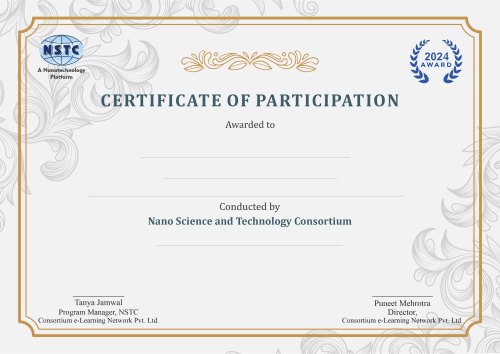
Get an e-Certificate of Participation!
Intended For :
Career Supporting Skills
Workshop Outcomes
- Build and deploy simple LLM-based autonomous agents for biological applications.
- Implement RAG pipelines and fine-tune LLMs for bioinformatics datasets.
- Extract meaningful features from protein sequences using ESM-2 or similar models.
- Visualize transformer attention and map embeddings onto 3D molecular structures.
- Apply AI and LLMs in solving real-world biological research problems.