

AI-Powered Life Cycle Assessment for Sustainable Green Bioproducts
Build an end-to-end LCA model and use AI to predict, interpret and reduce the environmental footprint of bio-based products.
Skills you will gain:
About Program:
This workshop introduces AI-driven Life Cycle Assessment (LCA) in green biotechnology, teaching participants to evaluate and optimize environmental impacts from bioprocess design to sustainable products. Through case studies and hands-on exercises, attendees will apply AI tools for process optimization and sustainability analysis to make data-driven, eco-friendly decisions.
Aim:
To equip researchers, industry professionals, and students with AI-enabled LCA skills for evaluating and improving the environmental performance of bioprocesses and biotechnology products, fostering sustainable innovation.
Program Objectives:
- Understand the principles of Life Cycle Assessment (LCA) in the context of green biotechnology.
- Explore AI and machine learning tools for environmental impact modeling and predictive analytics.
- Analyze and optimize bioprocesses for sustainability and efficiency.
- Evaluate environmental footprints of bio-based products from raw material sourcing to end-of-life.
- Integrate AI-driven insights to support eco-friendly product design and decision-making.
- Interpret LCA results to generate actionable recommendations for sustainable biotech innovation.
What you will learn?
Day 1 — LCA Fundamentals & Bio-Based Product Modeling
- Introduction to Life Cycle Assessment
- LCA applications in biotechnology and bio-based products
- Goal and scope definition
- Functional unit and system boundaries
- Cradle-to-gate vs cradle-to-grave assessment
- Life Cycle Inventory development
- Mapping raw materials, energy, water, transport, and waste
- Introduction to OpenLCA
Hands-on: Build a basic LCA model for a selected bio-based product.
Day 2 — Carbon Footprinting, Hotspot Analysis & AI
- Carbon footprint calculation
- Environmental impact categories
- Emission factors and inventory datasets
- Identification of environmental hotspots
- Preparing LCA datasets for AI/ML
- Environmental impact prediction using machine learning
- Random Forest / XGBoost fundamentals
- Feature importance and SHAP interpretation
- Model validation using R², MAE, and RMSE
Hands-on: Develop an AI model to predict environmental impact and identify key sustainability drivers.
Day 3 — Scenario Analysis & Sustainability Optimization
- Baseline vs improved production scenarios
- Renewable energy and process-efficiency scenarios
- Waste valorization and circular economy strategies
- Sensitivity and uncertainty analysis
- AI-assisted sustainability optimization
- Comparing bio-based and conventional alternatives
- Interpreting LCA results
- Translating results into sustainability recommendations
Hands-on: Compare multiple sustainability scenarios and identify the most impactful process improvements.
Mentor Profile
Fee Plan
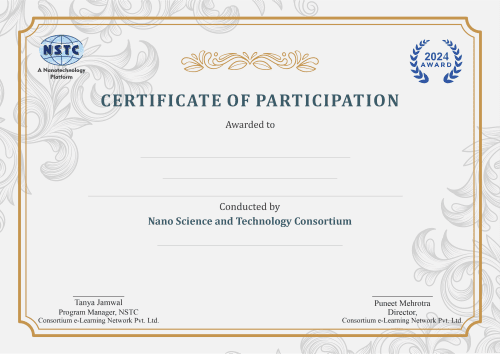
Get an e-Certificate of Participation!
Intended For :
- Industry Professionals in biotechnology, sustainability, or environmental management
- Academicians, Professors, and Researchers in life sciences, green chemistry, or biotech
- PhD Scholars and Postgraduate Students interested in sustainable bioprocess design and AI applications
- Professionals involved in product development, bioprocess optimization, and environmental impact assessment
Career Supporting Skills
Program Outcomes
-
Participants will create:
- Bioproduct life cycle map
- Goal and scope definition sheet
- Life Cycle Inventory template
- Product Carbon Footprint calculation
- Hotspot analysis chart
- AI/ML-based impact prediction model
- Circularity scenario comparison
- Digital Product Passport-style template
- Short LCA interpretation report